



The American liner shipping company Matson continues to use Southeast Asian beaches to dismantle old ships. In doing so, the company is breaking a ten-year-old agreement.
“Make Shipbuilding Great Again” – this is what US President Donald Trump keeps saying when it comes to the maritime industry in the United States. Ships are to be built at American shipyards again, and the aim is to stand up to the competition in China. However, as grandiose as the plans may be (after all, Chinese shipyards account for over two thirds of all new construction orders worldwide), they still fall short. After all, building a ship always involves scrapping it as soon as it has reached the end of its service life – but apparently this does not have to happen on American soil.
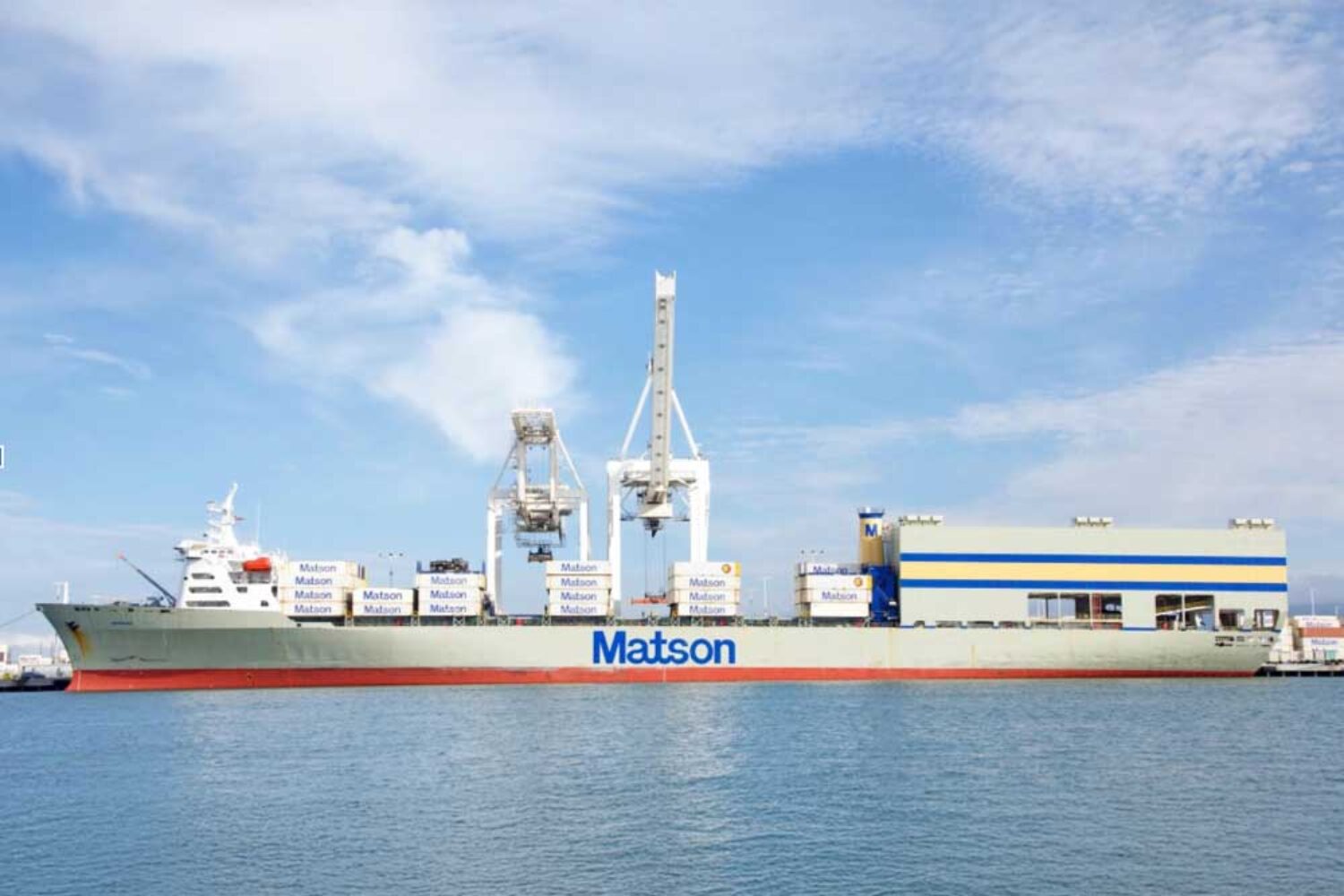
The latest example: the shipping company Matson Shipping Lines has sent the container ship “Mokihana” to the beaches of Alang in India to be scrapped. The ship is currently on the Pacific, its final destination being Bhavnagar, the port of the Alang scrapping yards. The companies here are known for not taking the protection of the environment and workers very seriously: The ships are dismantled here under catastrophic conditions and the job is life-threatening.
“Mokihana” was in service for over 40 years
The Basel Action Network (BAN) and the NGO Shipbreaking Platform have condemned Matson for sending the “Mokihana”, built in 1983, to Alang for scrapping – even though the shipping company pledged in 2015 to no longer have ships scrapped on beaches that do not comply with the Basel Convention. This classifies ships as hazardous waste that may not be exported to emerging and developing countries. As the wrecks are often full of heavy metals, oil residues and asbestos, they pose a danger to the local environment.
Matson has renamed the “Mokihana” (262 m long, 30,652 dwt) to “Mokhia” and registered it under the flag of St. Kitts and Nevis. According to a statement from the NGO Shipbreaking Platform, this flag of convenience is often used for ships that are about to be scrapped. The container ship is expected to arrive in Bhavnagar on February 25.
“This sequence of actions – reflagging, renaming, and dispatching the vessel to the Alang region – is a regrettable retreat from corporate responsibility and appropriate end-of-life ship management policy,” said Jim Puckett, Founder and Chief of Strategic Direction at BAN. “It directly contradicts Matson’s prior public commitments to avoid beach-based shipbreaking and is a violation of the Basel Convention, calling into question the credibility of Matson’s ESG commitments.”
Matson rows back
In 2015, Matson made a public commitment to end the use of tidal beaches in South Asia for shipbreaking following international criticism of the environmental and health impacts of this practice. According to BAN and NGO Shipbreaking Platform, the decision to send the “Mokhia” to Bhavnagar is a “clear reversal and a return to the very practices that Matson had once promised to ban.”
According to the organizations, Matson took a stand before the last voyage of the “Mokhia”. Rachel Lee, Vice President of Sustainability and Governance at Matson, explained in a letter that Matson would export the ship to a dismantling facility that allegedly complies with the Hong Kong Convention. The convention on safe ship recycling came into force in 2025.
The problem is that no shipbreaking yard in India has yet been approved under this new convention. Furthermore, it does not regulate cross-border waste transports – a gap that has long been criticized by environmental and labour organizations. The older Basel Convention, on the other hand, explicitly regulates such exports and prohibits trade between contracting states such as India and non-contracting states such as the United States. The export of decommissioned ships – which are considered hazardous waste – is therefore prohibited in this case.
“Beaching remains the most dangerous and polluting form of ship disposal in the world,” said Ingvild Jenssen, Founder and Executive Director of the NGO Shipbreaking Platform from Brussels. “But companies continue to make use of the beaching yards because this practice offers significantly lower costs than safe, contained recycling alternatives, often through the exploitation of desperate and vulnerable labor forces. Changing the name of the ship and its flag does not change the environmental reality on the ground, or the lack of corporate responsibility for sending it there.”
Workers, coastal communities and the environment are being exposed to hazardous and toxic substances in this improper scrapping of ships. This undermines global efforts to achieve safe, cohesive and truly sustainable ship recycling, according to a statement from both organizations.
“Retreat from leadership”
“This is not responsible recycling,” Puckett added. “It is a retreat from leadership, and a direct contradiction of Matson’s own ESG narrative.”
The organizations are calling on regulators, investors and clients to scrutinize Matson’s actions. It should “immediately” recommit to upholding the Basel Convention, using only off-shore, fully contained ship recycling methods and protecting the human rights of the world’s most vulnerable workers.
According to data from Alphaliner, the US shipping company Matson’s fleet currently comprises 29 vessels, 20 of which it owns. With a total capacity of around 71,200 TEU, the shipping company is ranked 29th in the global ranking. (JW)