



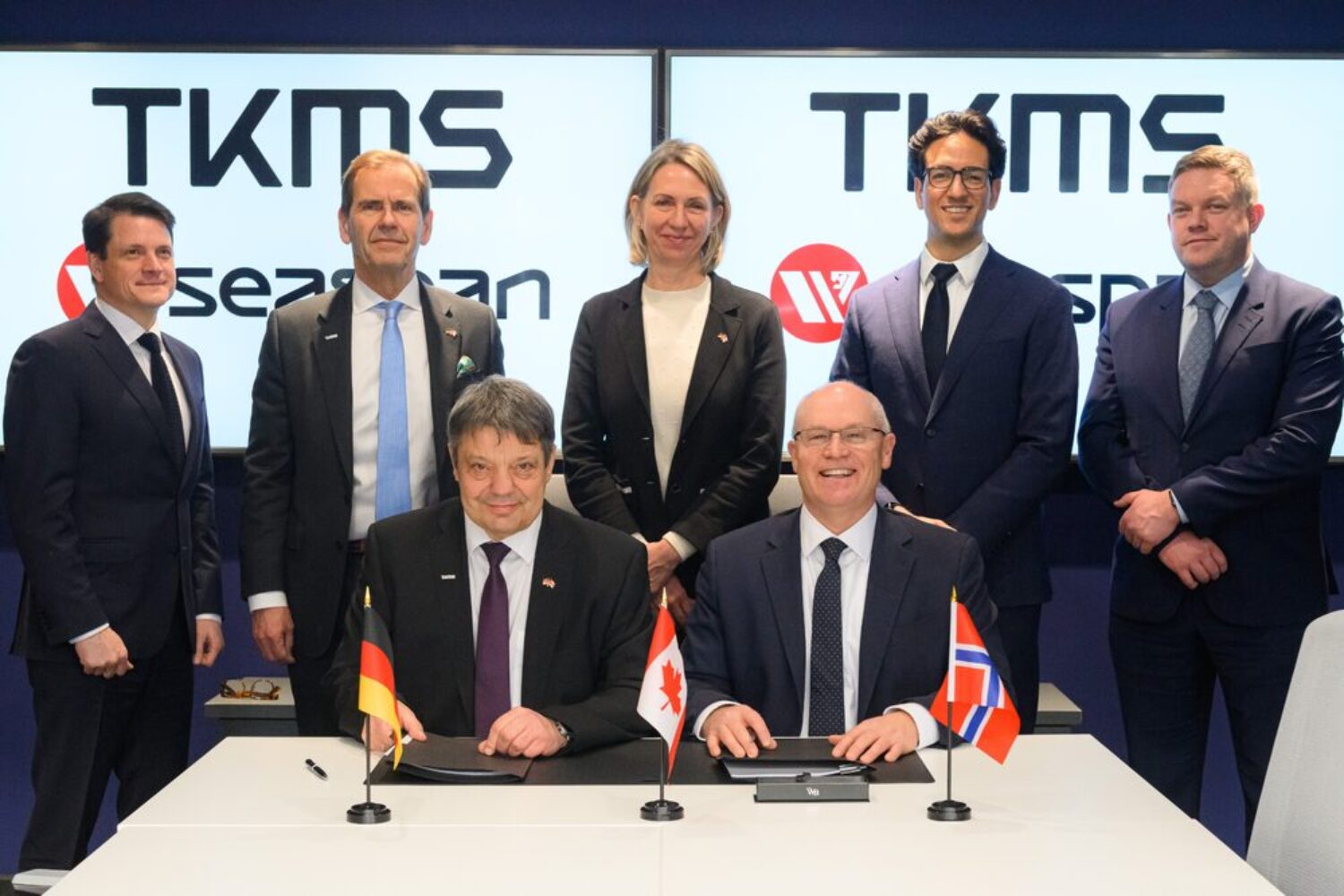
With a cooperation agreement with Seaspan Shipyards, TKMS is strengthening its position in the Canadian submarine program Canadian Patrol Submarine Project (CPSP).
The aim of the collaboration is to build sovereign national capabilities for maintenance and lifecycle management of the future Canadian submarine fleet – a key industrial policy criterion in current and future procurement processes. Specifically, TKMS and Seaspan agreed to work with the Royal Canadian Navy and the Canadian Department of National Defense to establish a Canadian-led integrated sustainability team.
The focus will be on the maintenance, repair and long-term support of future submarines on the west and east coasts of the country. The creation of an independent national maintenance capability has been explicitly defined by Canada as a core objective of the CPSP. The agreement is of strategic importance for TKMS. The German submarine manufacturer is one of the potential providers for the replacement of the current “Victoria” class and has long been advertising a comprehensive industry and technology transfer.
High demand for German know-how in Canada
The cooperation with Seaspan, Canada’s largest shipbuilding and repair group, directly addresses this requirement: German submarine technology is to be closely interlinked with existing Canadian shipyard, personnel and supply chain structures.
“This cooperation agreement reflects our shared commitment to excellent long-term support services and is in line with the objectives of the Canadian submarine program,” explained Thomas Keupp, Chief Sales Officer of TKMS. The goal is to ensure “that Canadian naval platforms are supported by robust, reliable and confident maintenance capabilities throughout their lifecycle”.
Seaspan brings extensive experience from maintaining the current Canadian submarine fleet and sees itself as the central building block of a purely national maintenance model. The company says it is the only shipyard in Canada with submarine expertise and has specialized facilities on the West Coast. “The CPSP is one of the top priorities for long-term defense and safeguarding Canadian sovereignty,” emphasizes John McCarthy, CEO of Seaspan Shipyards. The company is well positioned “to take on the decades-long maintenance of this new fleet and make a substantial contribution to Canada’s maritime defense industry.” Beyond the CPSP, the agreement also opens up prospects for export and third market activities. TKMS points to its international customer base, which could also benefit from Canadian maintenance services in the future.
Seaspan would thus not only become part of a national program, but potentially an international support network. In terms of industry policy, the cooperation is part of a series of similar agreements with which TKMS is systematically expanding its market opportunities in Canada. For Ottawa, the agreement underlines its ambition to become independent of foreign shipyards in the long term for safety-relevant naval platforms – an aspect that is likely to play a central role in the further course of the CPSP.