


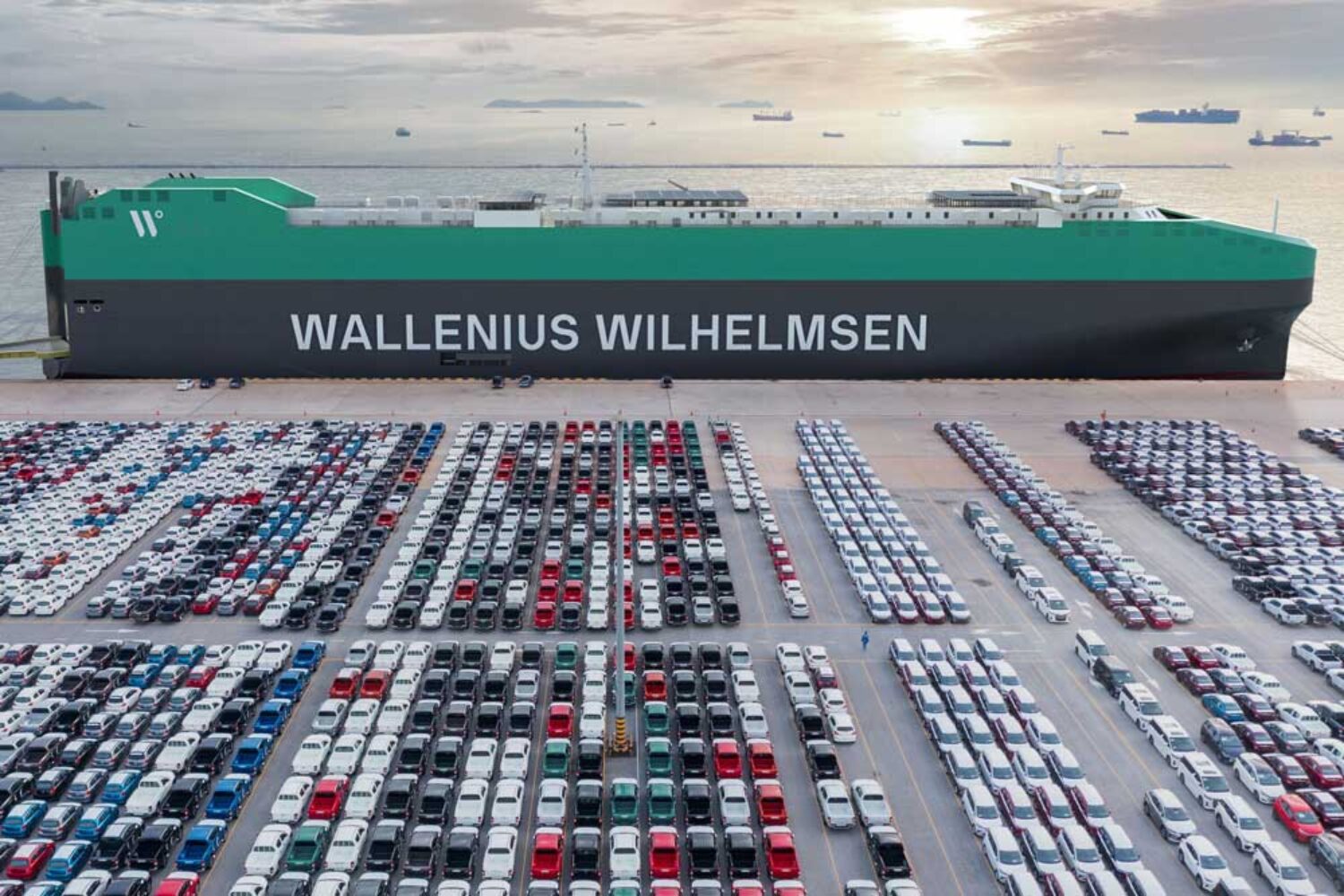
The shipping company Wallenius Wilhelmsen aims to run its car freighters on bio-methanol. One of its major suppliers is going to be the Norwegian energy company Equinor.
Both partners have signed a two-year contract for the supply of bio-methanol. Wallenius Wilhelmsen will provide the fuel as part of a pilot project for selected customers from 2027. The contract covers the supply of “significant quantities of bio-methanol” for the fleet’s appropriately equipped ships, the shipping company announced. The fuel will be produced in Norway and delivered to Antwerp-Zeebrugge, where the ships will be bunkered with it. The mass-balanced bio-methanol is ISCC EU certified and Wallenius expects it to reduce CO2 emissions by up to 95%.
“Signing this contract with Equinor is an important milestone for us at Wallenius Wilhelmsen,” said Xavier Leroi, Chief Operating Officer Shipping Services. “Securing low-carbon bio-methanol supports the decarbonization of our ocean freight operations while strengthening our ability to offer our customers lower-emission end-to-end logistics solutions. Partnerships like this are essential to make alternative fuels scalable and turn our ambitions into reality.”
Equinor is seeing “ever-growing interest” in bio-methanol as a solution to decarbonize shipping, said Alex Grant, SVP Crude, Products and Liquids. The fuel is both practical and scalable. “This partnership with Wallenius Wilhelmsen is a significant step in introducing Equinor’s bio-based methanol to the growing low-carbon marine fuel market segment,” Grant said. “Equinor has already signed supply agreements for bio-methanol with Maersk and NCL and is currently in discussions for several supply agreements for bio and conventional methanol.”
Expansion of alternative fuels
With this partnership, Wallenius Wilhelmsen is securing access to low-emission fuels for maritime transport. At the same time, the agreement is an important step towards the long-term availability of alternatives – “a basic prerequisite for decarbonization in shipping and logistics,” the shipping company announced.
“Long-term agreements create the necessary demand signals that fuel manufacturers need to invest and expand production. They strengthen the supply chain for alternative fuels and accelerate the transition from pilot projects to commercial use across the industry,” said Christos Chryssakis, Vice President Energy and Regulations at Wallenius Wilhelmsen.
The RoRo shipping company, which posted high profits last year, expects another solid financial year in 2026. Wallenius Wilhelmsen recently took over the operation of the “Giart” car terminal in Gothenburg and extended two contracts.