



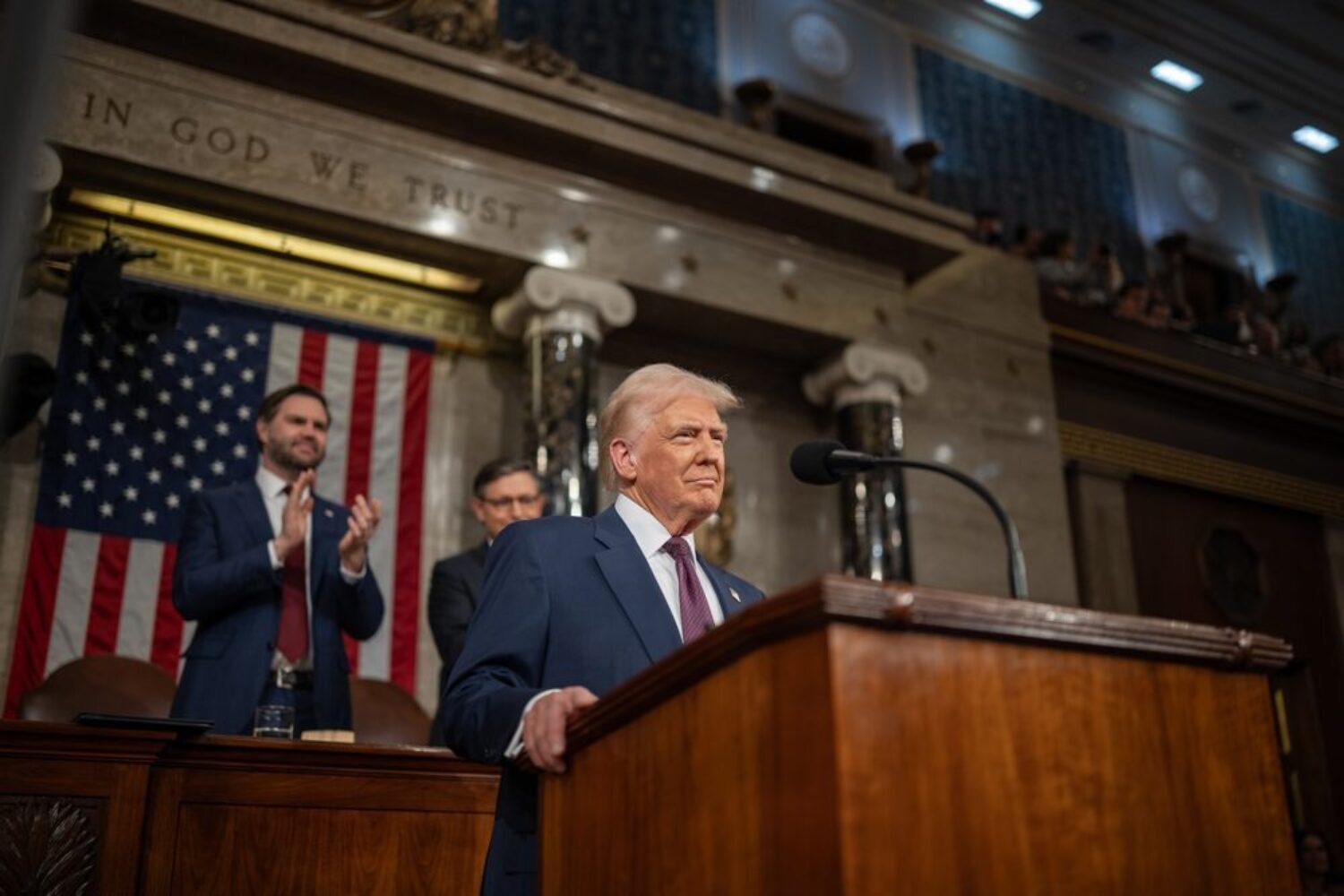
US President Donald Trump announced his intention to declare the Strait of Hormuz as US territory as soon as Iran had been defeated. The US is currently considering measures to bring the regime to its knees.
There is still no sign of a resolution to the Middle East conflict. The 60-day ceasefire, which had hardly been observed anyway, is due to expire soon. The US continues to block the Strait of Hormuz to ships calling at Iranian ports. At the same time, the Houthis in Yemen – who are allied with Iran – have resumed attacking merchant ships in the Red Sea. The situation for shipping in the region remains extremely dangerous, even though the Strait of Hormuz is now reportedly at least free of mines.
During a campaign rally in the state of New York, the US President has now announced a further step: as soon as Iran is defeated, the Strait of Hormuz is to be declared US territory. Quite apart from the fact that the United States would thereby effectively control all shipping traffic through the strait, this ‘measure’ would have far-reaching consequences for the region. Whether the plan is feasible or will remain merely a threat, however, is likely to remain open to question. The proposed toll, too, has so far remained merely a plan. Furthermore, Trump has frequently displayed such “wishful thinking” in the past, which has largely come to nothing: one need only think of Cuba or Greenland.
Iran’s Deputy Foreign Minister Kasem Gharibabadi wrote on the platform X that the strait could not be seized either by a tweet or by an aircraft carrier. He added that Iran would not be intimidated by such displays of power.
US plans further sanctions
However, aside from Trump’s threatening posturing, the US is planning far-reaching measures that could bring Iran to its knees. US Treasury Secretary Scott Bessent spoke of taking “historic” steps this week.
These include sanctions against private Chinese refineries, which account for up to a quarter of the country’s capacity. China is the largest buyer of Iranian oil. Smaller companies indirectly linked to the oil trade are also set to face sanctions. However, countermeasures from Beijing are to be expected here; a development similar to that seen in the trade dispute between the US and China is likely.
In addition to further sanctions against Iranian companies and individuals, representatives from the US and Israel have also raised the possibility of a land blockade against Iran, for example to restrict food imports. This would, however, require the support of Iran’s neighbouring states.