





Geopolitical conflicts, climate risks and the relocation of production sites are altering global trade flows. DP World therefore sees a growing need for more flexible transport networks and an increasing importance of regional shipping routes.
In its recently published white paper, “Navigating the Future of Maritime Trade’” the Marine Services division has examined how international trade routes are changing. The central thesis is that disruptions are no longer merely temporary anomalies. Rather, tariffs, changes in the trade policy framework and the geographical redistribution of industrial production are leading to structural shifts.
Feeder, coastal and short-sea services are gaining in importance
According to DP World’s assessment, feeder, coastal and shortsea services are consequently becoming increasingly important. They connect new production centres and regional ports with the major international shipping routes. In conjunction with rail, road and inland waterway transport, they can create additional transport options when established corridors are disrupted.
“A key component is the optimisation of what we refer to as “Connected Trade Corridors,” says Ganesh Raj, Global COO Marine Services at DP World. The aim is to link ports, maritime services and hinterland logistics in such a way that alternative routes are available for cargo when conditions change.
Shifts in production are changing shipping patterns
According to the white paper, global manufacturing is increasingly spreading across more regions. India, South-East Asia, Latin America, the Middle East and Africa are playing greater roles in global production. This is giving rise to new regional shipping routes.
According to DP World, this trend is particularly evident in trade between developing countries: exports of goods between these economies rose from around $500 billion in 1995 to $8.8 trillion in 2025. More than half of their exports now go to other developing markets.
Despite the disruptions, the vast majority of companies surveyed by DP World expect further growth. More than 3,500 executives from supply chain management and logistics were surveyed for the “Global Trade Observatory 2026” Of these, 94% expect trade growth in 2026 to reach at least the same level as the previous year. DP World interprets this as a sign that globalisation is undergoing a realignment.
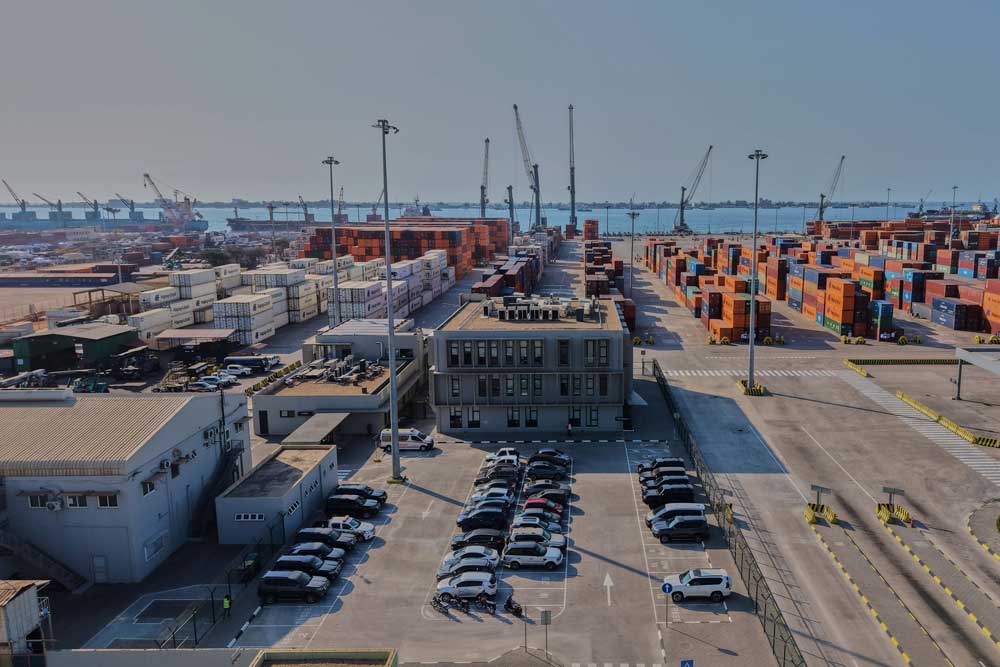
The port operator connects more than 200 ports in Northern Europe, the Mediterranean, the Middle East, Africa, Asia, and North and South America. It is supported by a fleet of more than 500 vessels.