




US companies play virtually no role in global container shipping. A state-owned shipping company, as proposed by the think tank OMI, could change that – but the costs involved would be enormous.
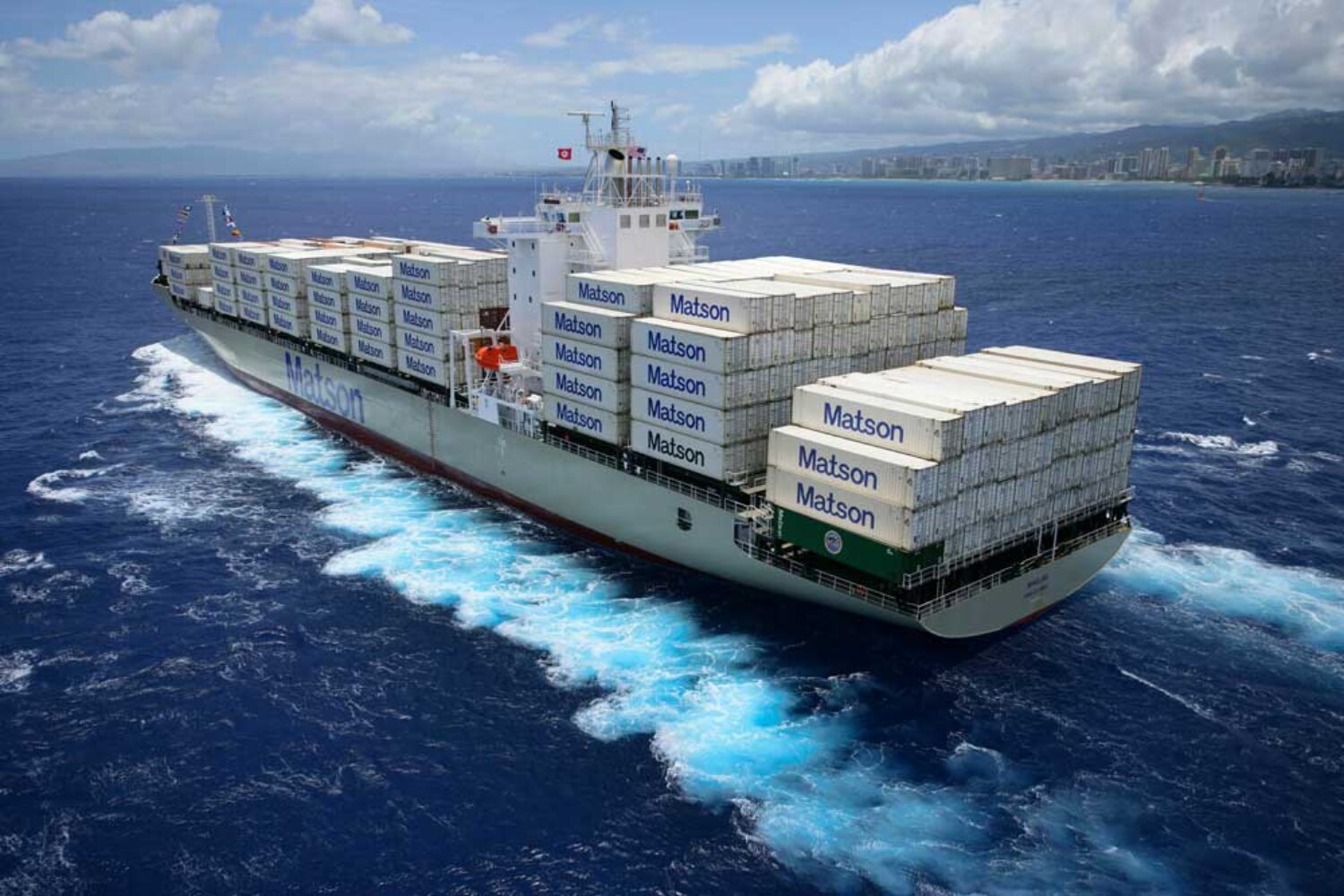
For a long time, the United States of America was a ‘powerhouse’ of global shipping. After the end of the Second World War, numerous merchant ships sailed under the American flag. Among the largest companies were American President Lines and the Sea-Land Corporation, one of the pioneers of container shipping. Today, little remains of this market position: not a single American company features among the 20 largest liner shipping companies. The US shipping company Matson ranks 30th and, with a capacity of just under 70,000 TEU, accounts for a mere 0.2 per cent of the global market share.
Reasons for this decline include, amongst other things, the high costs associated with operating a US-flagged vessel. Crew wages are higher, as are insurance costs and taxes. The globalisation of shipping has also been accompanied by a trend towards larger ships and fleets, as well as international service and logistics networks. American companies have tended to withdraw from these markets rather than expand into them. Added to this is a significant shift in the shipbuilding market, even more pronounced than in Europe. Whilst numerous ships were still being built at US shipyards in the mid-20th century, by far the largest shipbuilding capacities are now located in China, followed by South Korea and Japan.
Matters of national security
As a report by the think tank Open Markets Institute (OMI) concludes, this situation could become a problem for the US economy in the event of a crisis. Almost all major trade routes are served by foreign companies. Furthermore, less than 1 per cent of all container ships worldwide fly the US flag – a total of just 58 vessels.
In the report ‘Creating a Publicly Accountable Ocean Supply Chain’ (Creating a Publicly Accountable Ocean Supply Chain), the think tank explains that foreign ownership of shipping companies increases the risk that US shippers could easily be cut off from global markets. Furthermore, the report warns that the lack of ‘domestic’ transport capacity poses a threat to US national security.
Although some foreign shipping companies maintain US subsidiaries, these remain subject to comprehensive control by their foreign parent companies. The institute warns that this dependence on foreign shipping companies limits the capacity required for the US to respond to emergencies. US military supply lines could also be disrupted as a result. A look at Israel illustrates just how important this is: The takeover of the shipping company Zim by Hapag-Lloyd (for $4.2 billion) also depends on the consent of the government, which holds a ‘golden share’ in Zim. The company plays a key role in Israel’s military supply chains.
Open Markets’ recommendations sound drastic: global shipping alliances – including Gemini and the Ocean Alliance – should be subject to “stricter oversight”. Ships flying the US flag and with US crews (i.e. fleets compliant with the Jones Act) should receive financial support.
The most significant step would be the establishment of a state-run container shipping company. According to OMI, this could be achieved by instructing the US Maritime Administration (MARAD) to purchase vessels from US shipyards and to operate liner services with US crews.
“For much of the 20th century, we recognised that shipping was too important to be left solely to the vagaries of the market,” said Arnav Rao, transport policy analyst at the Open Markets Institute and author of the report. “It is time to reflect on this lesson.”
A maritime pipe dream
For US President Trump, these recommendations are likely to be preaching to the converted. Trump has made the “revival” of the American shipping industry a stated goal of his presidency. Committing a state – and thus reliable – client to this would probably accelerate this development.
However, the assumption that foreign shipping companies would ‘cut off’ their supply chains to US markets in the event of a crisis is unrealistic; the US is simply too important in global trade for that to happen. Added to this are the enormous costs that such an initiative would entail: the state-owned shipping company would need tens to hundreds of ships and millions of containers. Agreements would have to be concluded with terminals worldwide, and it might even be necessary to invest in its own terminals, not to mention the necessary logistics networks. Furthermore, it is by no means certain that such a shipping company could be operated under competitive conditions. After all, the construction and operation of ships in the US is, above all, one thing: expensive.