




Rolls-Royce and the Polish defense technology group Polska Grupa Zbrojeniowa (PGZ), which also includes the Polska Stocznia Wojenna naval shipyard, intend to intensify their cooperation in propulsion technologies for military vehicles.
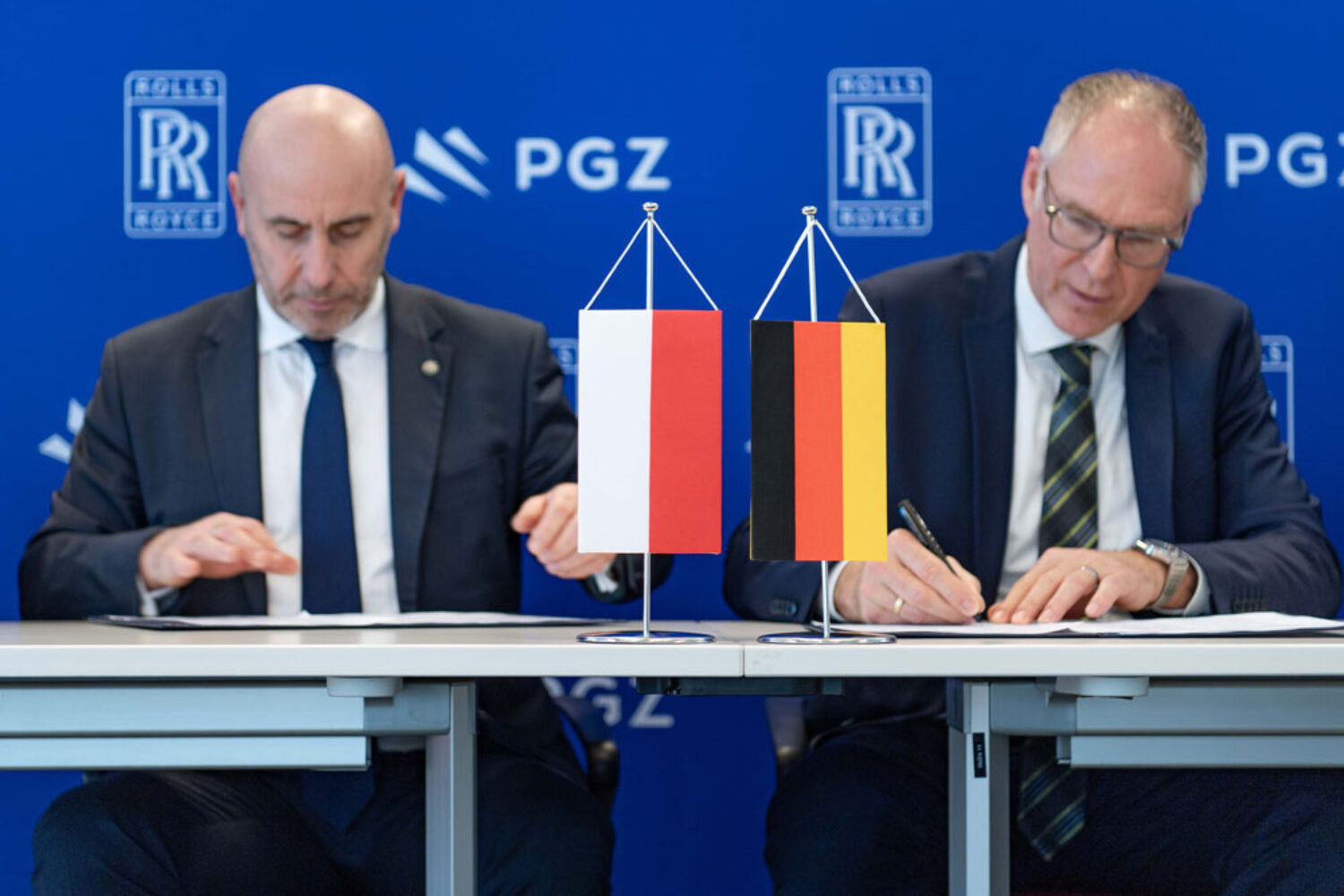
To this end, representatives of both companies recently signed a Memorandum of Understanding (MoU) in Warsaw. This covers the servicing and overhaul of mtu propulsion systems used by the Polish armed forces as well as the possible production of complete propulsion systems and engine components. Cooperation in the field of naval propulsion systems is also reportedly on the cards.
PGZ, Poland’s largest defense technology manufacturer and partly state-owned, unites around 60 companies. It plays a key role in the armament of the Polish armed forces. In particular in the expansion of armored land vehicles to protect the country’s borders. “The fact that we have been selected by PGZ as a potential partner for a more in-depth cooperation is an honor for us for our cooperation to date and at the same time an incentive to work on a successful future together,” says Andreas Görtz, President Business Unit Mobile & Sustainable at Rolls-Royce Power Systems.
According to Rolls-Royce Power Systems, it has been a reliable partner of the Polish armed forces for decades. Numerous vehicles in the existing army fleet are powered by mtu engines. The new Borsuk infantry fighting vehicle, of which the Polish army has ordered over 1000 vehicles, is also powered by the mtu 8V199 engine.
The PGZ Group is cooperating with Rolls-Royce on projects such as the Borsuk and frigates as part of the Miecznik program. The MoU opens up the possibility of acquiring the capacity to manufacture spare parts and components for propulsion units, joining the global Rolls-Royce supplier base and implementing joint projects, says Arkadiusz Bąk, Vice President of the Management Board of PGZ. This is another step in an important cooperation that strengthens the potential of the Polish defense industry. The idea of localization is taking shape here and has the chance to develop further, says Bąk.