




Ships arriving at Europe’s most important seaports are less likely to be cleared on time. Hamburg is particularly affected. Smaller ports, on the other hand, were able to score points.
Traffic is stalling in Europe’s largest transshipment centers – according to an analysis by the service provider Sea-Intelligence. The agency examined the punctuality of handling in European ports from July 2025 to February 2026 and found that the three most important ports in particular are less likely to meet their own schedules. Smaller ports in the region, on the other hand, pull the average upwards, with fewer difficulties occurring here.
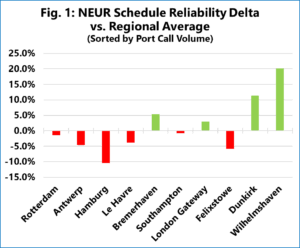
Sea-Intelligence attempted to isolate the specific operational bottlenecks of the ports. To do this, the agency compared the schedule reliability of individual ports with the continental average in order to determine a so-called “reliability delta”. A negative delta indicates weakening punctuality.
The data shows a “clear structural disadvantage”, which is concentrated in the three largest ports in the Northern Europe region: “Rotterdam, Antwerp and Hamburg – the three ports that handle the majority of the region’s ship call volume – all recorded negative reliability deltas,” Sea-Intelligence reported.
Hamburg deviates strongly from average
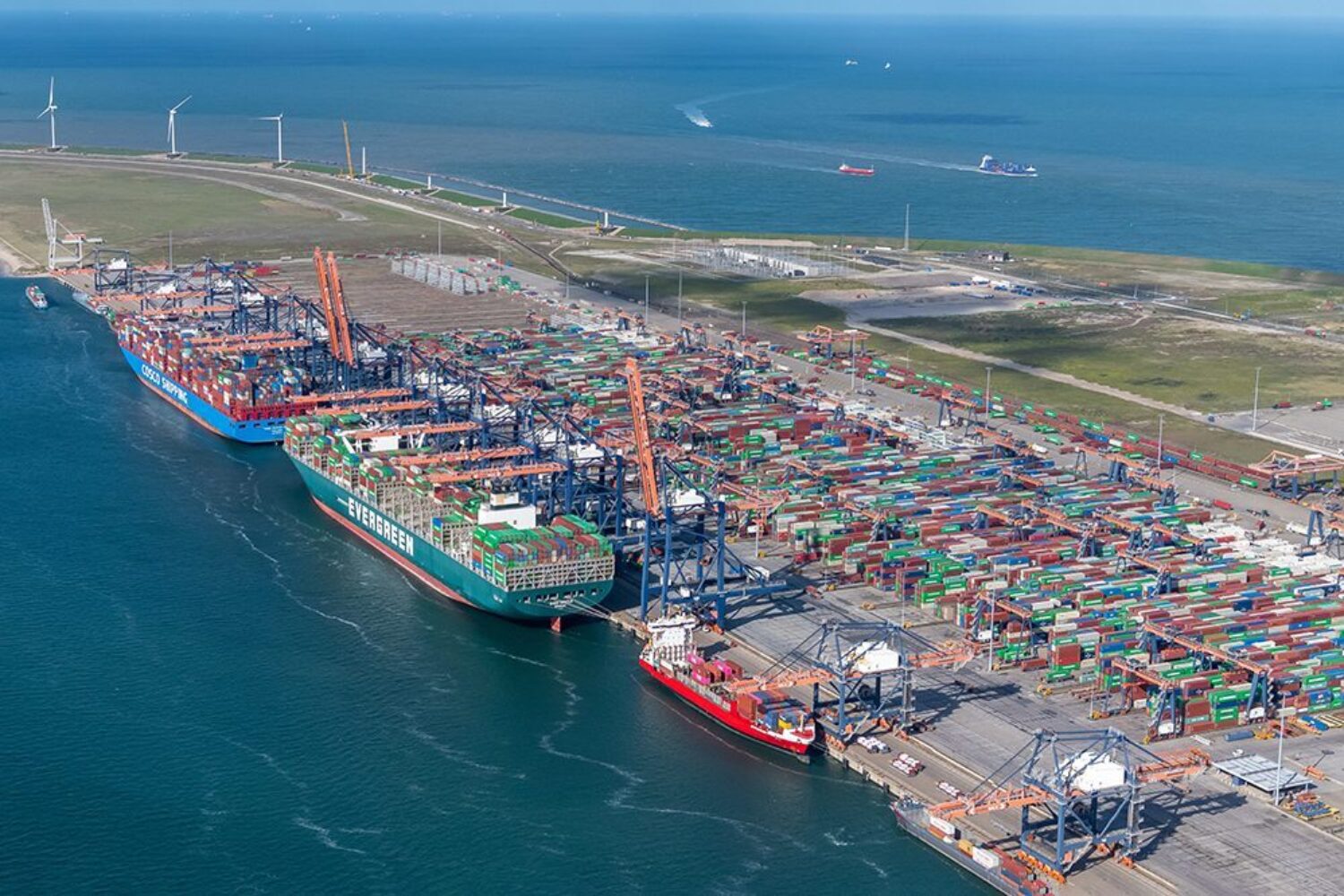
Rotterdam, Europe’s largest port with a throughput of 13 to 14 million TEU per year, handled over 1,200 calls during the analysis period and was 1.5% below the European reference value. Antwerp-Zeebrugge recorded a similar ship call volume to Rotterdam, but a delta value of 4.6%. Germany’s largest seaport, Hamburg, proved to be particularly vulnerable and was more than 10% below the unweighted European reference value. This suggests that the ports are overloaded and cannot keep up with the volume of ship calls.
Conversely, however, this local congestion meant that smaller ports were able to manage their processes much faster. In the period analyzed, Bremerhaven, Wilhelmshaven, Dunkirk and London Gateway had positive reliability deltas. This means that plans were adhered to more frequently than average in these ports, with Wilhelmshaven even being around 20% above the calculated average.
“These results show that the main transshipment hubs traditionally relied upon by shippers are suffering from persistent structural congestion, leading to significant disadvantages along the entire supply chain,” the analysis states. “Ports with high transshipment volumes are currently experiencing localized schedule deterioration, meaning that using the largest transshipment ports is no longer a guarantee of high schedule reliability.”