

The armaments group Rheinmetall has had a good year. 2026 should also bring a further step forward with the takeover of the Lürssen subsidiary NVL.
Düsseldorf-based Rheinmetall AG significantly expanded its business with the armed forces in fiscal year 2025 and further increased its profitability, as was emphasized at the presentation of the annual balance sheet. While Group sales rose by almost 30%, the operating result improved by a third compared to the previous year. The order backlog also grew thanks to “high-volume major orders”. The tense security situation underpins the “promising position” of the Group, which is playing an “increasingly important role in the necessary increase in defense capabilities in Germany and its partner countries”, it said.
With the carve-out of the automotive activities, which are up for sale, the Group intends to focus entirely on the defense business from now on. Through acquisitions and strategic partnerships in the defense sector, the transformation to a comprehensive system house for the armed forces has been completed at the same time. In addition to the existing land and air sectors, Rheinmetall also intends to position itself in the maritime sector following the acquisition of naval shipbuilder NVL .
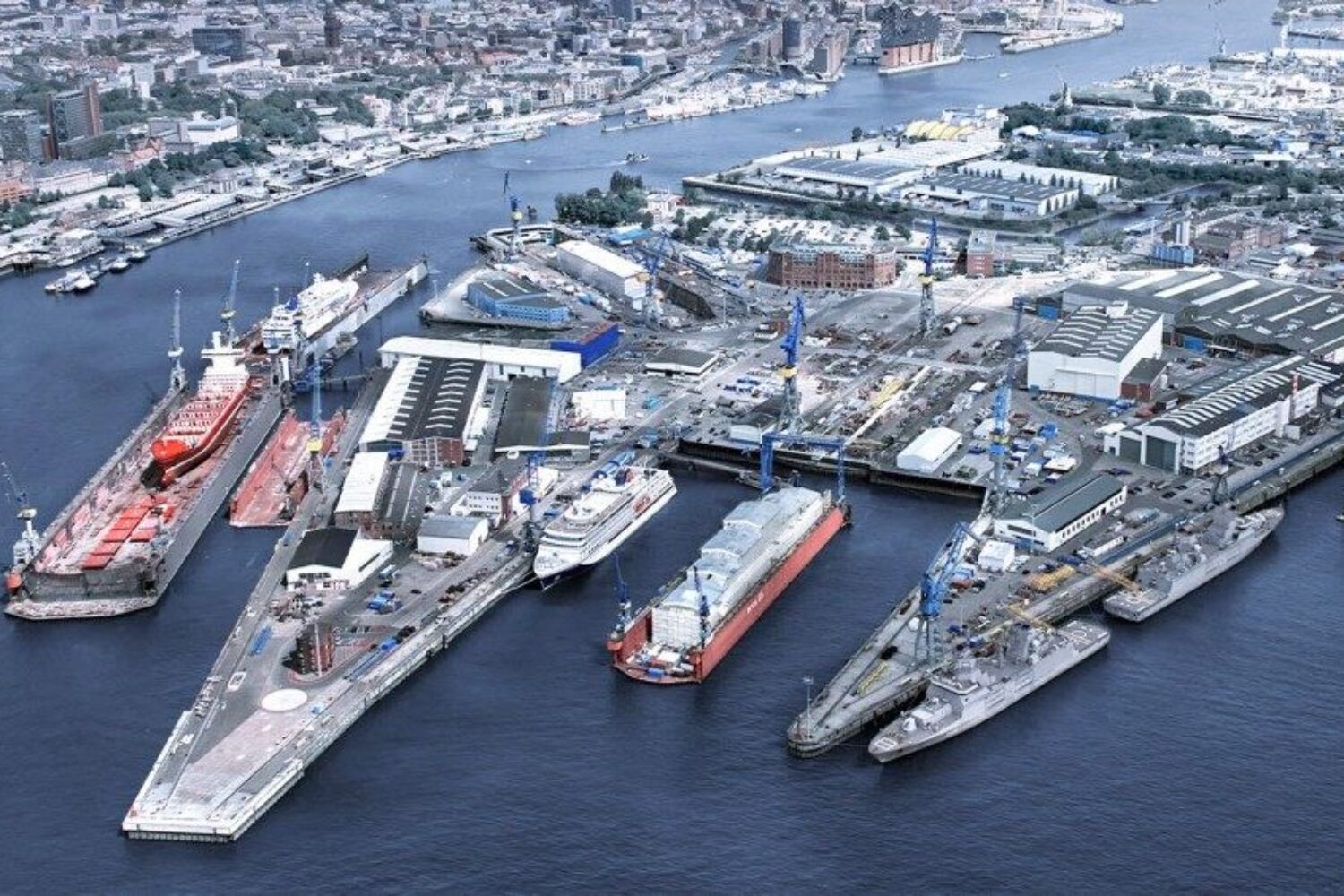
In February, the EU Commission waved the takeover through. This involves the sale of a total of four shipyards of the spun-off Lürssen brand NVL in Hamburg, Wilhelmshaven and Wolgast, i.e. the Blohm+Voss, Norderwerft, Neue Jadewerft and Peene-Werft sites. All sites and employees are to be taken over and integrated into the Rheinmetall Group as a separate division together with the existing management. The Lürssen Group intends to focus more strongly on yacht building in future.
CEO Armin Papperger said: “The world is changing rapidly and Rheinmetall is well prepared. We are needed when it comes to increasing the defense capability of Germany and Europe and creating an effective deterrent. Together with our new Naval Systems division, we are setting sail into the wind and are now hitting the ground running.”
The key balance sheet figures
- Turnover of € 9.9 billion was recorded for the 2025 financial year – an increase of 29%. “The rising demand as a result of the military upgrades that have become necessary in Europe continued to be a defining factor”. Business with the German armed forces, in whose equipment massive investments are being made, is becoming increasingly important. The proportion of sales generated in Germany rose by 4 percentage points to 38%. The foreign share of Group sales amounted to 62%.
- At the end of the year, Rheinmetall’s backlog amounted to €63.8 billion, reaching a new high after €46.9 billion in the previous year. This figure includes both the binding order backlog and framework agreements.
- The consolidated operating result increased significantly by 33% to € 1.8 billion. The Group’s operating margin was 18.5%, again exceeding the previous year’s figure of 18%.
- Profit after tax rose by 3% to € 835 million. After deducting earnings attributable to non-controlling interests of €139 million (previous year: €91 million), earnings attributable to Rheinmetall AG shareholders amounted to €696 million after €717 million in the previous year.
- A proposal will be made to the Annual General Meeting to be held on May 12, 2026 to pay a dividend of € 11.50 per share for the 2025 financial year, compared to € 8.10 in the previous year. This corresponds to a payout ratio of 45.5% (previous year: 41.8%).
Forecast
“Based on current market forecasts”, Rheinmetall officially states that it expects significant sales growth for the current fiscal year 2026 and anticipates a rising operating margin and thus also an improvement in operating earnings. The Group structure was reorganized as of January 1. In addition to “Vehicle Systems” and “Weapon and Ammunition”, the new segments Air Defense, Digital Systems and Naval Systems were established.
Annual sales are set to grow by 40% to 45% to €14-14.5 billion. The naval business with NVL is also expected to play an important role in this, as is clear from a reference in the balance sheet statement: Purely organic sales growth, i.e. excluding acquisitions, is expected to be “only” 28 to 31%.