




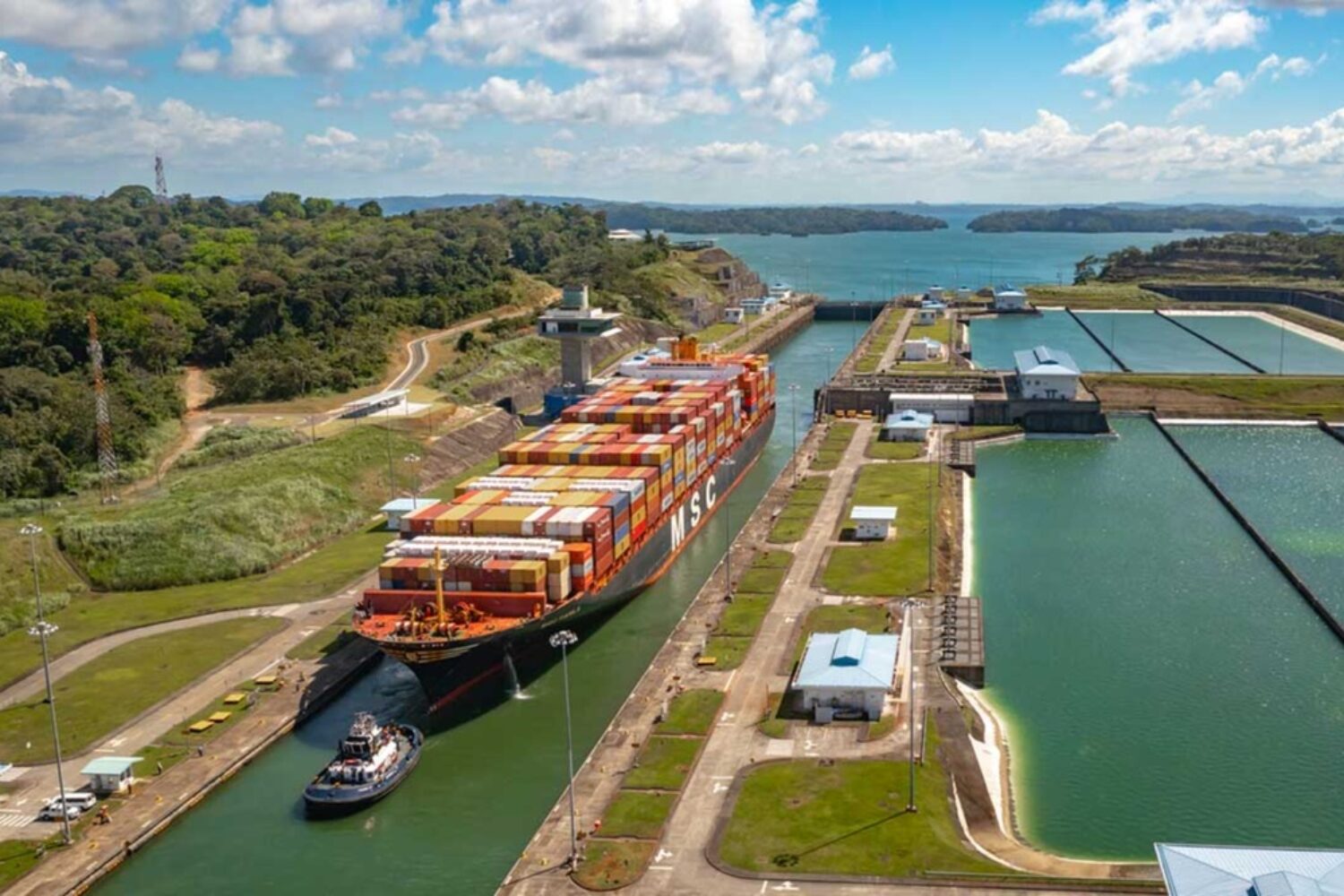
The Panama Canal is recording rising traffic figures again. In the first half of the 2026 financial year, which covers the period from October 2025 to March 2026, 6,288 transits were registered.
This was 224 more passages than in the same period of the previous year. The tonnage moved through the canal also increased: according to the canal administration, 254 million PC/UMS-t (Panama Canal System measured traffic volume) was handled, around 5 % more than the 243 million PC/UMS-t in the previous year.
The figures were presented as part of a virtual market update moderated by Anna Milne, Managing Director Emerging Markets Corporate Research at Bank of America Merrill Lynch. Administrator Ricaurte Vásquez Morales, Deputy Administrator and Chief Sustainability Officer Ilya Espino de Marotta and Chief Financial Officer Víctor Vial took part on behalf of the canal management.
According to the canal management, the operation of the waterway continues to run according to plan and without congestion despite the higher volume of traffic. The number of daily passages has increased significantly in recent months. In January, the average was 34 units per day, in March it was 37. On some peak days, more than 40 transits were recently achieved.
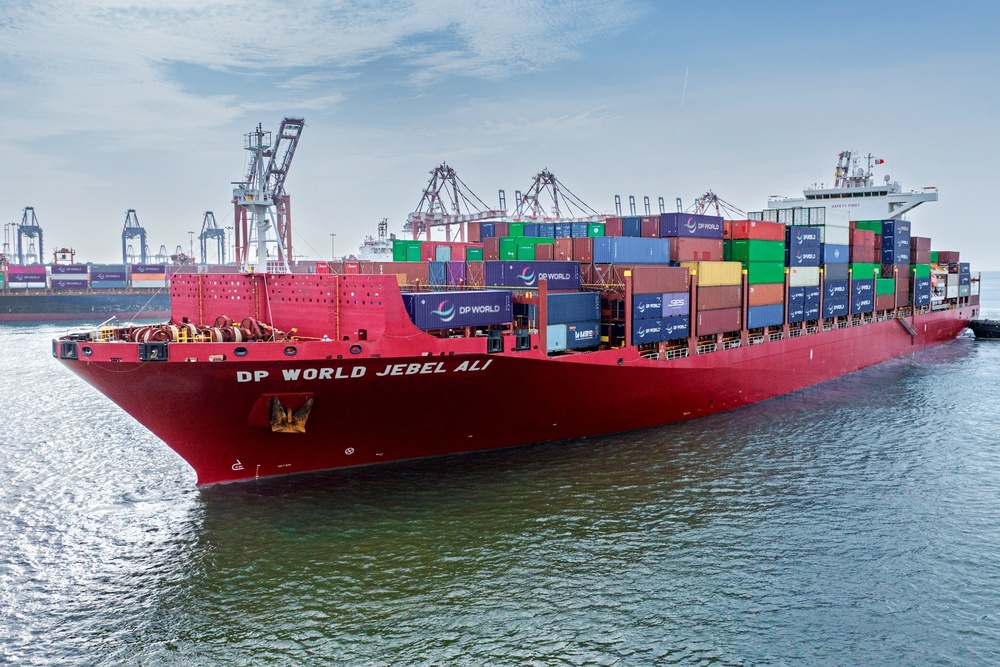
According to Vásquez Morales, traffic with container ships and liquid gas transports developed particularly strongly. Energy products are playing an increasingly important role in the volumes handled through the Panama Canal. The canal is “open and fully operational”, said the administrator. Around 9,000 employees ensure that the waterway is operated reliably. In view of geopolitical tensions and changing trade flows, the Panama Canal remains a reliable transport route. The water levels are currently at an optimal level so that the increasing volume of traffic can be handled.
Higher demand for reservation slots
Parallel to the increase in traffic, the demand for reservation slots has also risen. Chief Financial Officer Víctor Vial pointed out in the press release that individual ships had paid more than USD 1 million for short-term slots at auctions. However, these amounts were an expression of temporary market conditions and particularly high demand.
According to Vial, the average auction prices before the Middle East conflict were between $135,000 and $140,000. After the outbreak of the conflict, they rose to around $385,000 between March and April.
The Panama Canal offers its users several options for advance booking. These include the Long-Term Slot Allocation System (LoTSA) and a separate booking system for LNG ships. In principle, all ships must have a reservation prior to passage. Short-term reservations and an auction mechanism are available for ships without an early booking. Accordingly, three to five slots per day are allocated via auctions.
According to the canal administration, this system has no negative impact on reservations that have already been confirmed or the established order of transits. As the majority of ships book their passage in advance, there is currently no queue. The auctions relate to specific time slots that are already scheduled in the canal’s timetable.
Water levels currently at a high level
Another focus of the market update was the canal’s water supply. The operation of the Panama Canal depends largely on the water levels of the Gatún and Alhajuela Lakes. Following the severe drought of recent years, the canal administration is therefore continuing to monitor developments closely.
Vice-administrator Ilya Espino de Marotta explained that the canal is preparing for a possible El Niño event as a precautionary measure. Conditions have been monitored since the beginning of the year and water conservation measures have been implemented. Unusually heavy rainfall during the dry season has contributed to the fact that the Gatún and Alhajuela lakes are currently at their highest levels.
The aim is to maintain these levels for as long as possible in order to ensure the continuity of operations even in the event of a potentially stronger El Niño later in the year. According to the canal administration, it does not expect any significant restrictions between now and December. However, the situation will be closely monitored in order to enter the next dry season with the highest possible water levels.
“We do not expect any major developments between now and December, but are continuing to monitor the situation closely. We want to keep the water levels in the lakes as high as possible in view of the next dry season so that we can continue to provide a high-quality service,” says Espino de Marotta.