



Although it is a detour, Russia’s shadow fleet in the Baltic Sea is increasingly choosing the route along the German coast. This allows the tankers to avoid stricter checks.
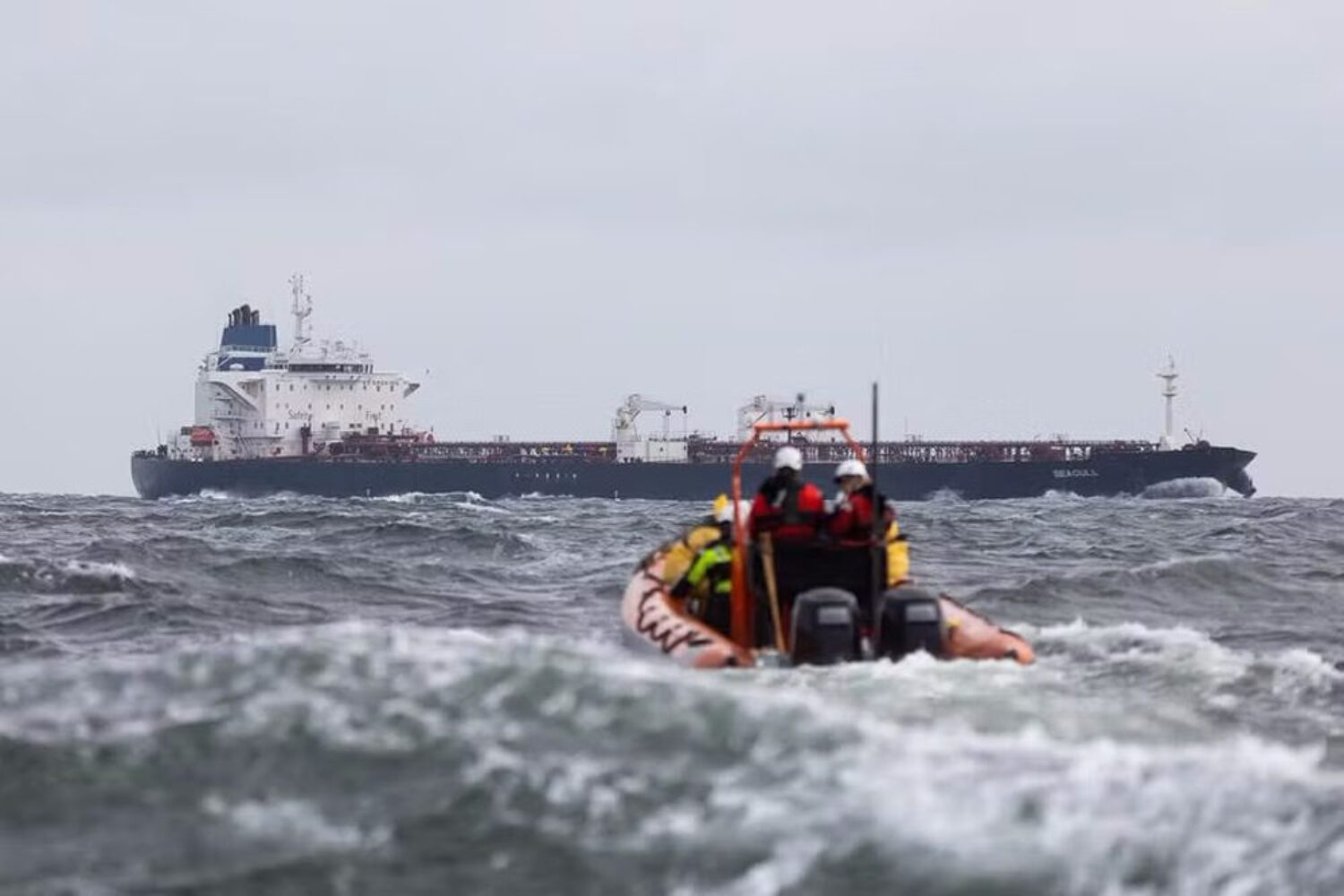
For several months now, an increasing number of tankers from Russia’s shadow fleet have been sailing in German waters. Their numbers have recently risen significantly, according to research by the environmental organisation Greenpeace. Between 6 March and 16 June, 42 out of a total of 136 tankers chose the longer Baltic Sea route, which runs along the German coast near Rügen. To describe this increase as “sharp” seems almost an understatement: during the same period last year, not a single tanker had chosen this route.
There is a Russian strategy behind this detour, as controls on the shorter route have now become significantly stricter. Sweden began carrying out more frequent checks between the Danish island of Bornholm and the Swedish mainland at the start of March. Four tankers from the shadow fleet were stopped in the process, and two of them were detained. The German coast, however, remains ‘safe passage’ for these ageing, poorly maintained and, in some cases, not even insured tankers: Germany continues to allow the ships to pass unhindered.
From Greenpeace’s point of view, this situation is untenable: “Because the German government is turning a blind eye instead of taking decisive action against Putin’s shadow fleet, more and more of these scrap vessels are sailing right past the German coast,” said Thilo Maack, a marine biologist at Greenpeace. “This is not only embarrassing, but also poses a massive environmental risk. The Swedish government is showing how to tackle Putin’s tankers, which are flying false flags and are therefore uninsured. German authorities must finally take action too and stop and inspect shadow fleet tankers sailing without a flag. We have demonstrated in an expert report that there is a legal basis for this. Furthermore, the German government must further develop German law and make sailing without a valid flag a criminal offence in future.”
Stricter controls would be possible
The tankers are coming closer to the German coast on their detour than many would like: the investigation reveals that 31 of the shadow fleet tankers sailing off Germany have even entered the 12-mile zone. Greenpeace stated that it had regularly reported ships flying false flags to the German authorities – along with a demand that the tankers be checked for valid insurance and flag states, and detained in the event of legal violations. “In no case has this led to on-board inspections by the authorities,” Greenpeace said. Yet a legal opinion had shown that the German government was “very much” in a position to order such inspections. Last July, the federal government had at least begun to ask tankers about their insurance status, at the same time as Sweden. In the north, however, they are now already one step further.
“In December last year, the EU Council of Foreign Ministers, with the support of the German government, declared that stateless tankers are considered to be without a flag, do not fall under international maritime law and can therefore be denied the right to peaceful passage,” Greenpeace stated. Tightening controls by Germany would therefore be perfectly feasible.
Tankers with machine guns
It is not only Sweden that has recently stepped up its response, but also the so-called shadow fleet itself – quite literally. According to research by the German public broadcasters Norddeutscher Rundfunk (NDR) and Westdeutscher Rundfunk (WDR), an armed tanker has been sighted for the first time. The “Marshal Vasilevskiy“, an LNG tanker built in 2018 for Gazprom and used to supply the Russian exclave of Kaliningrad, has been fitted with machine guns. Experts believe the weapons are intended as a precaution against potential Ukrainian drone attack
Apart from the fact that Russia continues to use these tankers to circumvent, unhindered, the sanctions imposed as a result of its war of aggression against Ukraine, the shadow fleet also poses an enormous environmental risk – particularly for a sensitive ecosystem such as the Baltic Sea. A large part of the German Baltic Sea coast would also be affected in the event of an oil spill. “German taxpayers would have to bear the costs of the clean-up operations,” says Greenpeace.