


The European Union plans to take stronger action against Russia’s shadow fleet. In addition to further sanctions on ships, at-sea boardings and restrictions on the sale of LNG tankers are also expected to play a role.
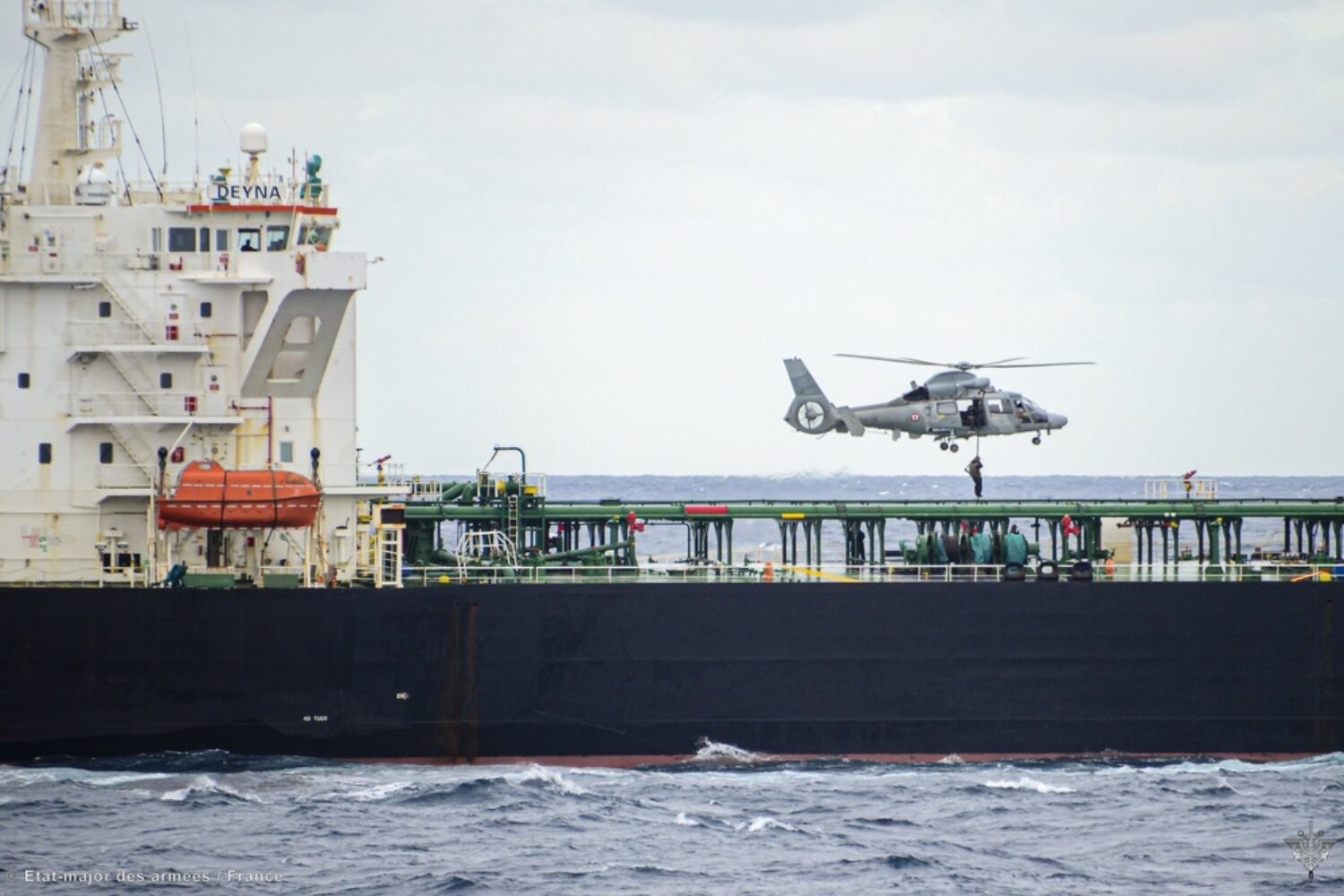
The EU is stepping up pressure on Russia’s so-called shadow fleet. According to EU Foreign Affairs Commissioner Kaja Kallas, the EU mission “Operation Irini” has amended its rules of engagement and has now begun boarding ships belonging to the shadow fleet as well.
The goal is to better coordinate member states’ handling of such vessels and to deprive Russia of revenue used to finance the war against Ukraine, Kallas said on the sidelines of an informal meeting of EU defense ministers in Nicosia. She noted that France and Sweden, among others, had recently inspected tankers.
Operation Irini was established in 2020 to monitor the UN arms embargo against Libya through aerial, satellite, and maritime surveillance. The mission is now also being cited in connection with the enforcement of measures against the Russian shadow fleet. According to the mission, the EU-sanctioned “Sandhya” was boarded in the Mediterranean on June 7 as part of a flag inspection. The basis for this was Article 110 of the UN Convention on the Law of the Sea (UNCLOS).
30 additional ships planned for the sanctions list
In parallel, the European Commission has presented its 21st sanctions package against Russia. According to Commission President Ursula von der Leyen, 30 additional ships are to be added to the list. This brings the total number of ships linked to the Russian shadow fleet on the EU sanctions list to 632.
For the first time, the list will also include vessels that support the shadow fleet, for example through bunkering or other services. Furthermore, the Commission proposes imposing sanctions on critical infrastructure such as ports, airports, or refineries if they trade in or process Russian oil.
Furthermore, the Commission intends to restrict the sale of LNG tankers to Russia. A similar measure had previously been introduced for oil tankers. This is Brussels’ response to Russia’s efforts to secure additional tonnage for the transport of liquefied natural gas.
The oil price cap is also to be adjusted. According to von der Leyen, the automatic adjustment mechanism is to be temporarily suspended until January of next year. The rationale is market turbulence resulting from the situation in the Strait of Hormuz. The Commission aims to prevent rising oil prices from increasing Russian revenues.
Separately from the Russia package, the EU Council has adopted new sanctions related to freedom of navigation in the Strait of Hormuz. Two individuals and one vessel are affected. Among those listed is the “Hormozgan Provincial Command” of the Islamic Revolutionary Guard Corps Navy, which is already subject to EU sanctions.
According to the Council, the IRGC Navy has taken control of the Strait of Hormuz and introduced a system requiring ships to transmit information on their identity, cargo, and destination. This information is forwarded to the Hormozgan Provincial Command, where decisions are made regarding which ships are permitted to pass through the strait, in some cases following the payment of fees.
In addition, Mohammad Akbarzadeh and Hamid Hosseini have been designated. The EU accuses them of supporting Iran’s actions that impede lawful transit and freedom of navigation. The sanctions include, among other things, the freezing of assets. EU individuals and companies are prohibited from making funds or economic resources available to the listed individuals and entities. Listed individuals are also subject to a travel ban to the EU.
Data leak provides first-ever insights into the crews of Russia’s shadow fleet
Meanwhile, a new data leak provides detailed insights into the crews of the Russian shadow fleet for the first time. The analysis examined data on approximately 85,000 crew members who called at Russian oil ports in the Baltic Sea between 2023 and 2026. The dataset, which was shared with international media by the NGO Dossier Center, also includes voyages by more than 700 tankers attributed to the shadow fleet.
Core of the investigation: Russia has apparently reacted to the tougher stance taken by Western nations. After several tankers were detained or inspected since late 2024, Russia began deploying more security personnel on ships of the shadow fleet starting in early summer 2025. In total, the researchers identified 83 individuals who are believed to have been on board as security personnel on more than 140 voyages. Many of them are said to have military experience, some from the regular army or the Wagner Group.
According to Western security agencies, these forces serve two purposes: they increase the risk for Western boarding teams, as they are believed to be armed. Additionally, they are said to discipline the often non-Russian crews and prevent them from cooperating too readily with Western authorities during inspections.
However, according to the data, a significant decline in these security forces has been observed since early 2026. At the same time, the shadow fleet appears to be under stronger Russian control. Accordingly, the proportion of Russian captains rose from about one-third in early 2023 to more than 75% in early 2026. In addition, some ships have recently switched to the Russian flag. This suggests that Moscow wants to exercise more direct control over these strategically important tankers.