


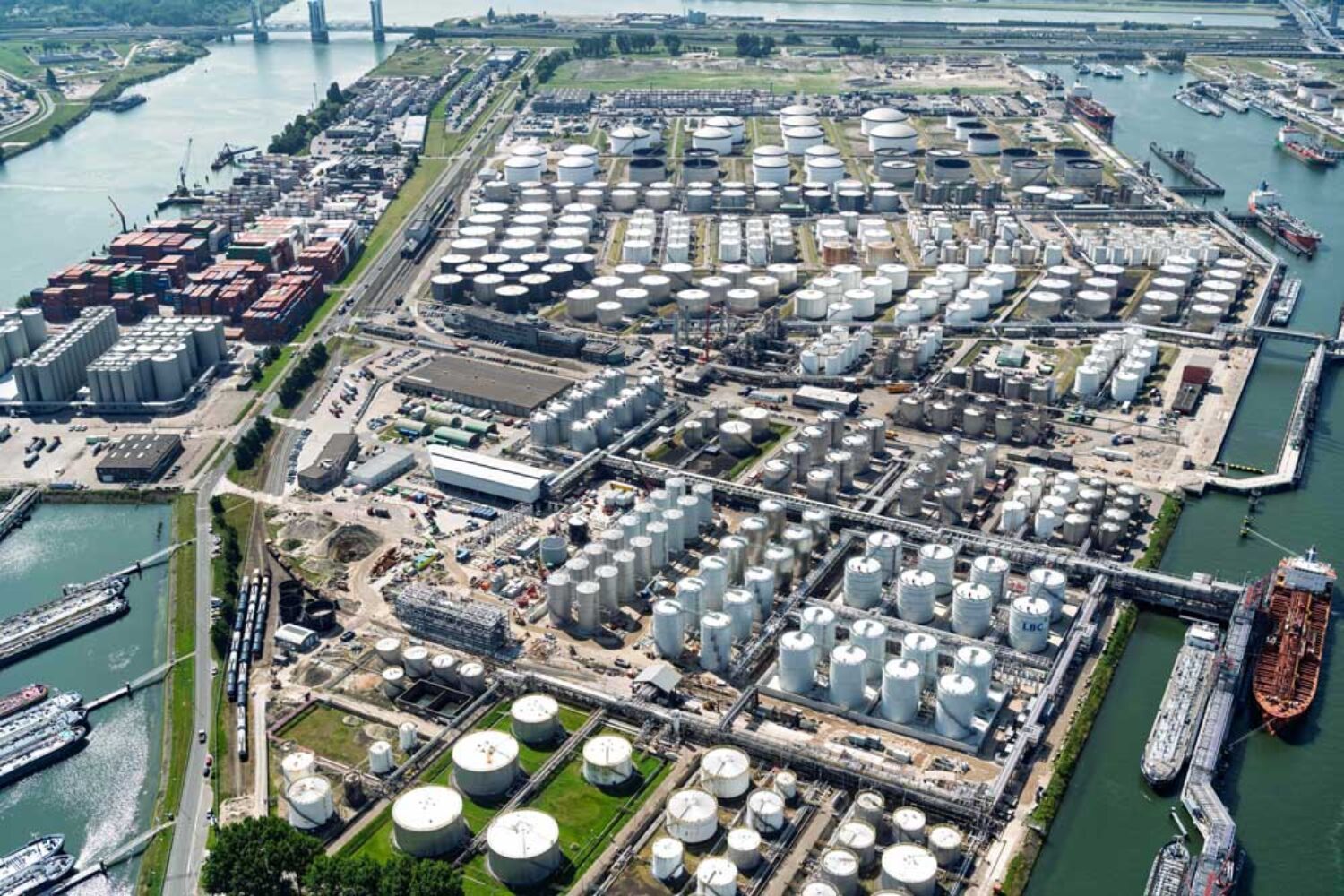
Total throughput at Europe’s largest seaport fell only slightly in the first quarter of 2026. There was a slight increase for oil and containers.
Compared to the same period last year, throughput in the port of Rotterdam fell by 0.7% in the first quarter and thus remained largely stable. In the first three months of 2026, 103 million tons of goods were handled, 700,000 tons less than in the first quarter of 2025.
This decline is primarily due to the lower handling of agribulk, coal, other liquid bulk and general cargo. The port recorded an increase in the handling of iron ore and scrap metal, other dry bulk, crude oil, oil products, LNG and containers.
“The closure of the Strait of Hormuz has severely impacted the global energy system,” the port authority said. Rotterdam depends on the Persian Gulf for 10% of its crude oil throughput and 14% of its oil products throughput. However, the impact of the closure of the Strait of Hormuz on throughput in the port is hardly reflected in the figures for the first quarter.
“Throughput in the port of Rotterdam remained largely stable in the first quarter of 2026, despite increasing geopolitical tensions,” said Boudewijn Siemons, CEO of the Port of Rotterdam Authority. “The closure of the Strait of Hormuz highlights the vulnerability of global energy flows; the impact of this is barely noticeable in the first quarter, but could intensify further in the second quarter. At the same time, growth in the oil, oil products and container sectors shows that Rotterdam remains stable as a European energy and logistics hub.”
The individual segments of dry bulk, liquid bulk, containers and breakbulk are listed below.
Dry bulk
Throughput of dry bulk fell by 4.3% in the first quarter. The sharpest decline of 20.9% was recorded in the handling of agribulk. According to the port authority, this decline is largely a “normalization”, as additional handling volumes were temporarily shipped via Rotterdam last year.
Coal throughput fell by 9.8% compared to the first quarter of 2025. The main reason for this is the decline in energy coal throughput, following “exceptionally high” production in 2025. Production returned to its usual level in the first quarter of 2026.
The handling of iron ore and scrap metal increased by 5.3% compared to the previous year. This growth follows the slight upturn in German steel production in the first quarter. German electrical steel production rose by 2.5% at the start of 2026. Scrap metal exports via Rotterdam were at a slightly lower level in this respect.
The throughput of other dry bulk also recorded an increase and is 4.6% above the 2025 level. This growth is due to higher demand for construction and industrial raw materials.
Liquid bulk
Throughput of liquid bulk increased by 2.2% in the first three months of this year. The throughput of crude oil rose by 1.7% to 25.2 million tons. “Refinery margins in January and February were similar to those in 2025,” the port authority announced. “They rose sharply in March after prices for crude oil and oil products increased due to the blockade of the Strait of Hormuz at the end of February.”
The throughput of petroleum products (gasoline, diesel, kerosene, etc.) is 10.3% higher than in 2025. Exports of petroleum products increased, while imports decreased. “One possible explanation is that most petroleum products were in backwardation, as in 2025, which does not incentivize storage. More gasoil/diesel was also exported to Spain and Gibraltar. Possibly because the Mediterranean is now an Emission Control Area (ECA) where the sulphur content of bunker fuel must not exceed 0.1%.”
LNG throughput increased by 1.7% compared to 2025 The low temperatures at the beginning of the year led to higher consumption, meaning that more imports are required to replenish reserves. Other liquid bulk fell by 7.2%.
According to the port authority, the decline was mainly seen in chemical products and can be partly explained by the fact that less was produced in Germany in January and February. This always has an impact on the handling of raw materials and finished products in Rotterdam.
Containers and general cargo
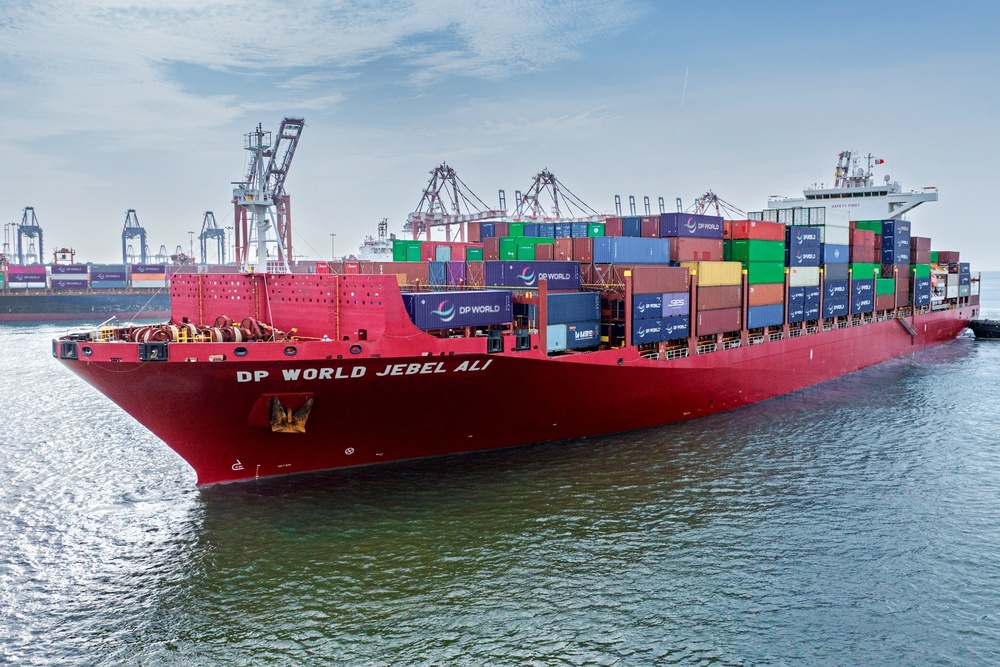
Container throughput in Rotterdam increased by 0.3% compared to the first quarter of 2025. However, trading volumes were lower than expected due to an update of the Terminal Operating System at one of the major container terminals.
Throughput in tons fell by 3.2%. This is due to the sharp 14% increase in exports of empty containers, particularly to Asia. The number of full containers in the Asian trade also increased.
“Throughput volumes remain under pressure and fell by 26%,” according to Port of Rotterdam Authority. “It is expected that throughput volumes will only increase again once the container terminal expansions have been completed.”
The flow of hinterland containers increased strongly by 11%. This growth is primarily attributable to Asia and North America, where order volumes increased and the range of services was expanded.
The general cargo segment recorded a decline of 1.5%. “The markets in the automotive, construction and mechanical engineering sectors remain under pressure,” analyzes the port authority. As a result, the handling of aluminum and steel fell. The RoRo volume rose slightly by 1.6% due to the slight recovery of the UK economy.
Effects of the closure of the Strait of Hormuz
As mentioned at the beginning, the situation in the Persian Gulf has not yet had a particularly strong impact on Rotterdam. To put this into perspective: a total of 19 million tons, or 4.4% of total throughput in Europe’s largest seaport, is accounted for by countries in the Gulf catchment area. “This mainly relates to crude oil from Iraq and Saudi Arabia, kerosene from Kuwait, heavy fuel oil from Saudi Arabia and gas oil/diesel from Qatar,” explained the port authority. “No LNG is shipped from Qatar to Rotterdam. Around two thirds of the LNG handled in Rotterdam comes from the United States.”
Asia is more dependent on imports of crude oil and petroleum products from the Middle East than Europe, it added. The blockade of the Strait of Hormuz led to rising prices for oil products in Asia immediately after the blockade began. Due to Asia’s greater dependence on the Middle East, this increase was greater than in Europe. “At least five tankers that were on their way to Rotterdam shifted their course to Asia due to the higher prices,” said the Port Authority. These effects are therefore expected to lead to a lower inflow in the second quarter of 2026.
The same applies to imports of petroleum products from the Middle East, which will also be reflected in the figures in the second quarter, due to the transportation time from this region. As the refineries in Rotterdam are operating at full capacity, this could lead to an increase in exports.
For the container segment, the impact of the closure of the Strait of Hormuz is limited. The direct container volume to and from the Middle East accounts for 1.2% of the total volume. However, the port authority warns of indirect effects of the war. These would manifest themselves in an economic downturn and falling purchasing power, which would have an “even greater impact on the container segment”.