




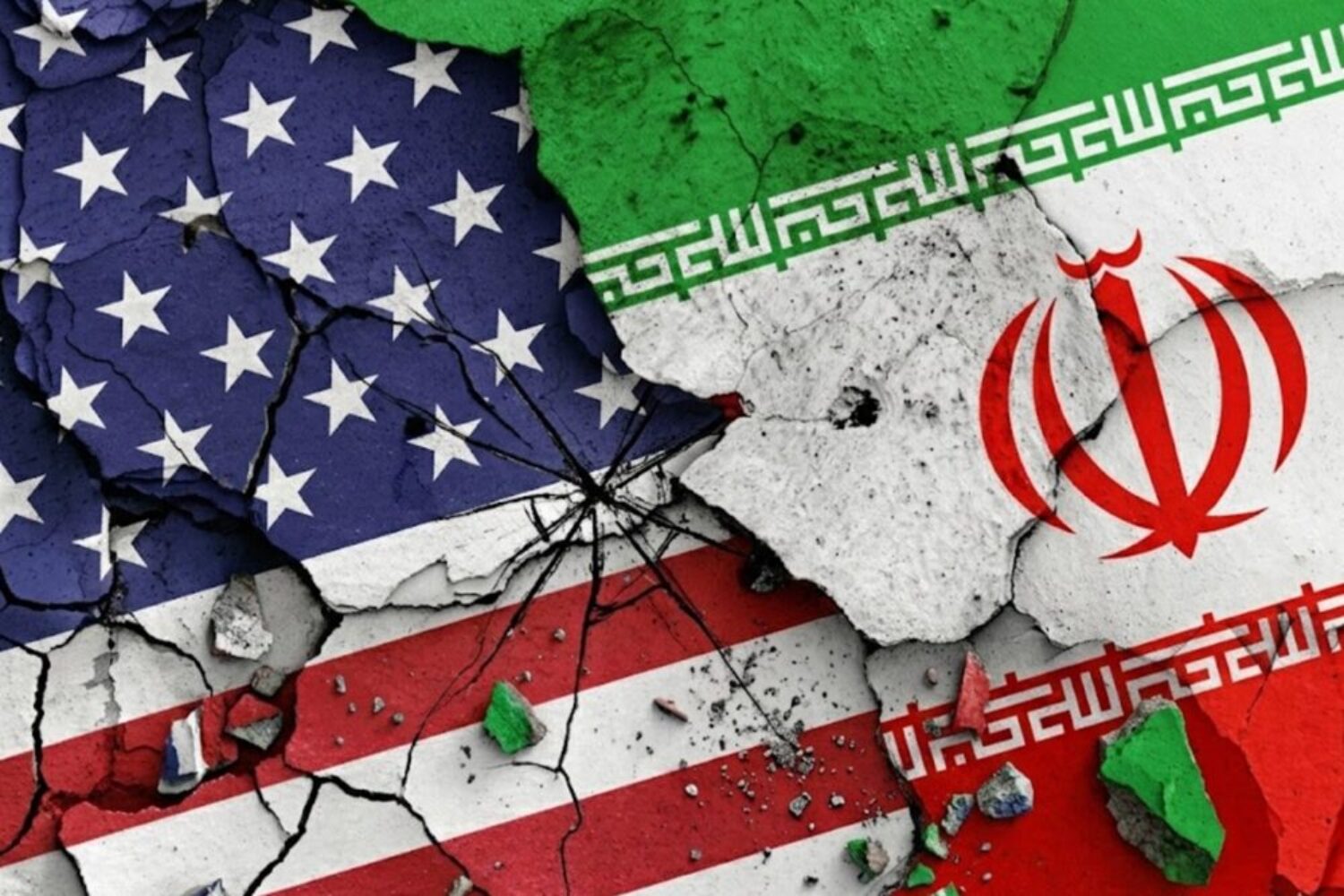
The announced two-week ceasefire between the USA and Iran could initially lead to ships stuck in the Persian Gulf preparing to leave.
However, Bimco believes that shipowners and crews will not act hastily, but will wait for specific instructions on safe passage through the Strait of Hormuz.
Jakob Larsen, Chief Safety & Security Officer at Bimco, emphasizes that ships want to leave the Persian Gulf “as quickly as safely possible”. However, this requires technical details from the USA and Iran on how safe transit of the strait is to be organized in practice. An unplanned or uncoordinated exit is currently not advisable due to the increased risks.
Narrow channel increases risk of collision
Larsen cites the narrow channel of the Strait of Hormuz as a key problem. If too many ships want to leave at the same time, the risk of grounding or collisions increases. In addition, the security situation remains tense. Iran has announced its intention to control the passage. At the same time, the country’s military command structure has been considerably impaired by the attacks of recent weeks. Misunderstandings between the Iranian authorities authorizing transits and the armed units on the ground could therefore not be ruled out. This poses the risk of unintentional attacks, even on ships that have been cleared in principle.
Bimco does not expect merchant ships to be escorted by navies
According to Larsen, Iran still has considerable military means at its disposal to control shipping traffic in the strait, including anti-ship missiles, drones, fast attack boats, coastal artillery and mines. However, Bimco does not expect a military escort of merchant ships by navies in the short term. The practical implementation of the ceasefire is still too uncertain for this. Should the negotiations fail, warships in the Strait of Hormuz would themselves be vulnerable. Escort could only become an option at a later stage.
Niels Rasmussen, Chief Shipping Analyst at Bimco, expects that if the passage is classified as safe, the ships that have been blocked in the Persian Gulf to date will want to leave as soon as possible. As far as possible, they would take on cargo before departure, but only if this would not jeopardize the chance of a departure within the two-week window.
However, Rasmussen does not expect many ships to return to the Gulf quickly for the time being. On the one hand, many units have now sailed to other areas. Secondly, the risk of being stranded in the region again after the two weeks is too great. Even if the situation normalizes after the ceasefire expires, the consequences for the oil market and exports are likely to be felt for some time to come. Rasmussen points out that production in several fields will first have to be restarted and damaged infrastructure repaired.
Shipping organization ICS welcomes ceasefire
The International Chamber of Shipping (ICS) also welcomed the announced conditional ceasefire. Secretary General Thomas A. Kazakos explained that the agreement could be a first step towards more stability in the region. The news was a relief for the approximately 20,000 seafarers who had been on the front line of this crisis. At the same time, he called for the swift restoration of freedom of navigation. It was now crucial that states worked together with the shipping industry to enable orderly and unhindered passages through the Strait of Hormuz. This would require close coordination between the industry and states inside and outside the Gulf region.