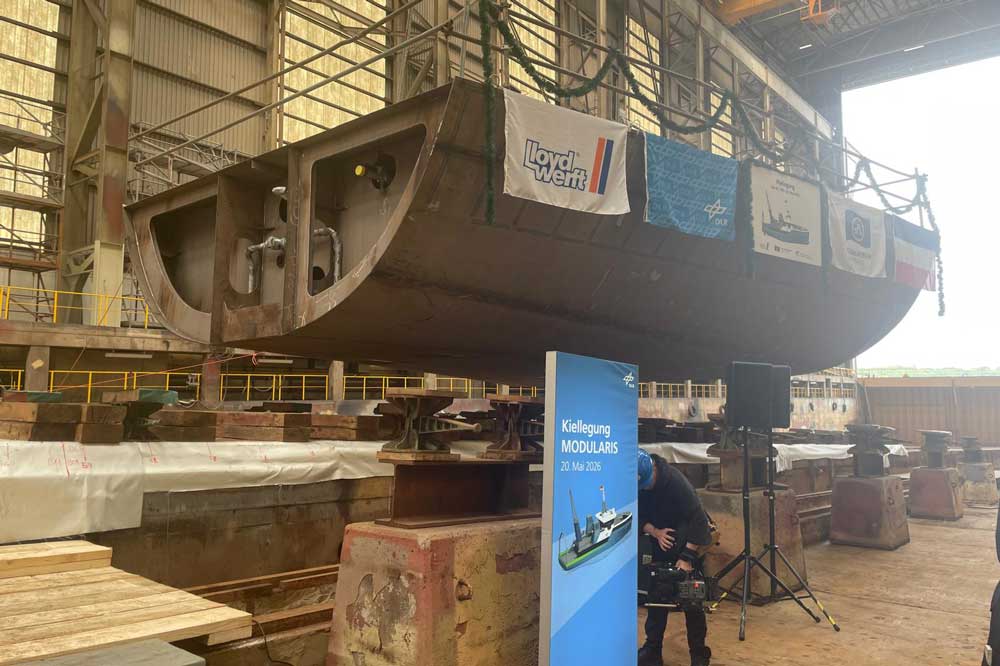




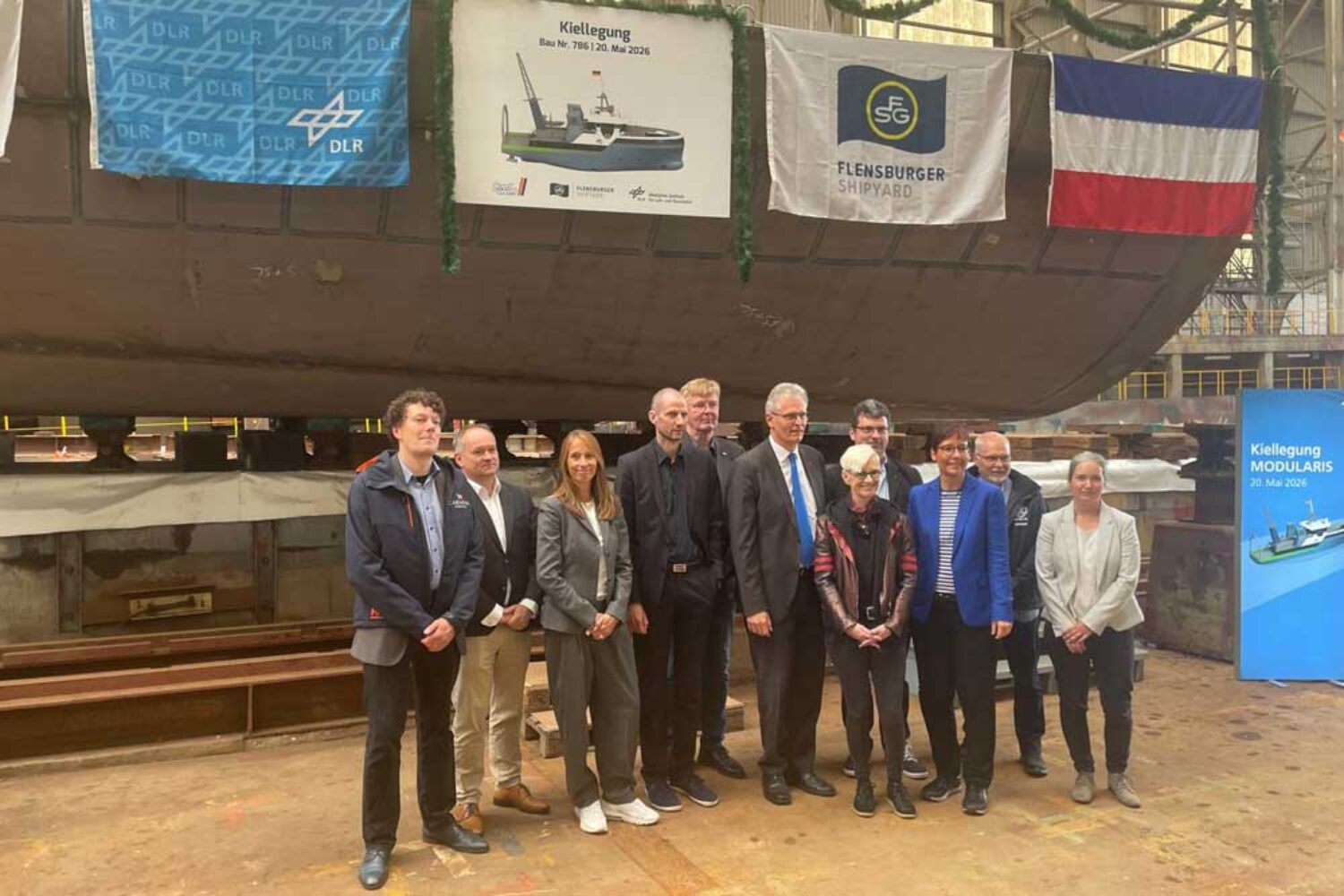
Following the steel-cutting ceremony in February, a new research vessel for the German Aerospace Center (DLR) was laid down today.
The 48 m long and 11.5 m wide ship will serve DLR as a seagoing platform for researching technologies related to resilient and climate-friendly shipping, autonomous navigation, as well as security and defence.
During the keel-laying ceremony, the shipyard also unveiled the vessel’s name: “Modularis”.
According to DLR, the name reflects the modular nature of the concept. The vessel, described as a seagoing research platform, is intended to be used by both civilian maritime companies for testing new technologies and by the navy. In particular, the Wehrtechnische Dienststelle 71 (WTD 71) in Eckernförde plans to use the platform for its own purposes.
The vessel will primarily operate in the North Sea and Baltic Sea on test voyages ranging from one to several days. Climate-friendly propulsion systems, including technologies based on hydrogen and batteries, will be tested and further developed in the “floating laboratory”. Research projects in the fields of security and defence are also planned.
The final outfitting will take place at the Lloyd Werft shipyard in Bremerhaven from this fall. After completion, the ship will have its home port in Kiel. Lloyd Werft was awarded the contract to build the ship last February. However, as no hulls are built in Bremerhaven, the Heinrich Rönner Group awarded the steel construction to the Flensburg shipyard. The shipyard, formerly known as FSG, was saved from insolvency by Rönner last winter, while Lürrsen took over the Nobiskrug shipyard in Rendsburg.
At the keel-laying ceremony for the first 29-ton section, FSG Managing Director Frank Mallon thanked Lloyd Werft, among others, for the trust it had placed in him. He was delighted about this milestone and also about the speed at which the construction of the ship is progressing. After the planned launch next fall, the “Modularis” will be transferred to Bremerhaven for final outfitting. Delivery is planned for summer 2027.