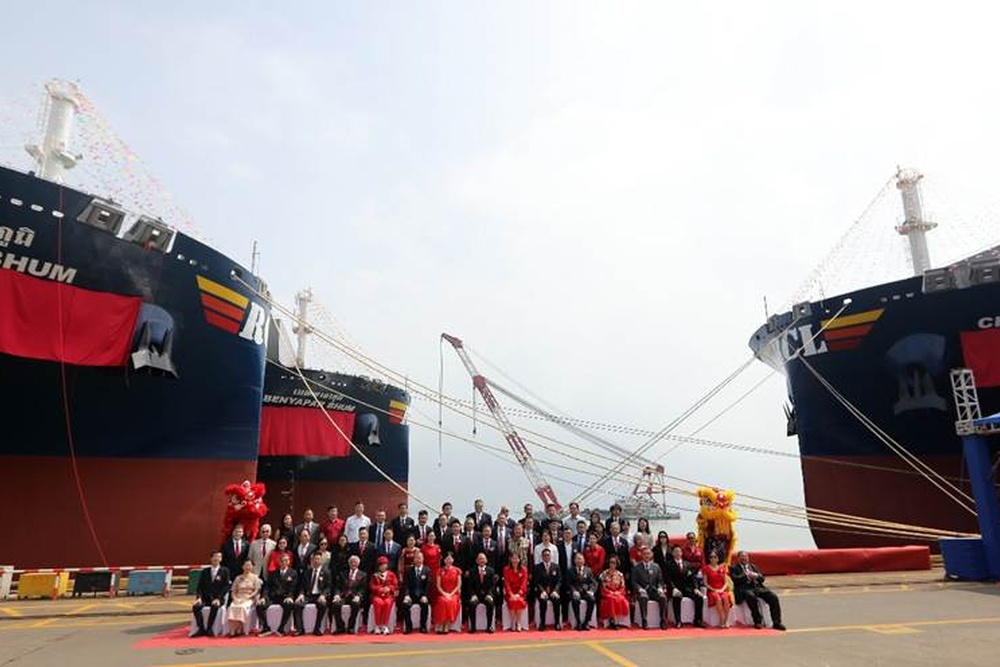




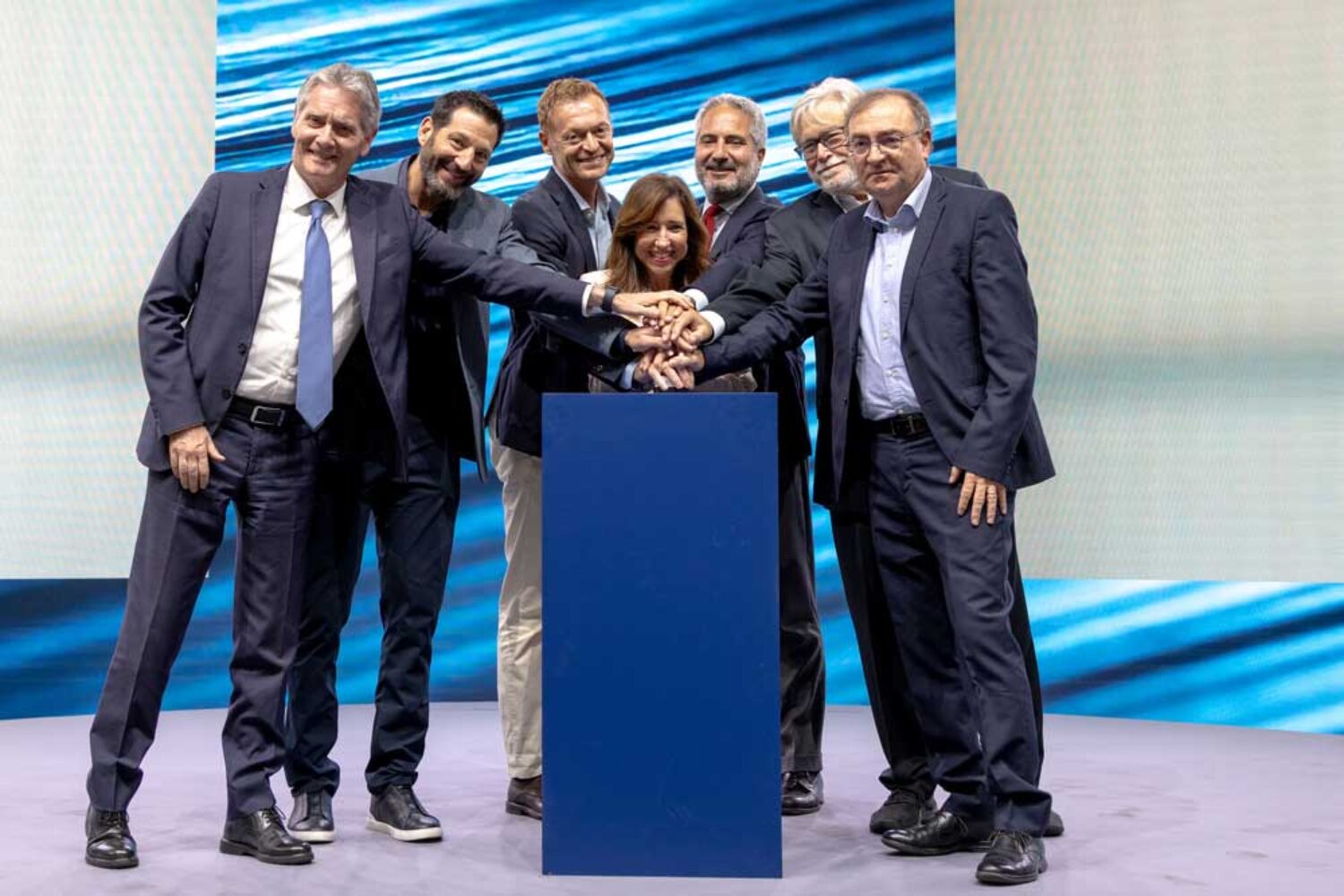
The Italian shipbuilder Fincantieri has begun work on the “Carnival Destiny”. The steel-cutting ceremony also marks an anniversary with its partner, Carnival.
The “Carnival Destiny”, which is being built at the Monfalcone shipyard, is the first of three “Ace”-class ships that Carnival Cruise Line has commissioned from Fincantieri. The partners also marked their 30th anniversary with the steel-cutting ceremony: in 1996, the Italian shipyard delivered its first ship to the cruise line, which bore the same name as the new vessel. The “Carnival Destiny” of that time was the first cruise ship with a gross tonnage of more than 100,000 GT. Since then, Fincantieri has delivered 76 ships to Carnival Corporation, 15 of which were for Carnival Cruise Line.
The newest ship is due to be delivered in 2029, with its sister ships to follow in 2031 and 2033. A great deal has changed over the last three decades: the next “Carnival Destiny” will significantly surpass its namesake, with a gross tonnage of 230,000, and will also be the largest ship Fincantieri has ever built in Italy. “This milestone underlines the further development of Fincantieri’s design and shipbuilding expertise and marks the company’s entry into the segment of ships with more than 220,000 GT,” Fincantieri stated.
Carnival’s LNG-powered “Ace-class” ships will have more than 3,000 cabins and, at full capacity, accommodate over 8,000 passengers. According to the shipyard, the new ships will be equipped with advanced technologies to improve energy efficiency, optimise waste management and reduce emissions, with a view to further minimising their overall environmental impact.
The company’s main shipyard
The construction of the ‘Ace-class’ ships for Carnival also confirms the strategic importance of the shipyard in Monfalcone in north-eastern Italy, the group’s main production facility. More than 45 cruise ships have already been built there; around 6,500 people are employed there every day. According to Fincantieri, extensive investment in infrastructure and production has strengthened the site’s capabilities, enabling it to handle increasingly complex projects and larger ships by adapting facilities, processes and technologies to the requirements of the new generation of cruise ships. “Today, the shipyard is a key driver of industry and employment in the region, as well as a central pillar for innovation and the further development of shipbuilding,” the shipbuilders state. Most recently, Princess Cruises also placed an order for three new ships, which are to be built in Monfalcone.
For Carnival Corporation, too, the construction of the “Carnival Destiny” marks a new chapter. It is set to become a “mega-ship” with the strongest focus on the sea to date: a large number of the cabins will offer sea views, whilst a newly designed lanai deck with 18,000 m² of glass surface area is intended to provide a view right through the entire ship.
“The ‘Carnival Destiny’ continues a tradition that has already transformed the cruise industry once before by redefining the at-sea experience for guests,” said Christine Duffy, President of Carnival Cruise Line. “With this ship, we are taking the guest experience to a new level: it feels more spacious and open, whilst at the same time fostering a sense of community amongst guests and ultimately ensuring even more fun.”
The “Carnival Destiny” will call at destinations in the Caribbean, the Bahamas and Mexico. Further details on the ship’s facilities and on-board experiences are to be announced later this year.