




The number of container ships and car carriers equipped with dual-fuel drives has almost doubled in the past year. The proportion in the order books is also increasing.
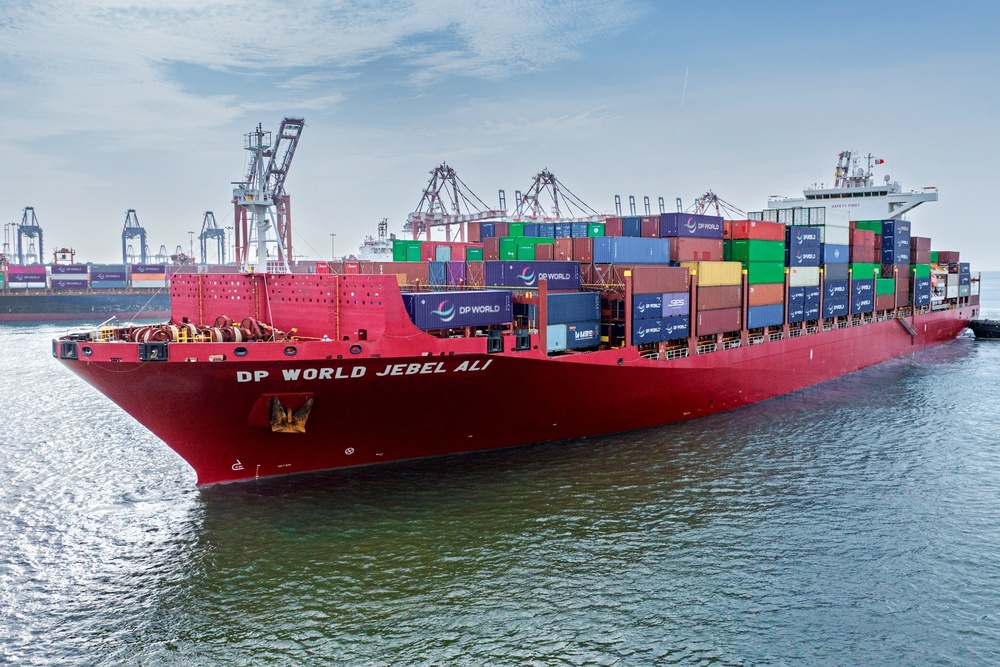
In December 2025, the global fleet of container ships and vehicle transporters with dual-fuel propulsion grew to 400 for the first time. Compared to the previous year, it is almost two times larger: in 2024, 218 ships were still equipped with such propulsion systems. This is according to an update from the World Shipping Council (WSC), which tracks the share of the fleet in the “Dual-Fuel Fleet Dashboard”. In the overview, the WSC presents the investments made by the global liner shipping industry in new ships that can be powered by renewable and lower-emission fuels, such as methanol or ammonia. The figures make it possible to follow the energy transition in the shipping industry.
Dual-fuel technology now also accounts for a significant share of global order books. Despite numerous deliveries last year, there are still 726 ships on the books – that is 74% of all orders for container ships and 87% for car carriers. In other ship segments, the share is significantly lower: Only 21% of orders are for dual-fuel propulsion systems.
This means that the number of dual-fuel ships already in service or still under construction has risen to a total of 1,126. Compared to the previous year, this represents an increase of 28%. According to the WSC, this figure corresponds to an amount of 150 billion dollars invested by the industry in new ships.
“The expansion of the dual-fuel fleet illustrates the scale of ongoing investment across the liner shipping industry,” says the WSC. “These ships are designed for the energy transition and can be converted to renewable and low-emission fuels as soon as they are economically viable and widely available.”
Largest share for LNG and methanol
Methanol has played an increasingly important role in new orders for container ships in recent years. Since 2022, the proportion of ships that can be operated with this fuel in the future has grown to 2.37 million TEU. In contrast, methane – in the form of LNG – remains the most popular alternative with 5.98 million TEU. However, LNG is not primarily a renewable form of energy, but also a fossil fuel (with the exception of bio-LNG and synthetic e-methane). Conventional heavy fuel oil propulsion still accounts for 2.34 million TEU, which is only slightly less than methanol.
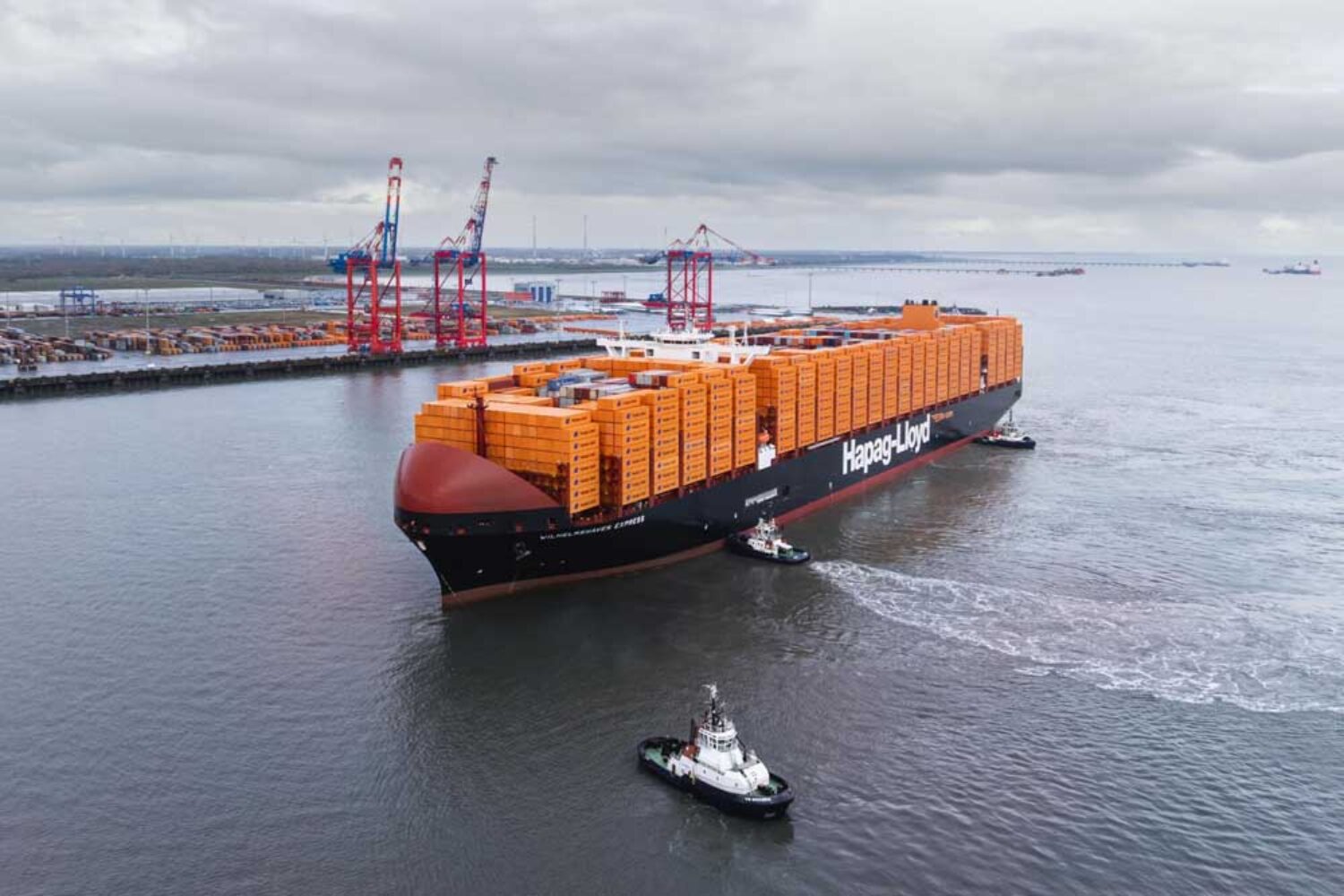
Hapag-Lloyd is one of the shipping companies that rely heavily on methanol. The twelve ships in the “Hamburg Express” class are equipped with dual-fuel propulsion systems and are designed to run on methanol. The shipping company recently ordered eight more dual-fuel newbuildings in China. (JW)