



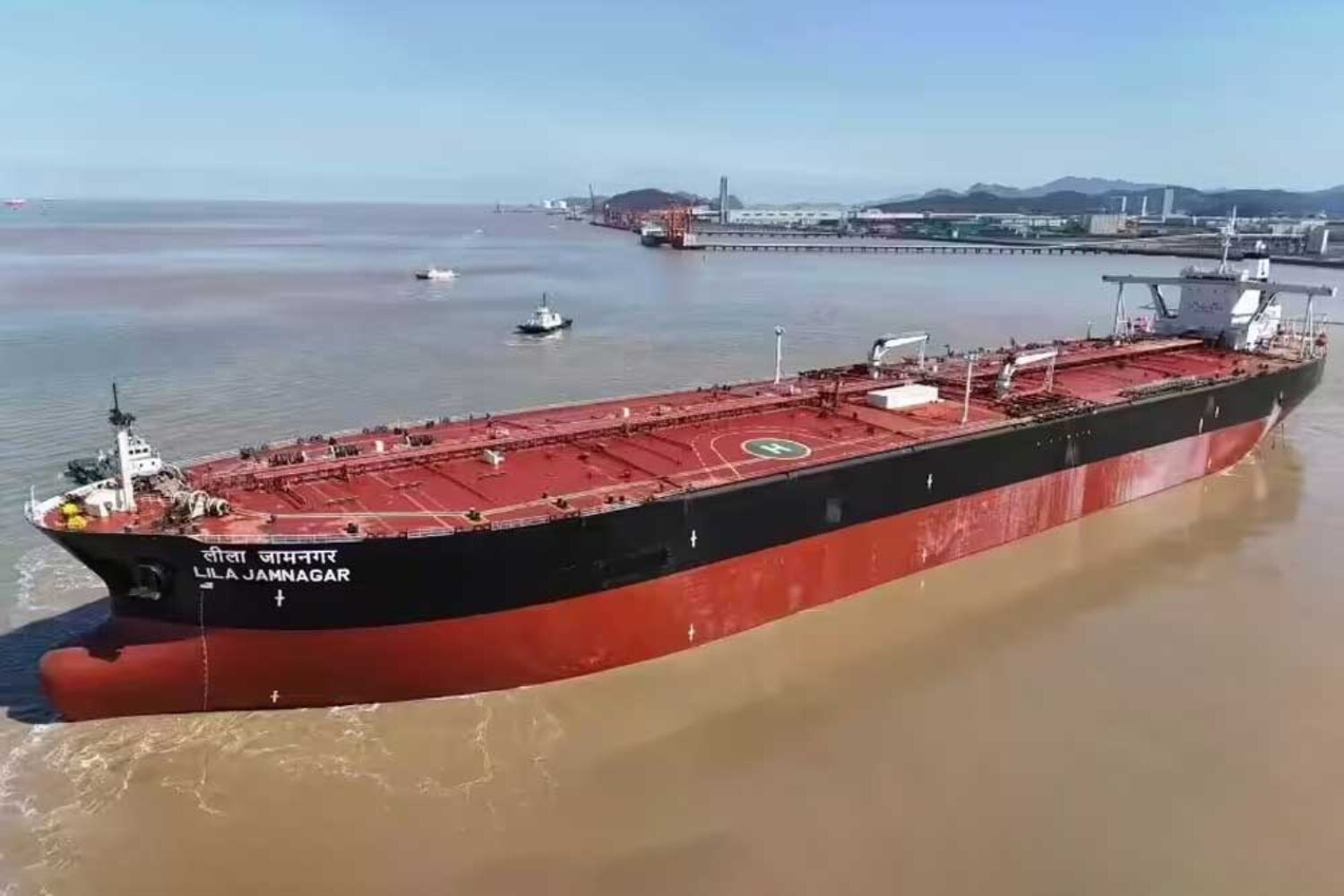
Greek shipowners, in particular, have triggered a rush for new VLCC-class tankers: the order book is growing, and newbuilding activity is reaching new heights.
In a recent market report, the consultancy firm Maritime Strategies International (MSI) refers to an “astonishing year”: the volume of orders for VLCCs is breaking historical records.
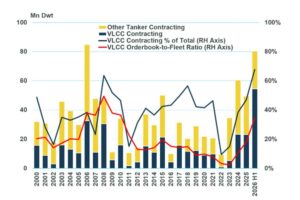
In the first half of 2026, the order book for VLCCs (Very Large Crude Carriers) saw a massive increase, which, according to the report, far exceeded previous annual records.
MSI reports orders for 177 VLCCs with a total capacity of 54.5 mill. dwt for the first half of 2026. The ratio of the order book to the existing fleet stood at around 35% in June – a significant increase from just 2% in 2023.
Even if no further orders had been placed in the second half of the year, the volume for the first half of 2026 would already have marked a historic high for VLCC orders and far exceeded the second-highest figure – 32.6 mill. dwt in 2006 – by a wide margin, according to the report.
Looking at the tanker market as a whole, the total order volume was already approaching the 80 mill. dwt mark by the end of June as a result of the boom in very large crude carriers (VLCCs), thereby exceeding MSI’s original forecast for the full year.
As the chart shows, the previous peak for VLCC orders was in 2006 (32.6 mill. dwt), with the ratio of order book to fleet also standing at around 38%. However, the global VLCC fleet at that time was only about half the size it is today.
Around 83% of the vessels ordered in the first half of 2026 are due to be delivered in 2028 and 2029. As a result of the VLCC orders placed in the first half of the year, the number of deliveries scheduled for 2028 has more than doubled, which could put considerable pressure on the future market balance.
“2026 is already proving to be an astonishing year for order intake in the tanker segment: Western shipowners – led by Greek companies – accounted for around half of the VLCC orders placed in the first half of 2026, whilst Asian buyers accounted for around a quarter of the orders,” explained Jialin Xu, an analyst at MSI. The five largest orders for VLCCs (Very Large Crude Carriers) all went to Chinese shipyards; in total, Chinese shipbuilders accounted for around 89% of the contracts signed in the first half of the year. Hengli Shipbuilding emerged as the leading player, securing 55% of the country’s orders in the first half of the year, followed by Jiangsu New Hantong with 14% and Dalian Shipbuilding Industry Co with 11%.