



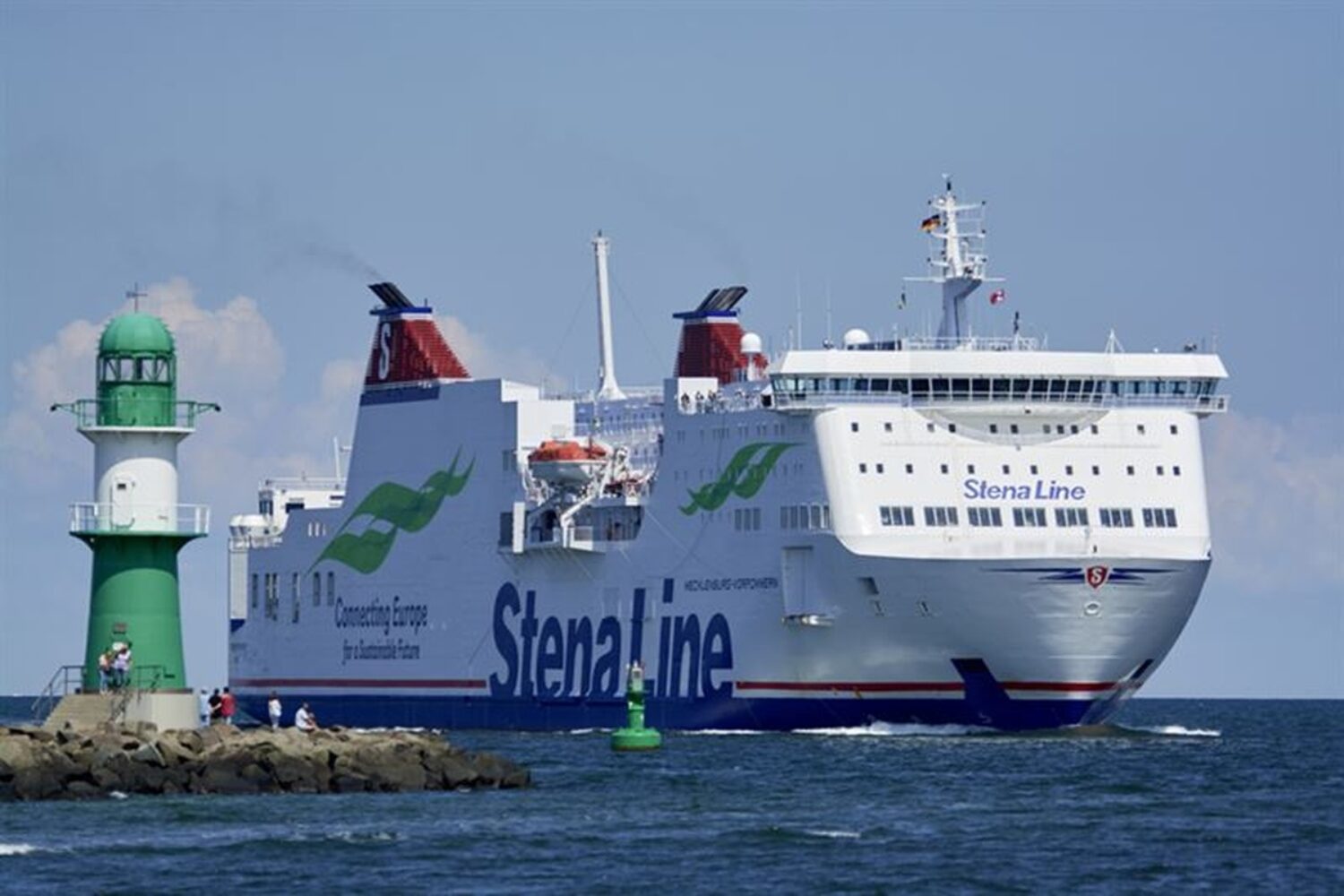
The shipping company Stena Line is investing in new engines for the two ferries operating on the Rostock–Trelleborg route. All four engines on each ship are to be replaced whilst the vessels remain in service.
Following the agreement for Swedish support for rail ferry services on the Rostock–Trelleborg route, which runs until 2031, Stena Line is now turning its attention to the vessels in service. As the shipping company announced today, a sum in the millions is to be invested in new engines for the two ferries operating on the route.
The vessels concerned are the “Mecklenburg-Vorpommern” and the “Skåne”. According to the company, all four engines on each ship will be replaced. The replacement will take place whilst the ships remain in service and is due to be completed by early 2027.
With this measure, Stena Line aims to improve the efficiency of the existing ferry system and extend the service life of the vessels. The new engines are also intended to enable the use of alternative fuels as soon as these become widely available.
Freight and passenger numbers stable at Stena Line
Operationally, too, Stena Line considers the route to be stable. On the Rostock–Trelleborg route, the shipping company is maintaining passenger numbers at the previous year’s level. According to the company, travellers on this route traditionally book later than those on the Kiel–Gothenburg route.
In freight transport, volumes have stabilised at a slightly higher level compared with the previous year. Stena Line expects a slight increase in the number of wagons in direct rail freight transport via the two rail ferries in the coming weeks. The company cites the closure of the Öresund Bridge as the reason for this.
“As a second route to Scandinavia, our rail ferries are an important part of Northern Europe’s rail infrastructure, a fact recognised by the cooperation agreement with the Swedish transport authority, which runs until 2031,” emphasises Mikko Juelich, Trade Director and Managing Director of Stena Line Germany. On the German side, too, opportunities are being identified to secure rail operations in the long term in collaboration with all stakeholders.
Juelich also pointed to rising costs, including for fuel and higher pilotage charges at the Rostock site. Stena Line nevertheless intends to continue investing in the route and to build on existing partnerships.
According to its own figures, Stena Line operates 40 ships on 19 routes, with around 35,000 sailings per year in Northern Europe and the Mediterranean. In Germany, the shipping company operates from three ports and two locations, including Hamburg and Rostock.