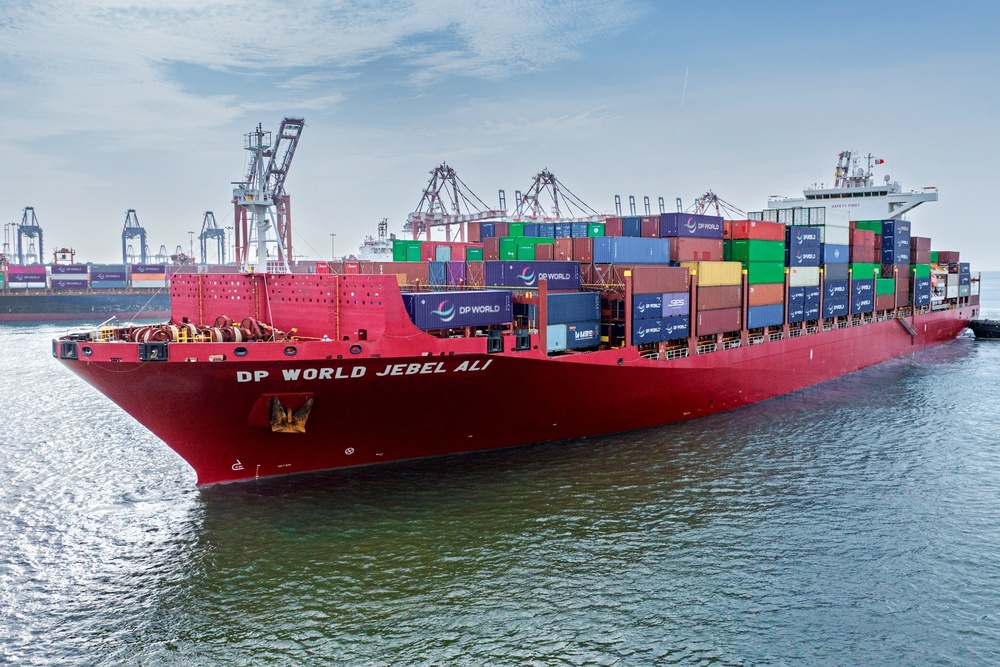






Civilian merchant shipping in the Strait of Hormuz remains in Iran’s crosshairs. A political-military protection mission is nowhere in sight. This is fatal.
This text is part of the March issue of “HANSA International Maritime Journal”. Given the time between sending the issue to press and having it sent out to the readers, it will likely be outdated by the time it will arrive in the physical postboxes – the situation in the Middle East is far too dynamic to expect any significant stability in developments. For example, it remains to be seen whether Iran will respond to Trump’s bomb threat if Tehran does not lift the blockade of the Strait of Hormuz.
Some might consider this an unfortunate opening to such an article. However, it is simply an attempt to draw attention simultaneously to the “Iran War” and the very dynamics that are having such disastrous consequences for the maritime industry.
Once again, it is clear: Shipping is a prerequisite, a driver, and a beneficiary of international trade. But it is also the one who suffers when political disagreements escalate into wars. “Suffering” here refers primarily to the human factor. An unfathomable number of ships are trapped in the Middle Eastern Gulf, under attack from missiles and drones. As the example of a Hapag-Lloyd vessel chartered by Maersk demonstrates, the threat is both extreme and widespread, not only for oil tankers: struck by missile fragments as “collateral damage.”
Tens of thousands of innocent seafarers must be evacuated – and there are fatalities. This cannot be justified by any military preventive or retaliatory actions. It is simply unacceptable. Politicians are called upon to ensure the protection of these people, without whom they would have to forgo a significant share of raw materials, consumer goods, and infrastructure for their electorate.
In the April issue, we will, of course, address the war. It is an attempt to strike a first balance after roughly four weeks of war and four weeks of threats to shipping. It is to be feared that further assessments will be necessary.
So, dear readers, if this text is not entirely up-to-date when you see it: please accept our apologies. But it has at least achieved one goal: to highlight the fatal dynamics at play in the relationship between wars and the maritime industry. Even if Trump’s threat has an effect, that doesn’t guarantee safe passage.
The situation may have worsened in the meantime. If so, it becomes all the more clear that political protection is needed more than ever. The fact that Trump, NATO, and the EU can’t agree on military escorts for merchant ships is disastrous. Concerns about the responsibilities of NATO and the EU’s Aspides mission in the Red Sea remain. But frankly, how many times in history have we seen that such problems can indeed be resolved through political maneuvering? If necessary, it must be possible to manage without a larger framework. There’s still the Combined Maritime Forces, just for example, a cooperation of “willing partner” for military action in specific maritime areas. It might not be the ideal solution, but if it helps …