


Almost 10 million tons of fuel were bunkered in the port of Rotterdam last year. Demand for alternatives to heavy fuel oil is increasing.
As Europe’s largest seaport, Rotterdam in the Netherlands is also one of the continent’s most important bunkering ports. Last year, seagoing vessels bunkered a total of 9.8 million tons of fuel in the port, a slight increase of 3,000 tons compared to the previous year.
LNG (liquefied natural gas) accounts for a steadily growing proportion of this: For the first time, the amount of LNG bunkered in the port exceeded 1 million m3. Bio-LNG is still a small but growing volume. In 2025, a total of 17,644 m3 of gas from biological sources was bunkered, a six-fold increase compared to 2024 (with 2,775 m3). The situation is similar with bio-methanol: according to the Port of Rotterdam Authority, 11,819 tons were bunkered last year, compared to 3,946 tons in 2024.
The total volume of so-called bioblends (blends of bio and conventional fuel) declined by 14%. Only from the third quarter of 2025 did the volume of bioblends increase again, after having decreased in 2024. “The decline in the second half of 2024 was due to the increased availability of bioblended fuels in Asia after the European Union imposed anti-dumping duties on Chinese biodiesel,” the Port Authority said.
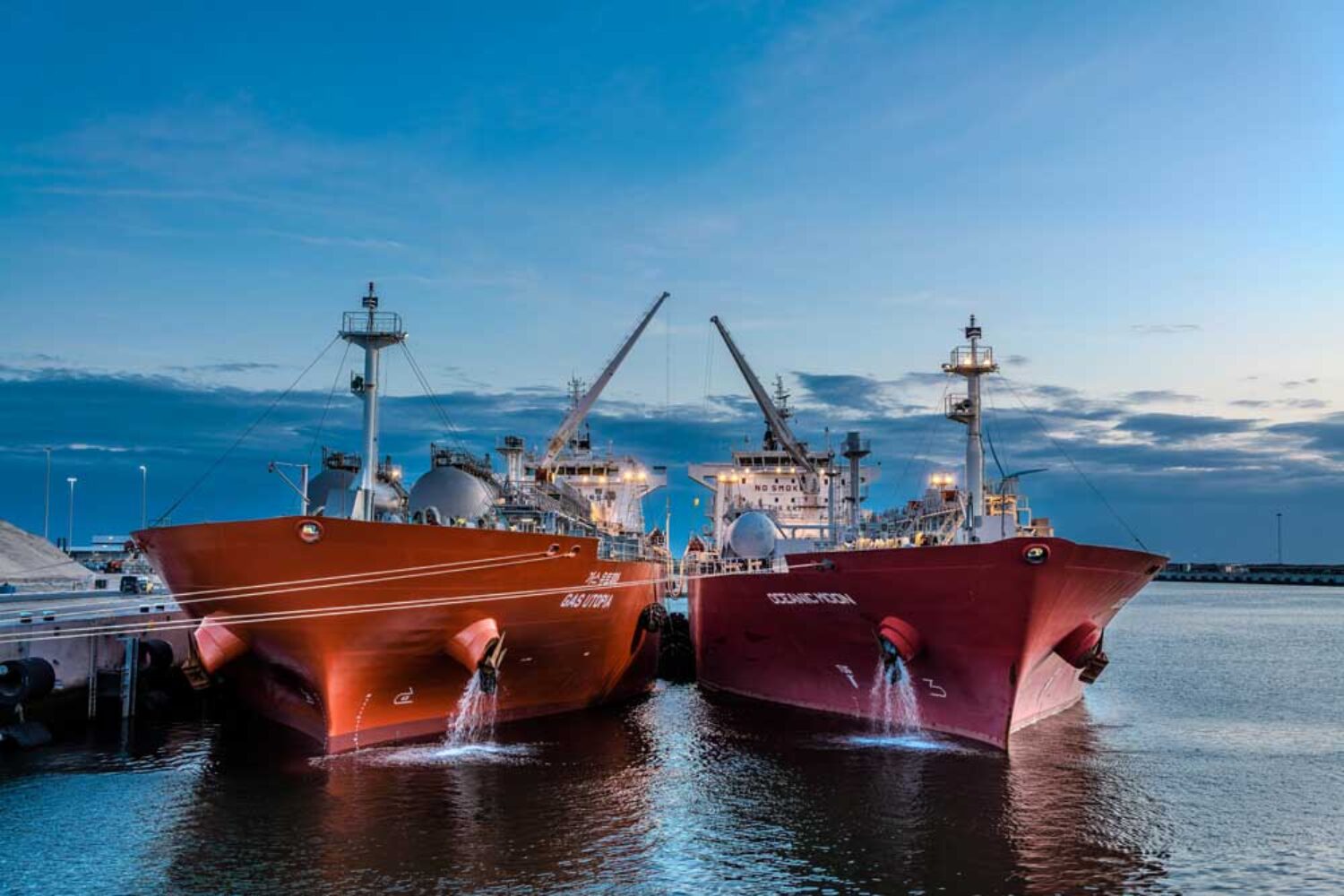
The port of Rotterdam is also preparing for a growing share of ammonia. In April 2025, the first ammonia transshipment operation between two ships in the port took place at the quay wall of a terminal. With this first test, the port is preparing for ships that will bunker the alternative fuel in the port in future. The strategy is also in line with Rotterdam’s environmental targets: emissions in the port area are to be significantly reduced by 2030, and operations are even to be completely climate-neutral by 2050.
The move away from conventional heavy fuel oil or marine diesel is a growing trend in the shipping industry: numerous newbuilds in the container and RoRo segment are now being equipped with dual-fuel engines and prepared for operation with alternative fuels. LNG accounts for the largest share, followed by methanol.