


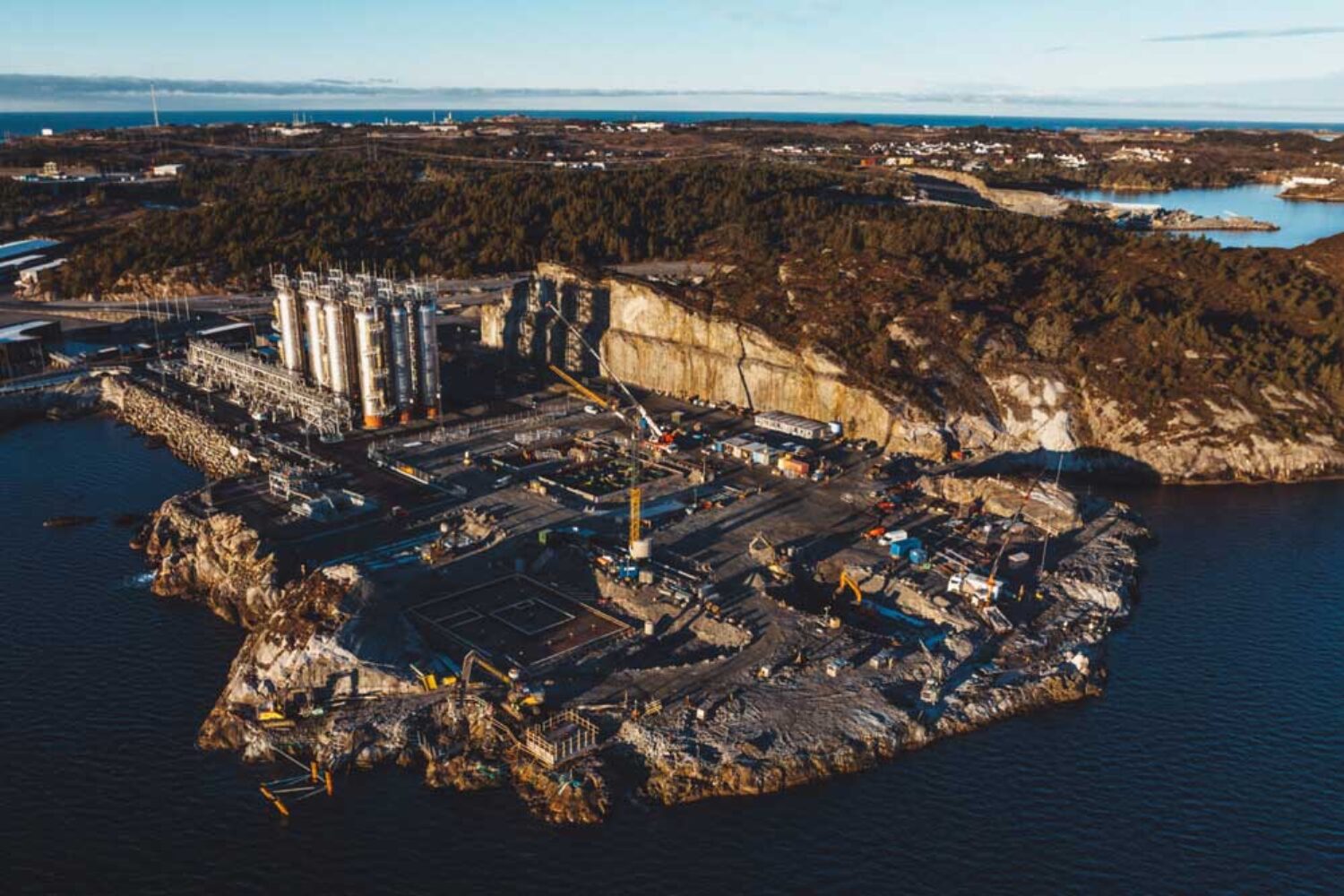
The Northern Lights project has entered its second phase as planned. In future, it should be possible to transport and store significantly more emissions.
The final investment decision was made in 2025, and planning for the Northern Lights project is now progressing. Work is already underway on the details, the Øygarden reception terminal near Bergen is taking shape and the production of important components is also underway, according to reports. Phase 2 of Northern Lights is funded by the EU’s Connecting Europe Facility.
The expansion in phase 2 will “more than triple” the transport and storage capacity, according to a statement from the project. While the current capacity is 1.5 million tons, it should be possible to store more than 5 million tons of CO₂ by 2028. To make this possible, new onshore storage tanks and pumps as well as a new jetty for larger and more frequent CO₂ deliveries will be installed in phase 2. Two new offshore injection wells, an expanded underwater pipeline system and additional ships specially designed for transporting CO₂ will also be added.
Construction work on land in Øygarden already began in August 2025. The most important ongoing work concerns the second jetty as well as foundation work for additional storage tanks and a new substation. This infrastructure builds directly on the operational phase 1 system, which received and stored its first quantities of CO₂ in 2025.
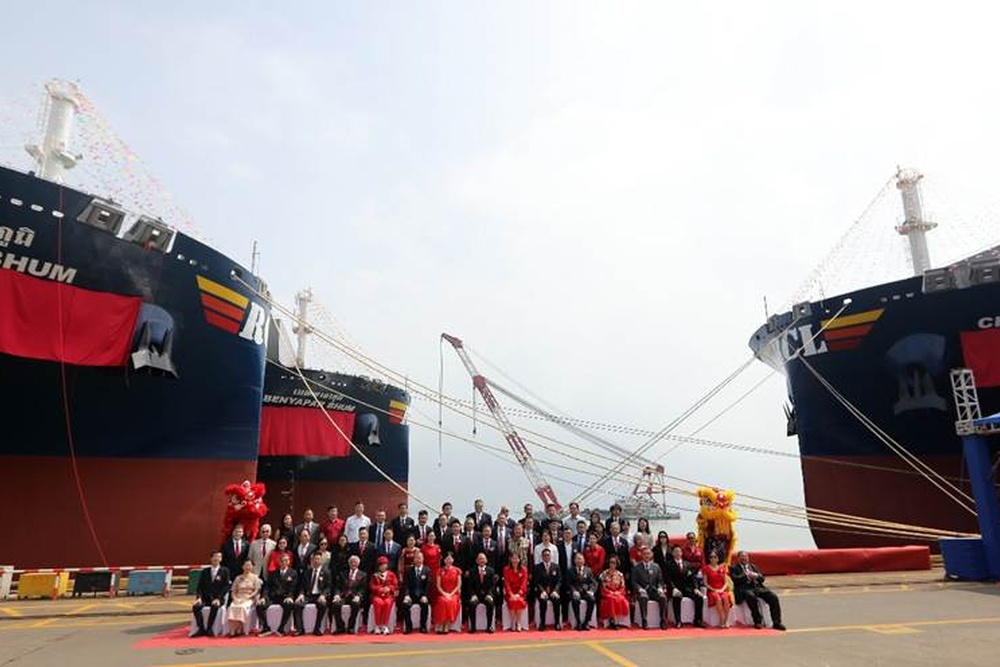
In order to be able to transport more carbon, the Northern Lights fleet will be doubled from the current four to a total of eight ships. They will be delivered in 2028 and 2029. “These next-generation vessels will serve a growing network of European loading ports and help accelerate the deployment of carbon transportation and storage across the continent,” a Northern Lights statement reads.
To date, five companies from Sweden, Norway, Denmark and the Netherlands have signed long-term contracts with Northern Lights for the storage of CO₂. Interest from other industries is growing steadily. The undersea storage of CO₂ is one way of decarbonizing operations that cannot be easily electrified.
The German Bundestag also recently approved the storage of CO₂ in the North Sea. However, the German North Sea Coast Protection Association (Schutzgemeinschaft Deutsche Nordseeküste, SDN) warned of unforeseeable consequences for the environment and pointed to a lack of empirical data.