


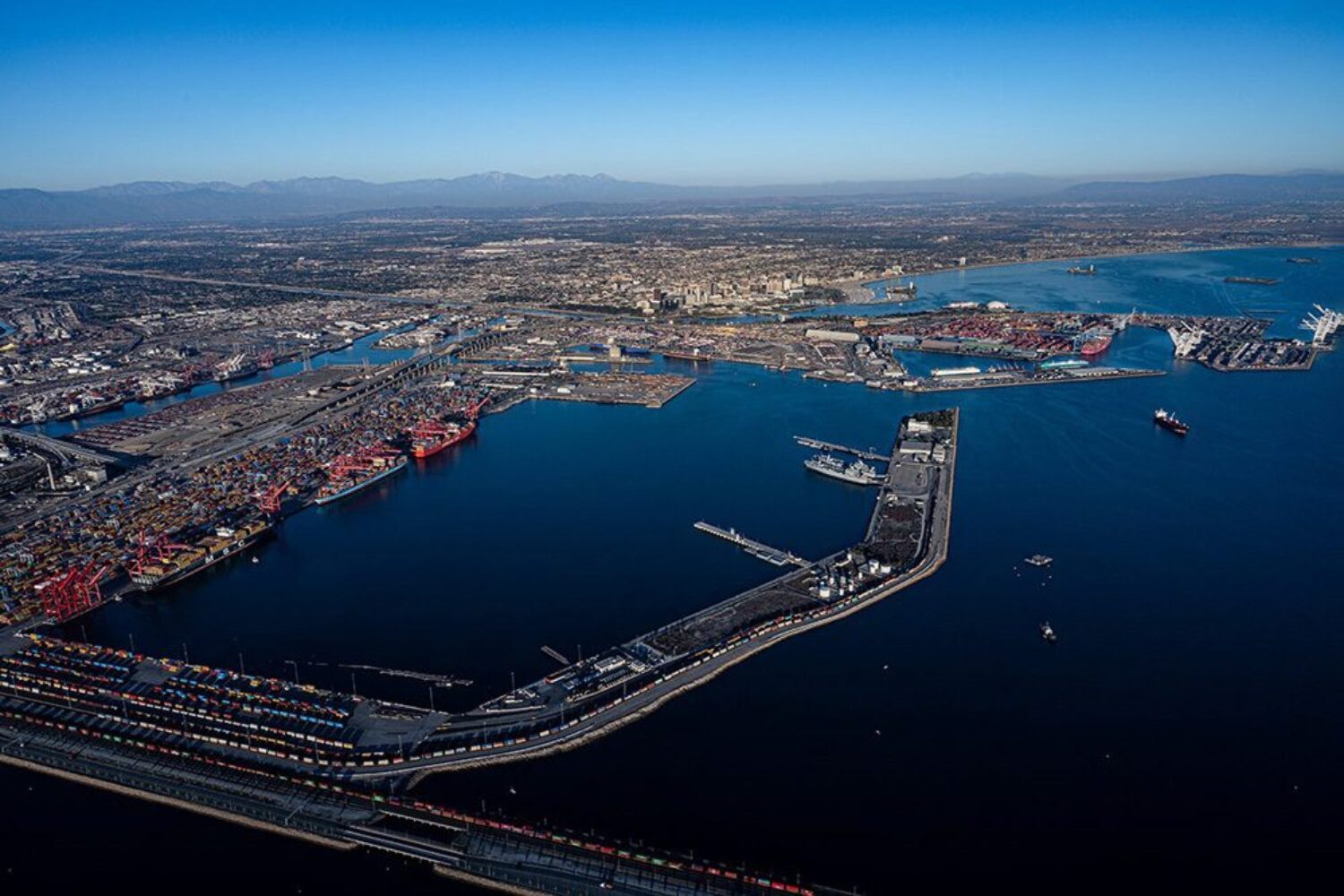
Along with Los Angeles, Long Beach is by far the most important container transhipment hub on the US west coast. A multi-billion investment programme is set to drive its development forward. The target: 20 million TEU.
The Long Beach Port Commission has approved an annual budget of $1.05 billion to realise the new CEO’s vision of doubling container throughput. Around 55 per cent of the expenditure is earmarked for investment in rail infrastructure, zero-emission technologies and other improvements, according to a statement issued following the decision. The aim is to efficiently manage the growing volume of freight whilst minimising the environmental impact.
Planned expenditure for the 2027 financial year, beginning on 1 October, is 28.6 per cent higher than the estimated expenditure for the 2026 financial year. The increase reflects a 53.7 per cent rise in capital expenditure compared with the previous year to $571.8 million, as work on the ‘Pier B On-Dock Rail Support Facility’ – the port’s largest project – is set to be accelerated. The increased expenditure is also intended to help create the necessary infrastructure to realise new CEO Noel Hacegaba’s vision for 2050: “to double cargo volume to 20 million containers a year by the middle of the century, whilst transforming the port into the world’s first zero-emission port.” The ten-year investment programme, worth $3.3 billion, is the most extensive of any port in the US.
To put this into perspective: 2025 was Long Beach’s strongest year to date in terms of container throughput: 9.9 million TEU passed through the docks, comprising 4.8 million import TEU, 1.2 million export TEU and 3.9 million empty containers. The previous year’s figure stood at 9.65 million TEU.
The budget for the coming year also provides for $54 million in funding as part of the ‘Clean Trucks Programme’. This is intended to support lorry drivers and haulage companies in switching to zero-emission heavy goods vehicles for port transport.
“This budget sends a strong signal to our partners in the supply chain: we are optimistic about the future and are determined to double our cargo capacity by 2050,” explained Hacegaba. “Our industry-leading investment plan, worth US$3.3 billion, will help us achieve this goal as we transform our operations and shape the port of the future.”
Construction of Pier B began in July 2024. The project is set to triple the capacity of the port’s rail facilities located directly on the quay and reduce the time taken to tranship goods from ship to rail from four days to 24 hours. Various sub-projects are currently underway, which will deliver additional benefits upon completion; the facility is scheduled for full completion in 2032.
The port currently handles goods worth $300 billion annually. Long Beach is also one of 18 so-called “strategically significant US commercial ports that must support troop movements in the event of a defence emergency”.