



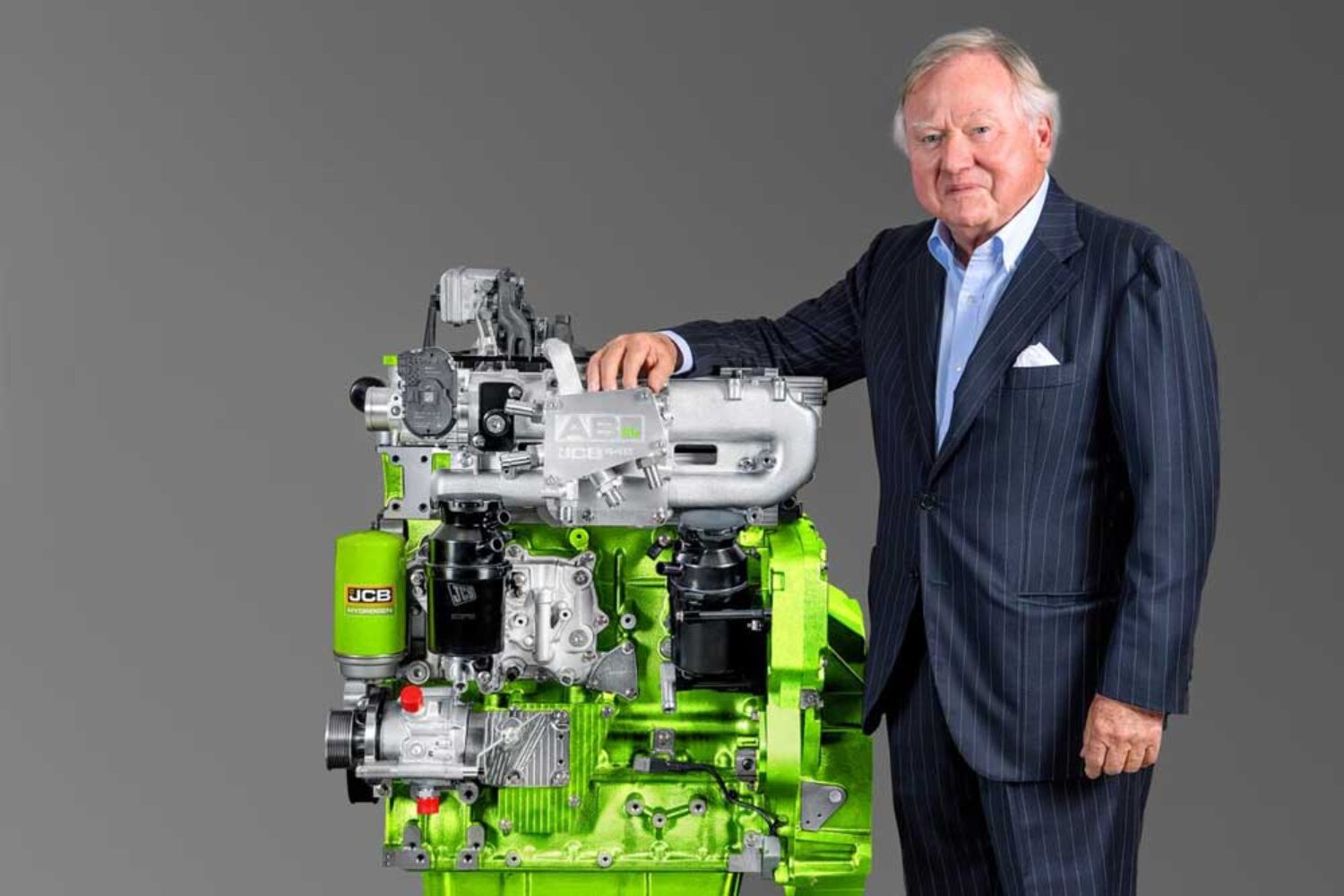
The mechanical engineering company JCB has received approval for a hydrogen combustion engine. It can now be used commercially in Europe.
A team of 150 engineers has developed the world’s first engine of this type. The cost: US$121m. What does this technology mean for shipping?
Eleven regulatory authorities across Europe have granted approval for the sale of the new type of engine, including Germany. Other countries are expected to follow suit this year. JCB announced that it had already started the first test runs with customers. Practical testing is well advanced and makes the manufacturer confident. The company primarily supplies construction companies and the agricultural sector.
“This is a very significant moment for JCB,” said Chairman Anthony Bamford. “To start the new year with certification in so many European countries bodes very well for the future of hydrogen combustion technology. JCB has proven in recent years that it is a true zero-emission solution for construction and agricultural machinery.”
JCB initially uses engine in agricultural machinery
So far, there has been no talk of commercial use on board a ship. Whether a hydrogen-based combustion engine can hold its own against conventional or alternative fuels such as methanol remains to be seen in practice.
Unlike fuel cells, JCB’s engines work on the conventional principle of an internal combustion engine – the only difference is that pure hydrogen is used as fuel. This significantly reduces emissions compared to established fuels, as only water and small amounts of nitrogen oxides are produced during combustion. However, they are not completely emission-free.
Furthermore, JCB did not initially provide any information on the efficiency of the engine. Compared to fuels based on oil and gas, pure hydrogen has a very low density, meaning that larger quantities are required for the same output. As far as the engine’s emissions are concerned, it is not only the direct combustion that plays a role, but also the production of the hydrogen. This must be obtained by electrolysis – an energy-intensive process for which the infrastructure must also be in place. Projects for this are taking place in Hamburg, among other places, where a “Sustainable Energy Hub” is being created.