



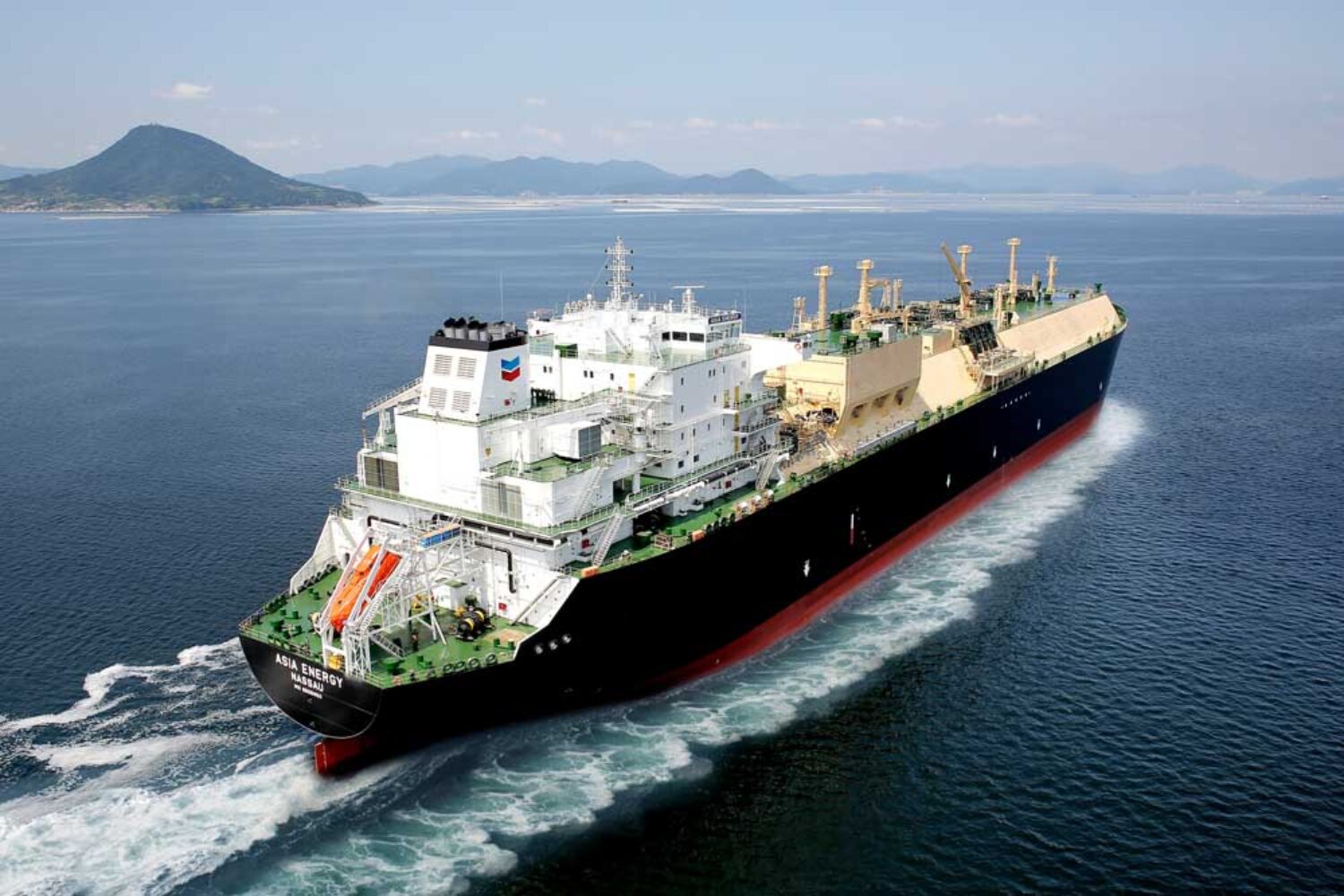
The technology group Wärtsilä has converted one engine on each of three LNG tankers operated by Chevron Transport Corporation – a subsidiary of the US energy group Chevron – from dual-fuel to spark-gas operation. The aim is to reduce methane slip.
Following the retrofitting of the first three vessels, three further retrofits are planned for this year and next. This will bring the total number of retrofitted vessels to six.
As part of the project to convert the Wärtsilä 50DF engines to spark-ignition operation, the engines already in service are being modified so that combustion is initiated by spark ignition rather than by diesel pilot fuel. According to the information provided, this enables an optimised combustion process, thereby reducing the engine’s methane slip and improving efficiency.
According to the engine manufacturer, retrofitting the Wärtsilä 50DF engine for spark-ignition gas operation minimises methane emissions through the installation of an electrically controlled pre-chamber valve. This enables an optimised combustion process. Methane emissions are expected to average 1.1 per cent of fuel consumption over the IMO E2 test cycle, according to Wärtsilä. The solution is available to vessels already fitted with Wärtsilä 50DF engines for diesel-electric propulsion systems. The majority of these vessels are LNG tankers.
“Making shipping more low-emission requires both technological innovation and collaboration within the industry. Through projects such as this, we can gain valuable operational experience, evaluate solutions and contribute to the collective knowledge base needed to drive the industry forward whilst ensuring safe and reliable energy transport,” says Barbara Pickering, President of Chevron Shipping.