




Four years after the start of the Russian war of aggression, shipping in the Black Sea has been profoundly restructured: Blocked ports, destroyed infrastructure and new trade routes forced shipping companies, shippers and ports to adapt.
At the same time, it is clear that the region’s maritime logistics have developed remarkable resilience, albeit with considerable security risks.
Before the war began, Ukraine handled around 60% of its exports via Black Sea ports. In 2021, cargo throughput there amounted to 153.7 million tons, driven primarily by grain and ore exports. However, traffic slumped dramatically with the start of the Russian blockade: only 59 million tons were handled in 2022. Ukrainian grain was previously mainly exported to Asia, North Africa and Turkey. The most important customers included Egypt, Indonesia, Pakistan, Bangladesh and Algeria. European countries only played a subordinate role at the time. It was only after the war that some of the exports shifted to European markets and alternative transport corridors via land and the Danube.
Shipping corridor provided stabilization
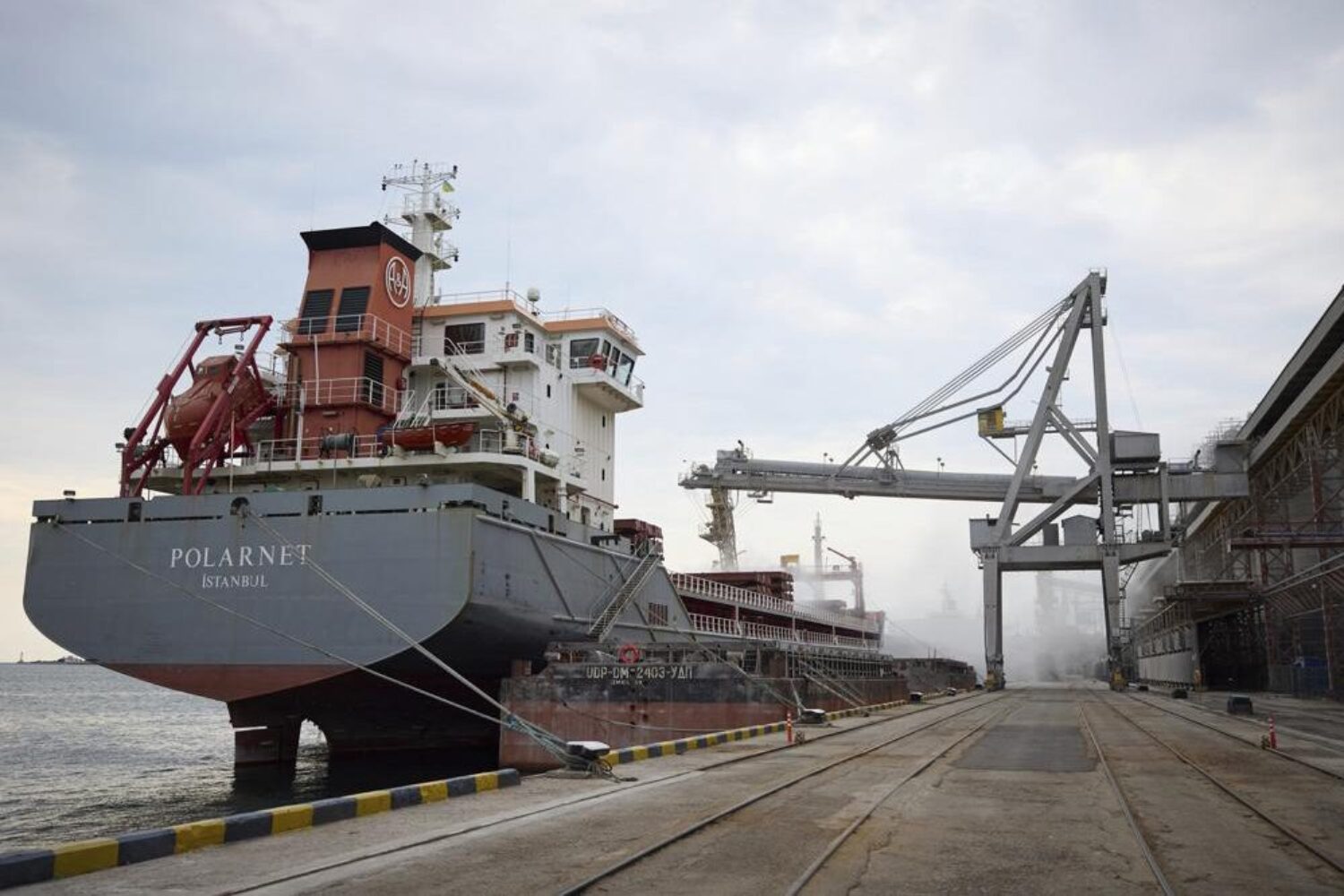
A cautious stabilization only began with the establishment of the Ukrainian shipping corridor , which has enabled exports from ports such as Odessa, Chornomorsk and Pivdenny since August 2023 despite Russian threats. By 2024, more than 55 million tons had been transported via this route, of which around 37 million tons were agricultural products. This means that the vast majority of Ukrainian agricultural exports were once again transported by sea. Overall, transshipment reached 62 million tons again in 2023, before rising to 97.2 million tons in 2024 – the highest figure since the start of the war. In 2025, the volume fell again to 81.7 million tons, reflecting the ongoing instability of the situation. At the same time, ship calls normalized. By the end of 2023, the ports of Odessa, Chornomorsk and Pivdenny were already approaching pre-war levels again. In 2024, more than 3,000 ships passed through the corridor. At the same time, Danube ports such as Ismail and Reni became increasingly important as alternative routes and developed into important logistical safety valves.
Sunflower oil the most important foreign currency earner
The export prospects for Ukrainian agricultural goods also point to a stabilization of maritime trade flows: For the current marketing year, the Ministry of Agriculture in Kiev expects rising wheat exports of 17.64 million tons, which corresponds to an increase of 11.5% compared to the previous year. Corn exports are expected to grow by 8.3% to 23.8 million tons, while barley exports could even increase by 20% to 2.8 million tons. In contrast, sunflower seed, sunflower oil, rapeseed and soybean exports are expected to decline, not least due to new export duties and changes in trading conditions. Sugar deliveries are also likely to fall due to EU quotas. Looking back, sunflower oil remained the country’s most important foreign currency earner in 2025 with export revenues of more than USD 5 billion, followed by corn and wheat. This development underlines the continued central role of agricultural logistics for the Ukrainian port industry and the stability of the shipping corridor.
War changed trade flows
However, the war not only changed volumes, but also the structure of global trade flows. Russian coal, which was previously mainly exported to Europe from Baltic, Arctic and Black Sea ports, has been increasingly diverted to India, China and Turkey since 2022. This has significantly lengthened transport routes. Similar developments can be seen in Russian fertilizers and grain, which are increasingly being shipped to Asia and South America.
Ukrainian exports, on the other hand, have the opposite effect: open shipping routes in the Black Sea are hugely important for Ukraine, but also for global food supplies. Before the Russian invasion in February 2022, Ukraine handled around 90% of its imports and exports via these routes. Afterwards, Russia blocked Ukrainian ports for months. At the time, there were fears of famine in the Global South: many countries in Africa and the Middle East are dependent on Ukrainian grain.
The decline in iron ore exports and a stronger focus on grain deliveries to the Mediterranean region shortened the average transport distances in some cases. Analysts expect that Ukrainian shipments could increase significantly again if the war ends, while Russian coal exports are likely to come under structural pressure, not least due to the expansion of renewable energies in China and competition from Indonesia and Australia.
The military threat remains the key uncertainty factor. According to Ukrainian figures, almost 200 port facilities have been attacked since summer 2023, including terminals, grain storage facilities and transshipment facilities in Odessa, Chornomorsk and Pivdenny. Danube ports were also repeatedly targeted by air strikes. Infrastructure was destroyed, grain was destroyed and port workers were injured or killed. In 2025, the attacks also spread to Russian port infrastructure, for example in the oil port of Novorossiysk. This means that maritime logistics on both sides remain part of the military target backdrop.
Port of Odessa with positive handling development
Despite the continuing high risk, shipping remains a central pillar of the Ukrainian economy. Ports such as Odessa almost reached pre-war volumes again at times in 2023 and 2024. International logistics companies are also already positioning themselves for the post-war period. Hamburger Hafen und Logistik AG (HHLA), for example, is strategically maintaining its Container Terminal Odessa, even though sea handling has been largely suspended there since 2022. Maintenance, limited overland transportation and intermodal activities will continue, and the terminal will remain part of the Group’s European network. With a pre-crisis capacity of around 1.5 million TEU, the site is considered a potential Black Sea hub as soon as the security situation stabilizes. Until then, the focus is on protecting employees and maintaining the infrastructure to enable a quick restart.
Four years of war thus paint a contradictory picture of shipping in the Black Sea. Infrastructure, routes and insurance conditions are still under military pressure. At the same time, an astonishingly resilient logistics operation has been established, which remains of central importance both for the Ukrainian economy and for the global supply of agricultural goods.
Ukrainian navy strikes back
Parallel to economic stabilization, Ukraine has continued to develop its maritime security strategy. Unmanned surface vessels are playing an increasingly important role in this and, according to Ukrainian sources, have contributed to the damage or destruction of numerous Russian ships. The Ukrainian navy currently comprises around 39 units, while programs are underway to build up new capacities, including corvettes and smaller patrol boats. The shipping corridor is increasingly being secured by a combination of traditional naval platforms, drone technology and coastal defense systems.