




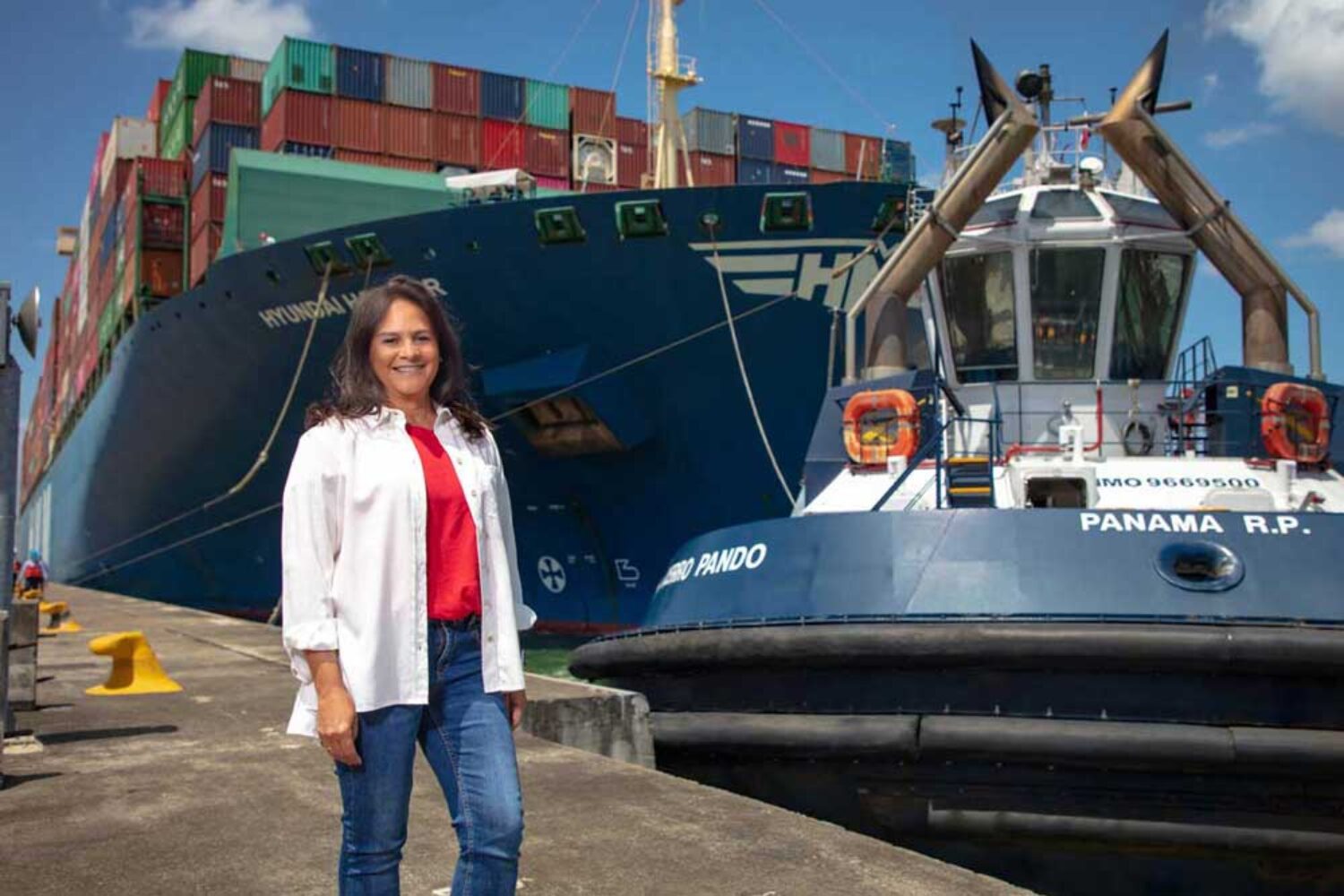
Ilya Espino de Marotta has been appointed as the new administrator of the Panama Canal. The engineer has more than 40 years of experience in operating the waterway.
Panamanian President José Raúl Mulino has announced that Ilya Espino de Marotta has been appointed as the next administrator of the Panama Canal. She is the first woman to head the strategically important waterway and succeeds Ricaurte Vásquez.
Espino de Marotta is one of the canal’s most experienced managers. She began her career there as an engineer back in 1985 and played a central role in the expansion to include the larger Neopanamax locks. The project was worth 5.25 billion dollars.
She previously served as Executive Vice President of Engineering during the expansion program and later became Vice President of Transit. In 2019, the Panama Canal Board of Directors elected her as Deputy Administrator under Vásquez.
Global politics and droughts
In recent years, the canal has faced major challenges, not least due to geopolitical tensions and shifts in global shipping patterns. Due to prolonged periods of drought, ship transits had to be reduced in the meantime, which is why the administration decided to build a new reservoir – at a cost of 1 billion dollars.
In recent months, the canal has been in the news mainly due to a dispute over the terminals in Cristóbal and Balboa after the government seized them. The terminals have been operated by Hong Kong-based CK Hutchison since 1997.
The new boss, Espino de Marotta, is also immediately faced with major tasks. The Panama Canal is currently operating at the limits of its capacity. Triggered by the blockade of the Strait of Hormuz, energy exports from the USA to Asia and the Pacific markets have risen sharply. As reported by the shipping organization Bimco, there are currently 38 ships passing through the canal per day; the upper limit is set at 36 to 40 transits.
Should the El Niño weather phenomenon occur again this year between May and July, as experts assume with a high degree of probability, the canal is facing a possible next drought period. Most recently, daily passages fell to up to 24 ships in 2023 and 2024, causing enormous disruption to global traffic. Since then, the Panama Canal Authority has worked hard to replenish water reserves and implemented water conservation measures aimed at preventing another operational crisis.