


The “summer season” is open: The first Russian tanker serving the sanctioned Arctic LNG 2 project has crossed the Northern Sea Route (NSR) en route to Asia. In future, the route is expected to become navigable all year round.
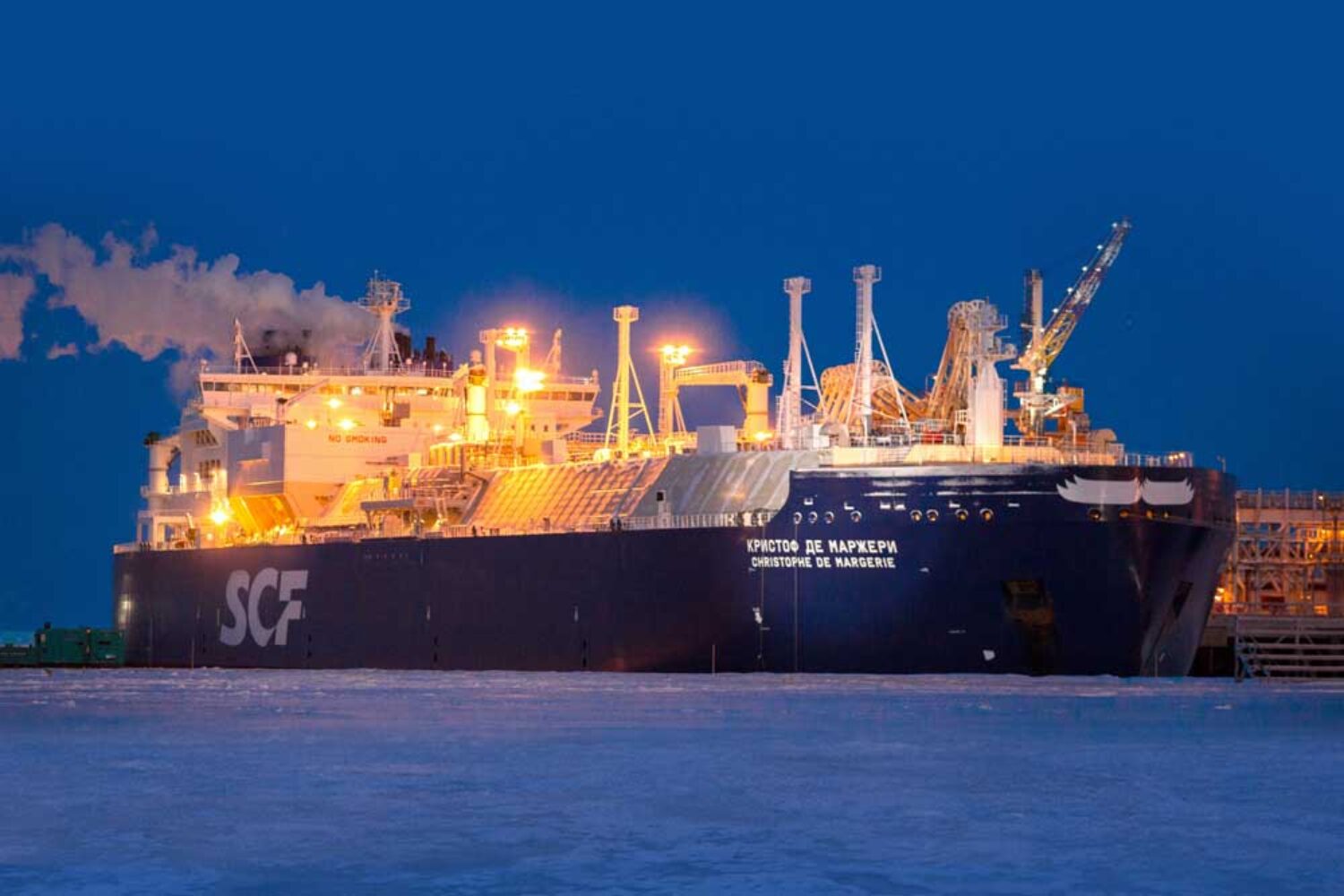
The LNG tanker “Christophe de Margerie” was the first vessel of the year to complete the Northern Sea Route (NSR) along Russia’s northern coast. This marks the start of Russia’s seasonal export corridor through the Arctic Ocean. Although the Arctic LNG 2 project is subject to Western sanctions, Russia continues to find buyers for its fossil fuel exports in Asian markets.
According to ship-tracking data, the Arc7 ice-class tanker departed from the Utrenniy terminal on the Gydan Peninsula on May 26 and passed through the Bering Strait on June 8. The voyage was around 40% slower than comparable passages, presumably due to ice conditions, but was still significantly faster than the alternative route to Asia via the Cape of Good Hope and the Indian Ocean. Within the next few days, the “Christophe de Margerie” is expected to arrive off Russia’s Kamchatka Peninsula, where the floating LNG storage unit (FSU) “Koryak” is located.
At the same time, tracking data shows that the tanker “Arctic Mulan” is heading north from the Beihai LNG terminal in China. It is likely to call at the FSU and take up shuttle operations between the storage facility and Asian markets. This would effectively reopen the supply chain from the gas fields of north-western Russia to Asia for the current export season.
The NSR is not yet available to Russian ships year-round. During the winter months, sea ice becomes too extensive to guarantee safe navigation despite the vessels’ ice-class capabilities. The navigation window typically extends from May or June until November, after which Russian tankers are forced to revert to the longer southern route.
This summer, however, LNG exports via the NSR are expected to increase. According to market reports, Novatek, Russia’s largest LNG producer and the main shareholder in Arctic LNG 2, has added four conventional LNG carriers to its fleet and could therefore expand export volumes.
NSR to become navigable all year round
Russia has long pursued the goal of making the NSR navigable throughout the year. While the idea has been discussed for decades, Western sanctions have likely added further urgency. The sanctions, imposed following Russia’s invasion of Ukraine and tightened repeatedly since, are intended to restrict Russia’s ability to finance the war through commodity exports. However, countries such as China and India continue to purchase Russian energy exports, and the shortest route to these markets lies through the Arctic.
New Arc7 ice-class tankers are expected to enable year-round navigation in the future. This was recently reaffirmed by the Russian companies Rosatom and Sovcomflot during an economic forum in Vladivostok. According to the companies, year-round operations could become possible as early as the 2026/2027 season.
Last year already saw an increase in traffic along the NSR, with more than 100 transits recorded. Tankers continue to account for the majority of voyages, but container ships are also increasingly using the route. In addition to Russia, China and South Korea are exploring opportunities linked to the NSR, which offers a significantly shorter connection between Asian and European markets.
At the same time, environmental organisations continue to warn about the growing volume of shipping in the ecologically sensitive Arctic region. Emissions from ships could accelerate ice melt, further contributing to climate change. There are also concerns about the increased risk of accidents. In the event of an oil spill, environmental damage in the remote Arctic would be far more difficult to contain than in more southerly and accessible waters.