

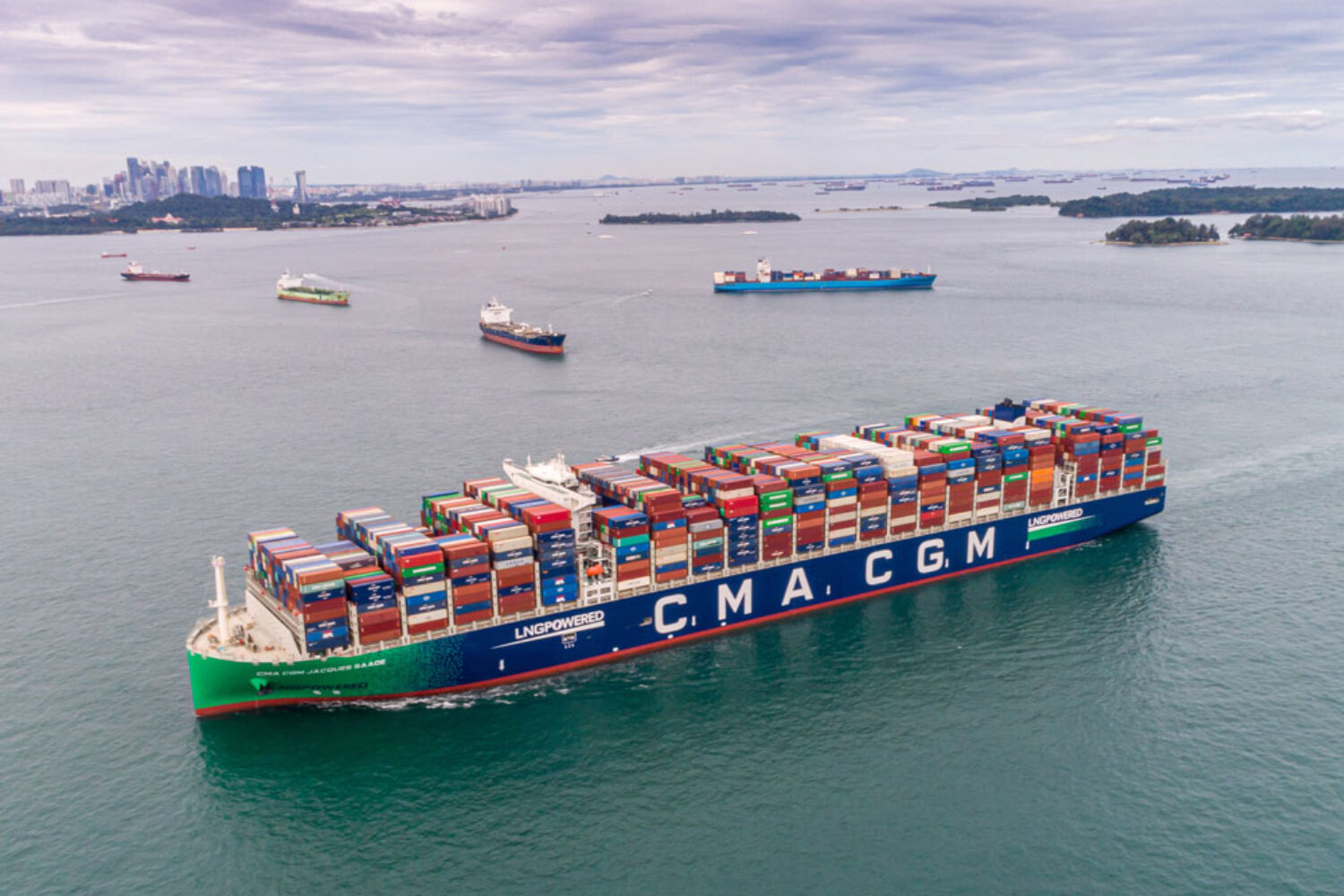
The French liner shipping company CMA CGM was the first in the industry to announce higher transportation costs to its customers as a result of the EU ETS.
Since this year, shipping in European waters has been part of the emissions trading system (EU-ETS). For every ton of CO2 emitted, a certificate must be purchased and the actual amount must be reported. The system is being introduced gradually.
In the first year of application, which is still ongoing, 40% of all emissions will fall under this regulation. From 2025 it will already be 70%, and then 100% from 2026. “This will have a direct impact on our cost structure,” writes CMA CGM.
EU ETS makes containers 75% more expensive
As a result of this regulatory change, cargo customers will have to prepare for an increase in EU ETS surcharges of around 75%. This is initially only an estimate and does not take into account fluctuations in CO2 prices.
The liner shipping companies currently levy differentiated surcharges depending on the trade or service. At Hamburg-based shipping company Hapag-Lloyd, this will be between €12 and €42 per TEU and between €21 and €80 per reefer container in the fourth quarter of 2024.