




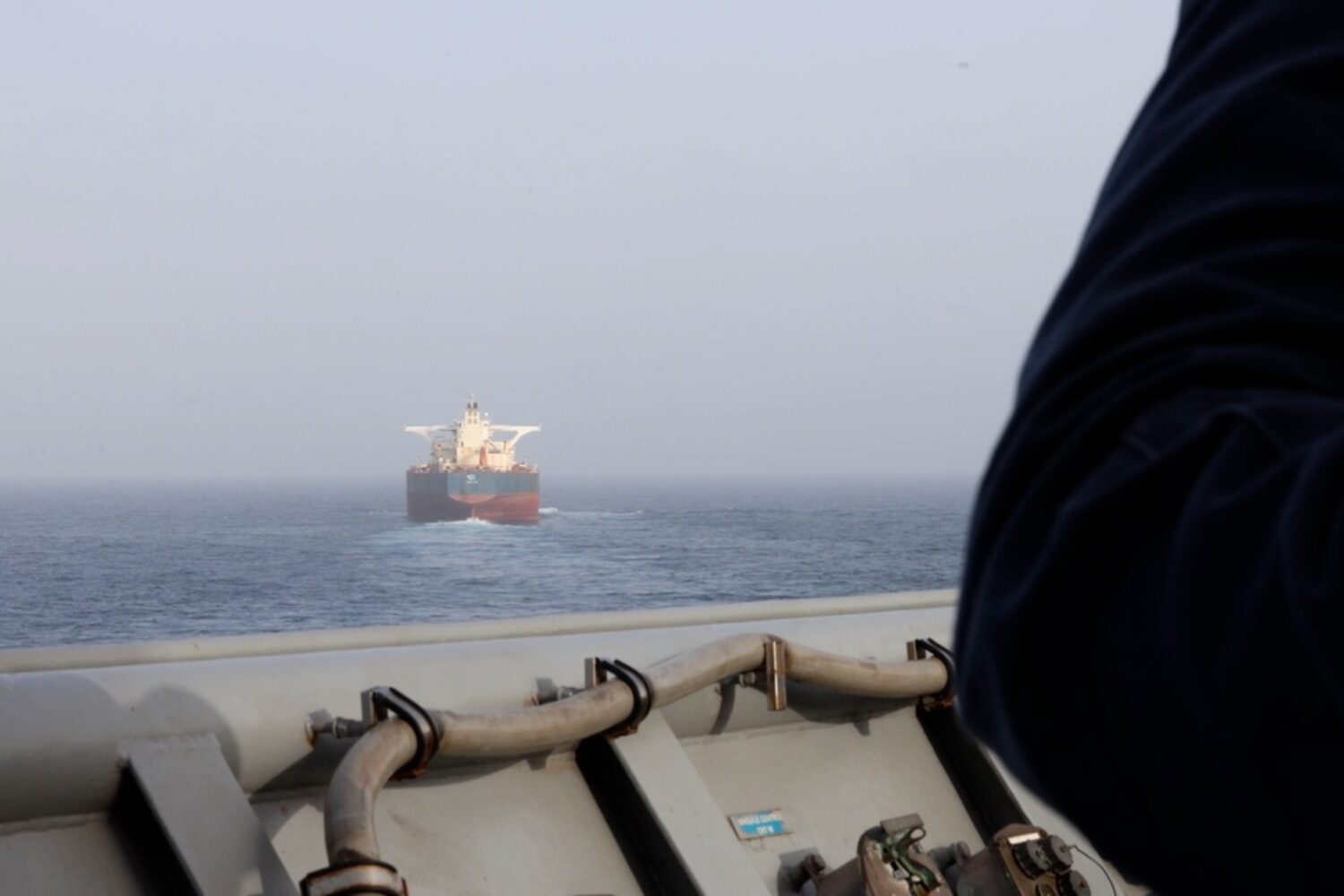
The shipping organization Bimco outlines two scenarios for the tanker market: a rapid opening of the strait – or a prolonged blockade with noticeable consequences for fleets, seafarers and transport volumes.
“Since the start of the Iran war, cargo volumes in the dirty and clean tanker segment have fallen by 13% compared to the previous year,” explains Niels Rasmussen, Chief Shipping Analyst at Bimco. Although volumes were still rising before the start of the war, the year-to-date volume is now 5% down on the previous year. This corresponds to a decline of 340 million barrels in the dirty tanker segment and 147 million barrels in the clean tanker segment.
Two scenarios with different outcomes
Bimco bases its outlook on two scenarios. In the “SoH open” scenario, it is assumed that the Strait of Hormuz will be fully reopened before the end of the second quarter. In the “SoH closed” scenario, on the other hand, the passage remains effectively closed throughout 2026 and 2027.
According to Bimco, oil reserves have been released at an exceptionally high rate so far to make up for the lack of oil supplies. JP Morgan estimates that around 800 million barrels could still be withdrawn from stocks worldwide without falling below the minimum quantities for pipelines and storage tanks.
“If the Strait of Hormuz remains effectively closed, oil inventories could reach critical levels by the end of September and then no longer serve as a secondary source of oil supply,” says Rasmussen.
At the same time, the subsequent rebuilding of global oil stocks could bring additional demand to the tanker market as soon as ships can safely pass through the Strait of Hormuz again. The International Energy Agency (IEA) estimates that up to 1 million barrels per day could be needed over three years to replenish stocks.
According to Bimco, the possibility of Saudi Arabia and the United Arab Emirates diverting exports to ports on the Red Sea and the Gulf of Oman plays an important role. This has prevented an even greater decline in global oil supply and demand for dirty tankers. Saudi Arabia was able to maintain around 60 % of its pre-war export volumes despite the loss of regular export routes, although around 90 % of exports normally pass through ports in the Persian Gulf. The United Arab Emirates would have maintained more than 70% of its pre-war volumes.
Spot rates recover to pre-war levels
After an initial rise in freight rates at the beginning of the war, spot rates on most major routes are now back to around pre-war levels, according to Bimco. Although the rates for exports from the Persian Gulf remain elevated, they are largely theoretical given the small number of ships that actually pass through the Strait of Hormuz.
“If the Strait of Hormuz reopens before the end of the second quarter, we expect cargo volumes to gradually increase in the third quarter, normalize in the fourth quarter and grow again in 2027, supported by the rebuilding of stocks,” said Rasmussen. Due to the strong fleet growth, the supply/demand ratio in the product tanker segment could nevertheless weaken in 2027. If the strait remains closed, however, Bimco expects cargo volumes to decline as soon as oil stocks are further reduced.