
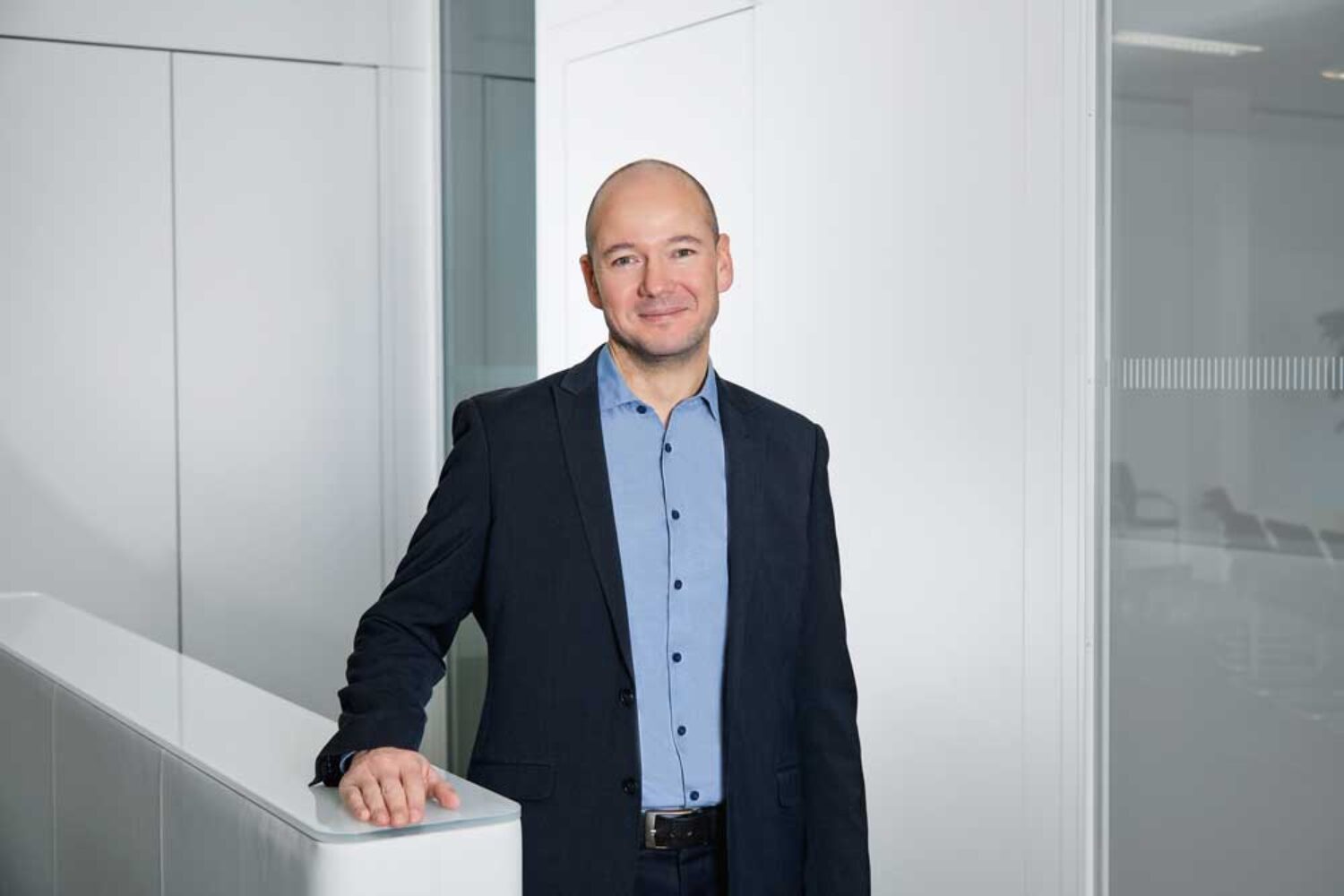
With Daniel Pfeifer taking over as CEO at the start of the year, Bachmann Electronic is sharpening its strategic focus on growth, technology and market diversification. Maritime automation remains a key pillar, driven by decarbonization, electrification and digitalization. The company aims to strengthen its role as an international technology partner in complex automation projects.
A major focus lies on the technological advancement of our modular automation platforms M200 and M100. In particular, we concentrate on high robustness, the highest cybersecurity standards, and powerful yet user-friendly engineering tools. Our ambition is to provide developers and system integrators with an environment that equally supports efficiency and innovation.
At the same time, we are systematically expanding our portfolio. In addition to our control solutions, we are strengthening our offerings in the areas of operator and visualization systems, SCADA solutions, and condition monitoring.
A decisive added value for our customers is the exceptionally high level of investment protection we provide. Long-term product availability is a deliberate strategic commitment – and a strong differentiator, especially in an increasingly fast-paced technological environment.
Pfeifer: The maritime segment is a strategically important business area for us and accounts for a substantial share of our total revenue. We hold a strong market position, particularly in shipbuilding, specialized vessels, and offshore applications.
The maritime industry plays a key role in our corporate strategy. On the one hand, it is technologically demanding and requires high standards in terms of reliability, certification, and lifecycle performance – which is precisely where our strengths lie. On the other hand, the industry is undergoing profound transformation driven by decarbonization, electrification, and digitalization.
We see ourselves not merely as a component supplier, but as a system partner. Our automation solutions perform central functions in power distribution, hybrid propulsion systems, power management systems, and condition monitoring. The maritime segment is therefore not only a significant revenue contributor, but also a key driver of innovation for our entire company.
Pfeifer: In both traditional shipbuilding and the offshore wind sector, we observe three dominant trends: decarbonization, electrification, and digital connectivity.
In shipbuilding, the pressure to reduce emissions is increasing significantly. Alternative propulsion concepts, hybrid solutions, shore power integration, and energy management systems are gaining importance. At the same time, vessels are increasingly becoming highly networked systems. This requires powerful, robust, and cyber-resilient automation platforms.
In the offshore wind industry, we see clear scaling effects: larger turbines, more complex grid connections, and increasingly sophisticated maintenance concepts. As an automation specialist with many years of experience in the wind sector, we are able to leverage strong synergies here. Our scalable control systems are suitable both for offshore substations and for service and installation vessels.
We are therefore consistently aligning our portfolio toward modular, open systems that can flexibly adapt to new energy and propulsion concepts. As part of this effort, we are investing heavily in software expertise, data analytics, and condition monitoring in order to deliver added value to our customers throughout the entire lifecycle.
Pfeifer: The greatest challenge at the moment is the rapidly changing market environment. Technological innovation cycles are becoming shorter, regulatory requirements are increasing, and geopolitical developments are having a significant impact on supply chains and investment decisions.
As a maritime supplier, we must meet high quality and safety standards, comply with international certifications, and remain competitive at the same time.
For us, this means further professionalizing our processes, strengthening our global presence, and safeguarding our innovative capabilities. We therefore invest deliberately in research and development, strategic partnerships, and the training and continuous development of our employees.
In an environment of increasingly fragile supply chains, we rely on strategic inventory management to buffer against volatility. This ensures that our customers can continue to rely on Bachmann for the high delivery performance and reliability they have come to expect, even under challenging conditions.
Pfeifer: In five years, I want to be able to say that we have strategically advanced Bachmann while at the same time preserving our core identity. I hope that we will be recognized even more strongly on an international level as a reliable technology partner for complex automation projects.
Ideally, we will have further expanded our market share in the maritime segment. Equally important to me is that we remain an attractive employer and cultivate a corporate culture based on trust, personal responsibility, and technical excellence.
If we succeed in combining business success with technological leadership and a sustainable orientation, that would represent a very satisfying interim assessment for me.