





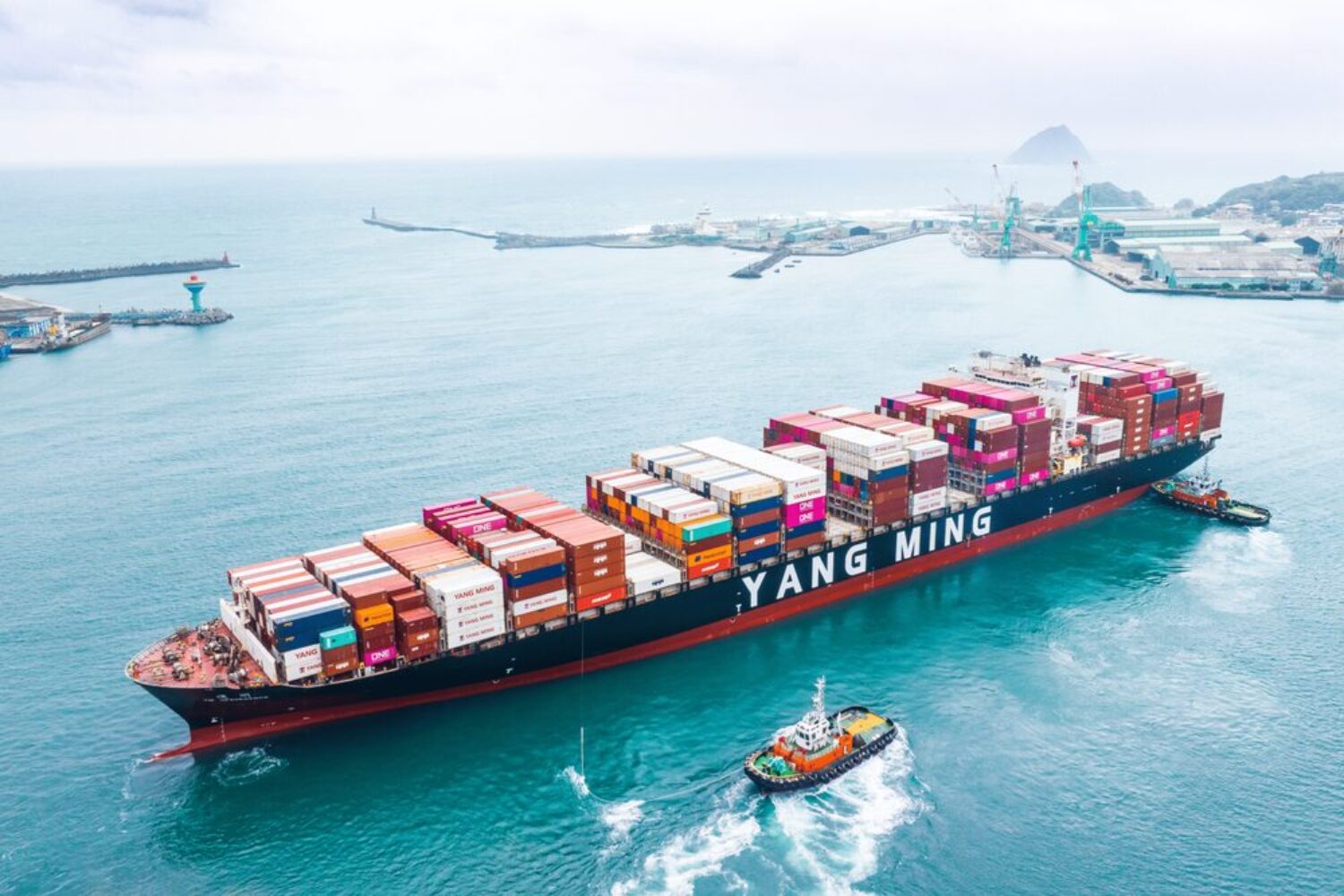
The Taiwanese shipping company Yang Ming plans to compensate for the increased bunker costs with surcharges from April 1, which will be reflected in the freight rates.
The rise in bunker prices – a direct consequence of the conflict in Iran – could be an advantage in renegotiating transpacific contracts. This is the view of the management of Taiwanese shipping company Yang Ming, which recently reported on costs and prospects for the coming year at a press conference.
Company president Kevin Lee said that shipping lines will implement fuel surcharges on 1 April to reflect increased costs due to rising crude oil prices.
The fuel surcharge will vary according to the route, and the longer the route, the higher the surcharge. According to the Baltic Exchange, as of yesterday, prices of very-low sulphur fuel oil, the most commonly used marine fuel, averaged $ 841 per tonne in Singapore, $ 896 per tonne in Zhoushan, $ 723 per tonne in Rotterdam and $ 798 per tonne in Houston. While prices have come down from the $ 1,000 per tonne mark in the last fortnight, they are still nearly double from before the Middle East hostilities broke out.
“Fuel accounts for about 17% of our costs, but over 60% of our fleet is scrubber-fitted, enabling these vessels to burn cheaper high-sulphur fuel oil to reduce costs,” Lee said. Currently, it is the annual contract signing season for transpacific routes, and with the US-Israel-Iran war pushing up oil prices. Yang Ming expects that this year’s contract rates will exceed last year’s levels. Contracts are expected to be signed by May.
Yang Ming’s executives also said they are bullish about the company’s earnings for 2026, saying the Middle East hostilities will tighten shipping and container availability.
Lee responded that more than 150 container ships are currently stuck in the Persian Gulf, holding up 500,000 TEU of capacity, accounting for approximately 1.5% of global shipping capacity, excluding hips waiting outside the strait. Yang Ming’s Persian Gulf service is part of the Premier Alliance. With one ship stuck in the Strait of Hormuz, the Premier Alliance will divert vessels originally intended for the Middle East to services to the US, Europe, and the Mediterranean.
“Less than 1% of the global container shipping fleet is idle. While there was a significant oversupply of ships last year, the supply-demand gap is expected to narrow this year, as shipping and container availability tightens,” Lee added. Yang Ming’s management also believes that port congestion will also support freight rates, as vessel queues are building in South Asia and Europe. “Europe has been experiencing port congestion due to weather and structural issues, and if the conflict escalates, it could potentially affect other Asian ports.” (PL)