



For almost half a year now, it has not been possible to sail safely through the Strait of Hormuz. The German Shipowners’ Association (Verband Deutscher Reeder, VDR) warned that maritime trade could also be used as a means of exerting pressure elsewhere.
There is currently no sign of a de-escalation in the Strait of Hormuz: the memorandum of understanding between the US and Iran, which was intended to lay the foundations for a long-term peace agreement, has given way to a fresh escalation. Iran has attacked ships on several occasions and declared the strait closed; the US government and President Donald Trump have responded by reimposing their own blockade, accompanied by a proposal for a 20% cargo fee (which he withdrew a few days later). Instead of the hoped-for peace and a return to normal trade, the Strait therefore remains a hotbed of geopolitical conflict, with merchant shipping and the crews of these vessels caught right in the middle.
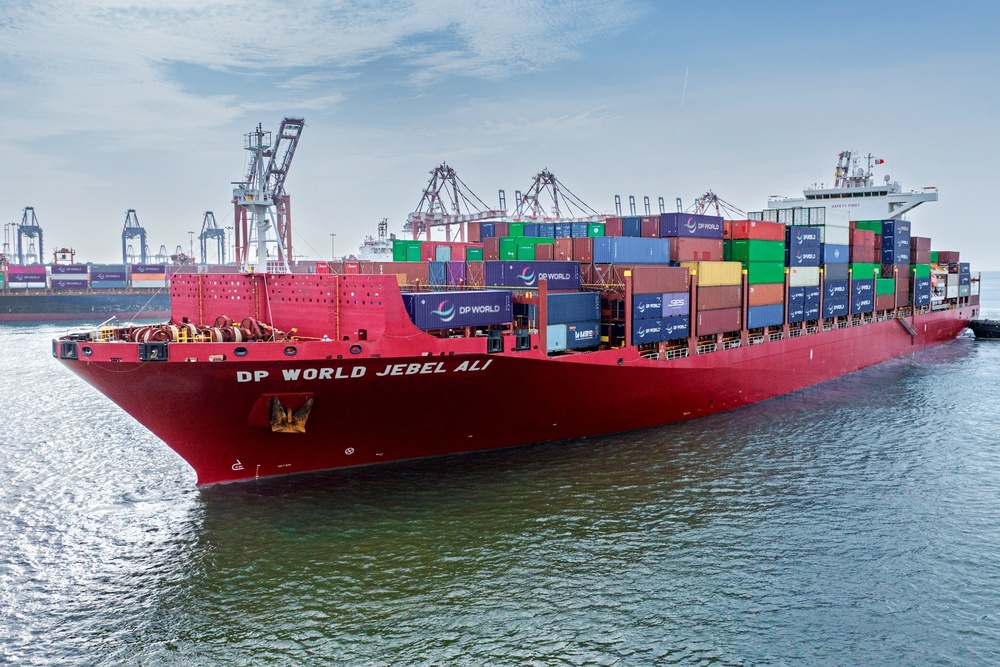
According to the VDR, at the start of the conflict there were around 50 ships, carrying 1,000 seafarers, in German ownership or under German management in the Persian Gulf. “Since the start of the conflict, more than half of the ships originally affected have been able to leave the region safely, with extensive security measures in place and in close coordination with the local navies,” the association said. However, around 20 ships with German links, carrying some 400 seafarers, remain in the region.
“One thing must be clear to everyone: bringing ships and their crews to safety from the danger zone is an important first step,” said Martin Kröger, Chief Executive of the VDR. “But sooner or later, they must also be able to return safely in order to transport urgently needed raw materials and goods. Global trade is not a one-way street; only if the Strait of Hormuz remains permanently safe to navigate in both directions will supply chains remain functional.”
Free navigation is neither an end in itself nor negotiable. Ships transport energy, raw materials, food, medicines and industrial intermediates: “Goods on which people and businesses worldwide rely every day,” according to the VDR. Any disruption affects supply chains and brings supplies to a standstill; it also makes everyday life more expensive. This is also noticeable in Germany.
Today the Strait of Hormuz, tomorrow the Strait of Malacca
As the VDR reported, it is observing with concern how security risks to international merchant shipping are increasing simultaneously on several strategic sea lanes. “Attacks in the Red Sea, the war in the Black Sea, tensions in the Taiwan Strait and the South China Sea, as well as hybrid threats in the North Sea and the Baltic Sea, show that freedom of navigation is coming under increasing pressure worldwide,” according to the shipowners’ assessment. “If it were to become the norm to use maritime trade as a means of exerting geopolitical pressure, this would have far-reaching consequences.”
“Today it is the Strait of Hormuz; tomorrow it could be the Strait of Malacca, the Taiwan Strait or another strategically important strait. International sea lanes must not become a pawn in geopolitical power politics,” said Kröger. “Free and safe shipping is the foundation of global trade, and thus also of our security of supply in Germany and Europe.”
The VDR called on the international community to do everything in its power to permanently restore freedom of navigation and to effectively protect merchant ships and their crews. “Free passage through international straits is a fundamental principle of international maritime law,” the association stated. “This principle must not be undermined, either militarily or economically. For Germany in particular, as a nation that both exports and imports, the protection of free and safe sea lanes is of particular strategic importance.”