

Germany gets energy from the desert: Saudi Arabia and Germany are driving forward the development of an international supply chain for climate-friendly energy sources.
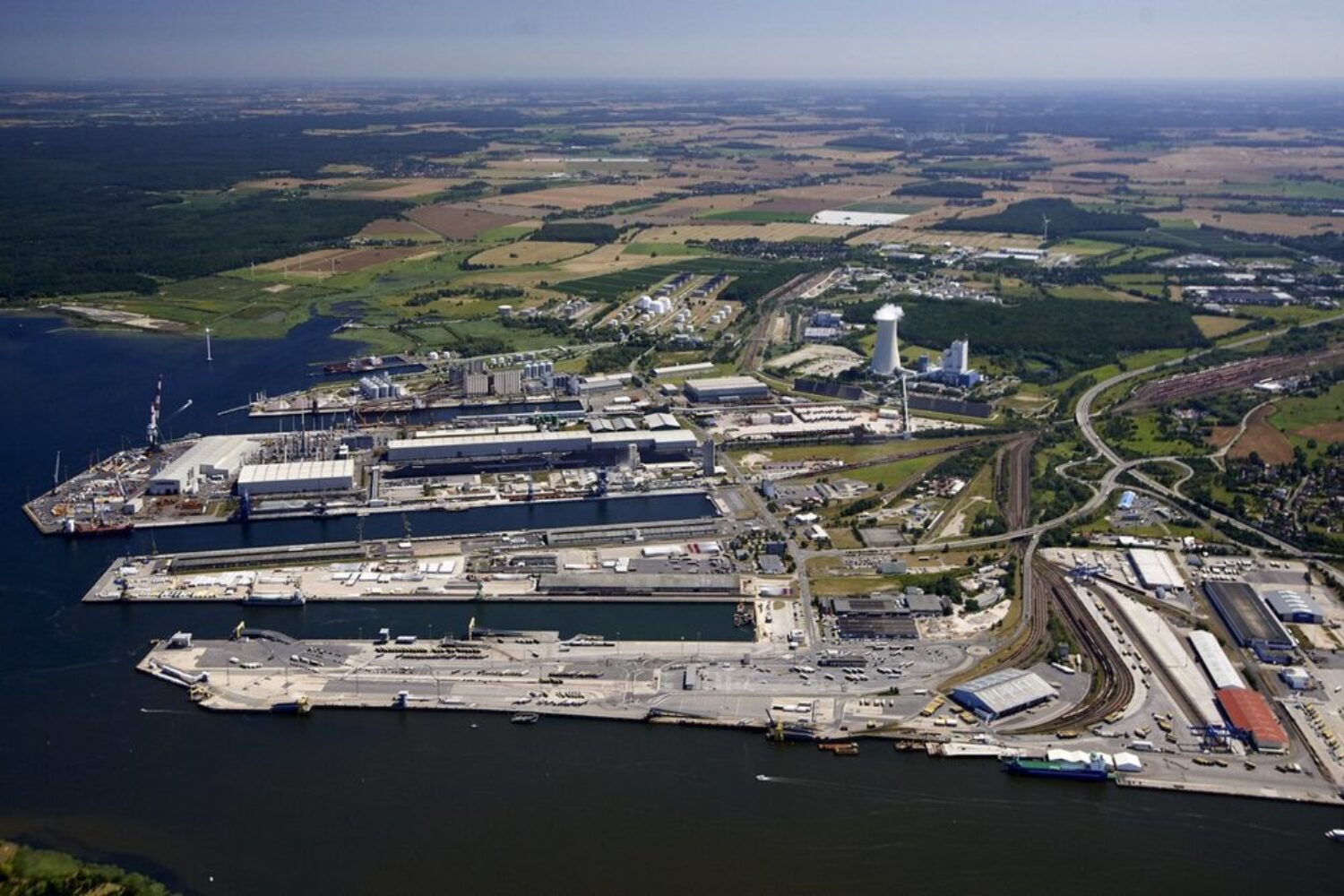
A Memorandum of Understanding has now been signed to establish a green ammonia corridor from Saudi Arabia to Germany. The aim is to transport green ammonia from Yanbu in Saudi Arabia to Rostock, where it will be used for the German energy transition.
The Saudi Arabian energy company Acwa, the German energy supplier EnBW, the port of Rostock and the Leipzig-based gas importer and infrastructure operator VNG are involved in the agreement. The signing took place in the presence of the Saudi Arabian Energy Minister Prince Abdulaziz bin Salman and the German Federal Minister for Economic Affairs and Energy, Katherina Reiche (CDU).
Supply chain for green ammonia as the aim of the agreement
The core of the project is the establishment of an end-to-end supply chain for green ammonia. This is to be produced in Saudi Arabia using renewable energies and exported to Rostock by ship. VNG is planning to build an ammonia cracker plant in the port of Rostock, where the ammonia will be converted back into green hydrogen. The hydrogen will then be fed into the German hydrogen core network.
This will give Rostock a central role as an import hub for green molecules. The port will not only be a transshipment point, but will also continue to position itself as an energy port. According to those involved, the project will strengthen both security of supply and industrial decarbonization in Germany, particularly in sectors that are difficult to electrify. Hydrogen is set to play a central role in a climate-neutral energy system. It can be used to generate electricity in new gas-fired power plants when wind and solar energy are not sufficient. Hydrogen is also to replace fossil fuels such as coke in industry – for example in blast furnaces for steel production – and thus save large amounts of CO₂.
EnBW becomes a customer for the green ammonia
As part of the agreement, EnBW will assume the role of purchaser of the green ammonia and will be responsible for commercial processing and logistics from Saudi Arabia to Rostock. Acwa is in charge of developing the production project in Yanbu and is also examining a possible participation in ammonia infrastructure in Germany.
The detailed technical planning of the production facilities should be completed by mid-2026. Commercial commissioning is currently scheduled for 2030.