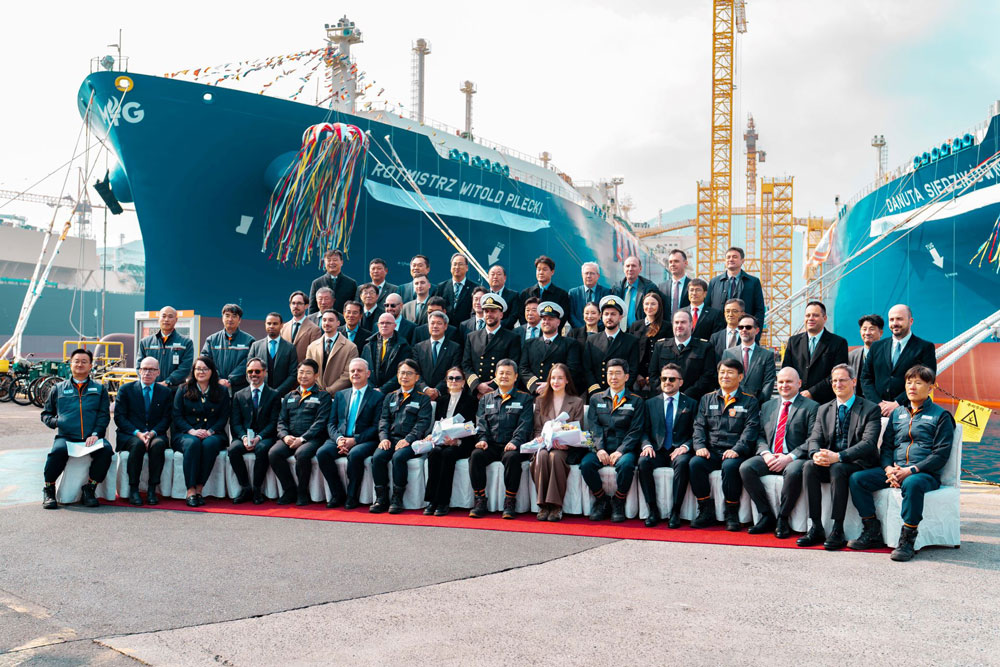



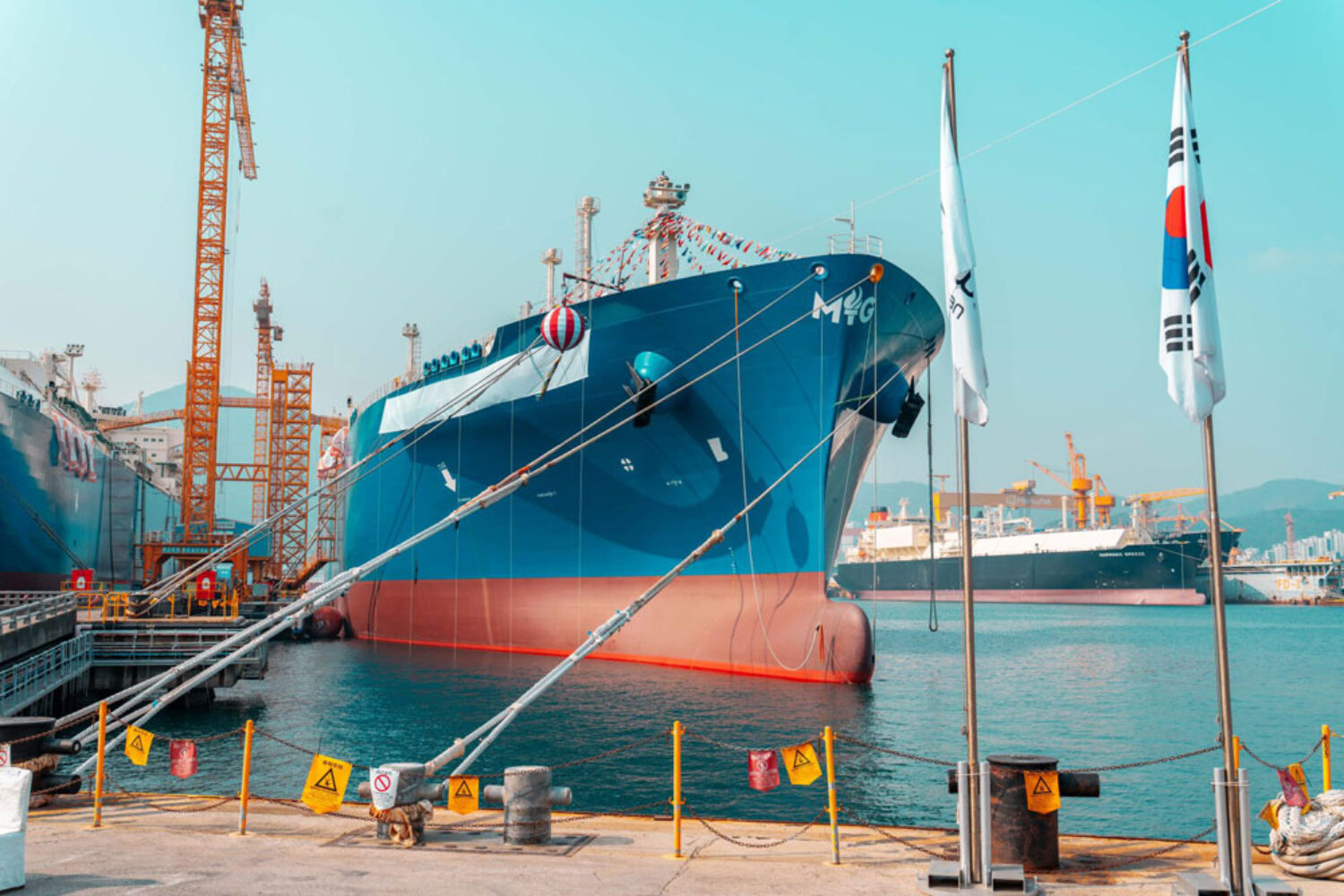
The Polish energy group Orlen is continuing to expand its LNG tanker fleet. With two new ships that the company has now taken delivery of in South Korea, the fleet has grown to eight units.
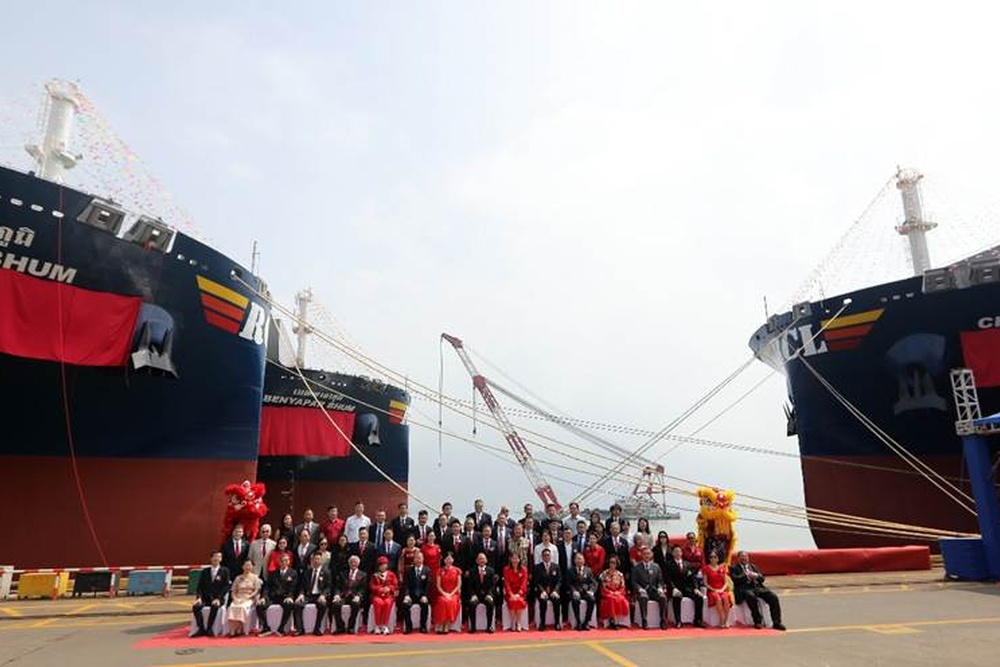
The new tankers were built by Hanwha Ocean in Geoje (South Korea). They were also christened “Danuta Siedzikówna-Inka” and “Rotmistrz Witold Pilecki” there.
Each ship has a capacity of 174,000 m³ of LNG and can transport around 70,000 tons of liquefied gas per voyage. After regasification, this corresponds to around 100 million m³ of natural gas – roughly the amount that all Polish households consume in an average week.
According to Orlen, they are designed in such a way that they can call at the majority of LNG terminals worldwide, which should ensure a high level of operational flexibility. The charter period is ten years with an option to extend.
As the energy group calculates, each of these tankers can supply almost 1 TWh of energy after regasification, which corresponds to around 0.5-0.6% of Poland’s annual natural gas requirements. One ship can make around eight to nine voyages per year on the USA-Europe route, providing transport capacities of 8-9 TWh of gas per year.
Both newbuildings with LNG propulsion
The ships are equipped with advanced technologies to increase operating efficiency. These include a reliquefaction system that recovers vaporized LNG during transport and an integrated energy management system. The engines can run on both natural gas and diesel, thus meeting future environmental standards for maritime shipping.
According to Orlen, the expansion of LNG transportation is a central component of the company’s strategy. Natural gas is to serve as a transitional fuel in the energy transition; consumption in Poland could increase to up to 27 billion m³ per year over the next ten years. The investment program, which focuses on securing LNG supplies, is designed to counter this development.
Świnoujście sets a record
Last year, the terminal in Świnoujście set a record: The Orlen Group received 81 LNG cargoes – 20 more than in the previous year. In total, almost 6 million tons of LNG were imported by sea, an increase of 30% compared to the previous year.
Orlen is also expanding its presence on the global LNG market. The company has already made deliveries to Japan, China, Thailand, Egypt and terminals in Western Europe. The new tankers are intended to further strengthen logistical capacities and enable even more active participation in the global LNG trade.
At the same time, the company is expanding its gas feed-in capacities in the region. To this end, Orlen is using capacities at the FSRU terminal in Klaipėda, from where regasified gas is transported to Poland via the Poland-Lithuania interconnector; some of the volumes are also distributed to the markets of the Baltic states.
At the same time, the domestic infrastructure is being expanded. To this end, the company has booked the entire regasification capacity of the floating LNG terminal in the Bay of Gdansk, which amounts to 6.1 billion m³ of gas per year. Once the facility is operational, the number of LNG cargoes received annually by the Group could increase by up to 58.