

Whilst the issue of CO₂ storage is still in its infancy in Germany, the Norwegians are further ahead. The Northern Lights JV has the necessary infrastructure and client base.
Northern Lights has now secured a new client in Öresundskraft Kraft & Värme AB. The two companies have signed an agreement covering the transport and storage of CO₂ from the Filbornaverket waste-to-energy plant in Helsingborg.
Operations are scheduled to commence in the fourth quarter of 2029. Under the agreement, Northern Lights will provide transport and storage services for up to 200,000 tonnes of CO₂ per year.
The agreement is based on a joint logistics model that utilises capacity within Northern Lights’ fleet of vessels, thereby enabling efficient CO₂ transport.
Seven industrial customers are relying on Northern Lights
As part of the Öresundskraft project, CO₂ is captured and liquefied at the Filbornaverket waste-to-energy plant in Helsingborg before being transported by lorry to the Port of Halland in Halmstad.
From there, Northern Lights transports the CO₂ by ship to the reception terminal in Øygarden, Norway. It is then injected into a designated storage site 2,600 metres below the seabed of the North Sea and stored there. The agreement remains subject to certain agreed conditions.
Öresundskraft will become Northern Lights’ second Swedish customer. A commercial agreement on cross-border CO₂ transport and storage was already announced last year with the Swedish district heating supplier Stockholm Exergi.
Northern Lights began its first injections of liquid CO₂ for storage in 2025 and, with the agreement with Öresundskraft, will have seven industrial customers across four countries. The company is expanding its capacity from 1.5 million tonnes to more than 5 million tonnes of CO₂ per year and currently still has spare capacity for further customers.
By ship to the storage site
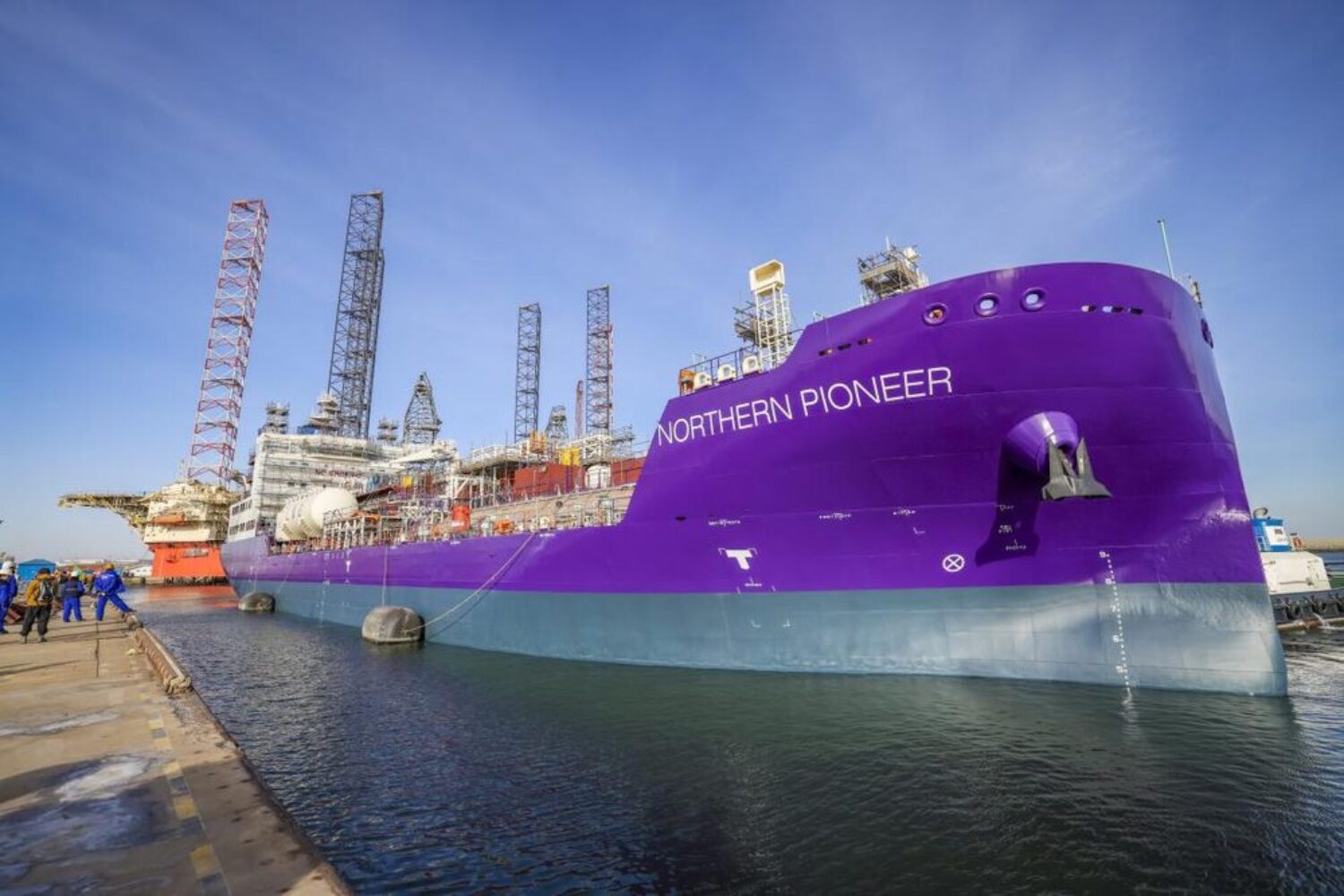
The CO₂ is transported by ship to the storage site in the North Sea. Since the end of 2024, Northern Lights has had a fleet of three vessels with a capacity of 7,500 m³ for this purpose. These are the ‘Northern Pioneer’, ‘Northern Pathfinder’ and ‘Northern Phoenix’.
At the start of 2026, Northern Lights announced plans to expand its fleet by four vessels.
The vessels are being built at the Chinese shipyard Dalian Shipbuilding Offshore (DSOC) and by HD Hyundai Heavy Industries (HHI). Delivery is scheduled for the period from the second half of 2028 to the first half of 2029.
With this fleet expansion, Northern Lights is responding to rising demand. The company’s aim is to increase its transport and storage capacity to more than 5 million tonnes of CO₂ per year.
A German company, amongst others, is ensuring that the CO₂can be transported and injected safely. The vessels in the Northern Lights fleet are equipped with LCO₂ cargo handling systems from the Bonn-based company TGE Marine. The gas specialists not only supplied the equipment but also developed it specifically for this application.
You can hear more about the Northern Lights project and the LCO₂ handling systems in the HANSA news cast featuring TGE Marine’s Managing Director, Jan-Volkert Wibel: