

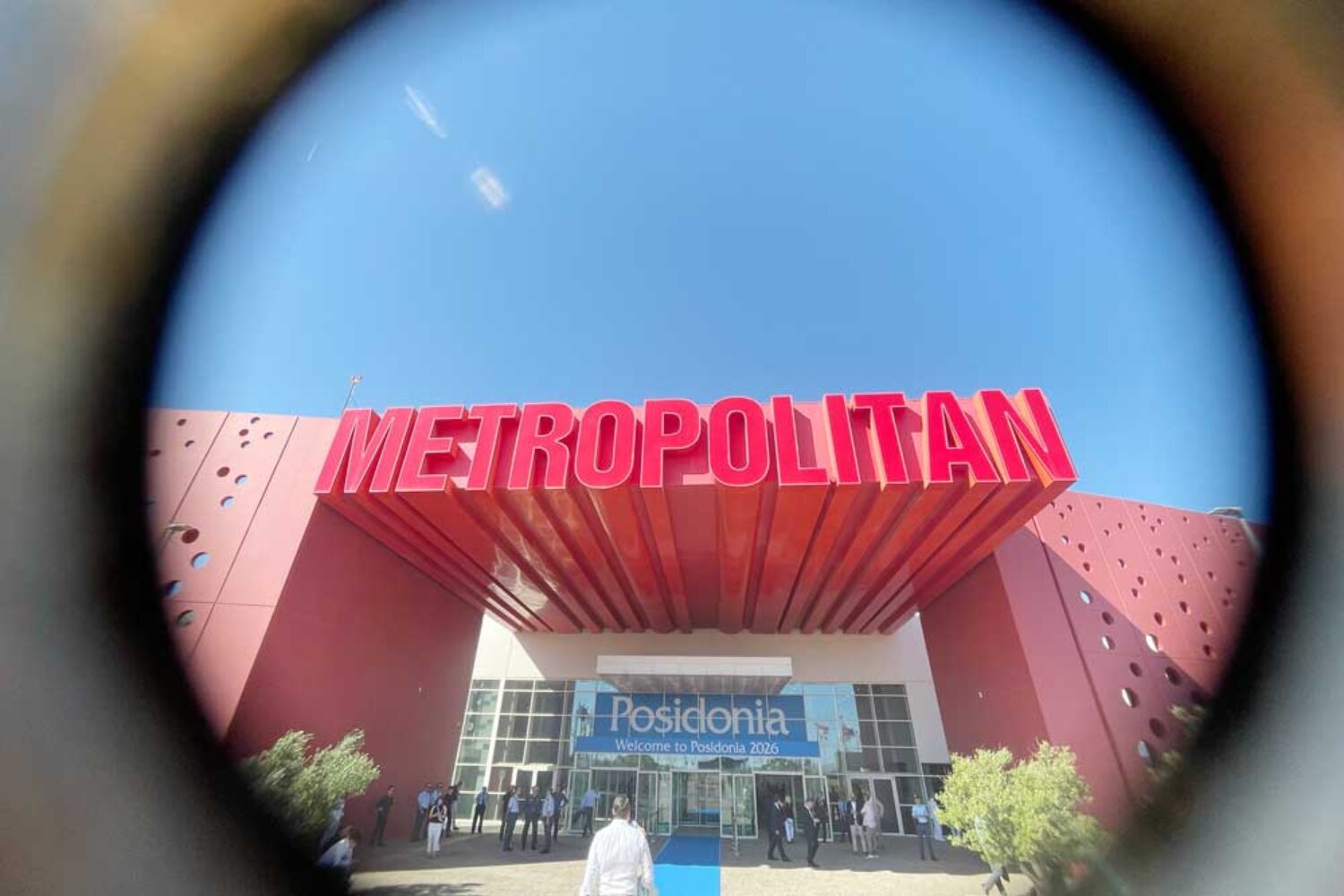
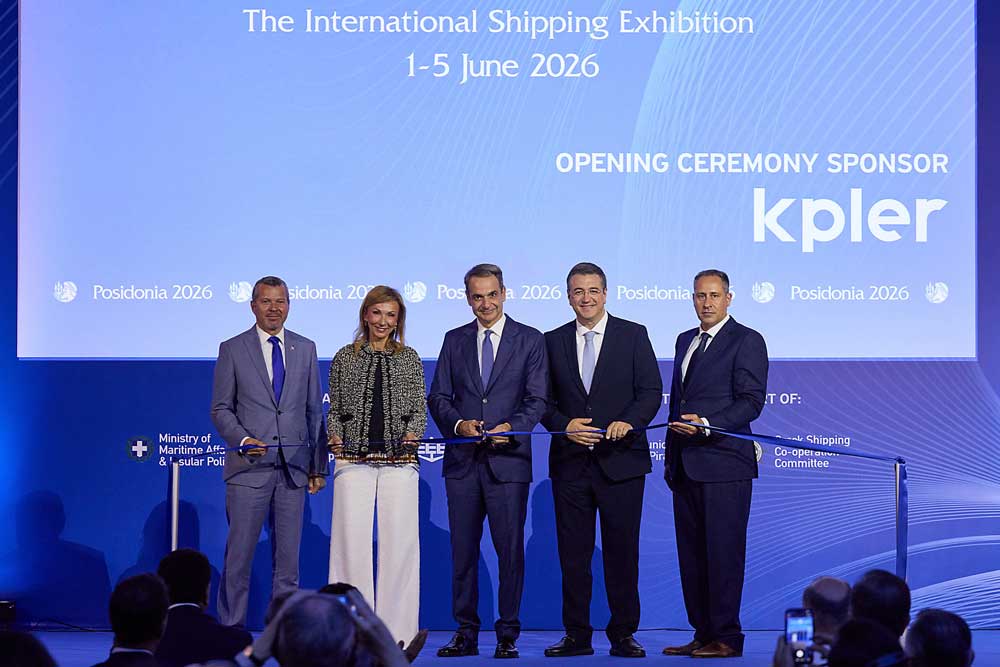
Last week, the maritime industry met in Athens. On the occasion of the 29th edition of Posidonia, 2,227 exhibitors from 83 countries came to the Greek capital. Contracts worth billions were awarded and geopolitical topics were discussed.
This year, Posidonia took place against a backdrop of geopolitical and regulatory challenges. These include the tensions in the Red Sea and the Strait of Hormuz as well as protectionist trade policies and the controversial decarbonization roadmap of the International Maritime Organization (IMO).
In his opening speech, IMO Secretary-General Arsenio Dominguez pointed out that the current situation in the Middle East, including the tensions in the Red Sea and the Strait of Hormuz, poses significant challenges to global shipping, energy security and supply chains. “The strategic importance of the Strait of Hormuz as a key bottleneck for global energy trade cannot be overstated. Disruptions there have a direct impact on trade,” said Dominguez.
The region has so far handled around 20 million barrels of oil per day, around 25% of the global seaborne oil trade, almost 20% of the global LNG trade and around a third of the fertilizer trade. At the same time, the uncertainty in the Red Sea is affecting traffic through the Suez Canal, through which 12 to 15 % of global trade and 20 % of global container traffic is handled under normal conditions, the IMO Secretary-General described the situation.
EU Commissioner Apostolos Tzitzikostas also addressed the current challenges in shipping: “Freedom of navigation means safe and unhindered passage – without coercion, without discrimination and regardless of a ship’s flag. Its importance is enormous. Shipping transports 76% of the European Union’s imports and 73% of its exports. Even within Europe, maritime transport accounts for almost a third of all goods traffic. The value of the EU’s maritime imports alone amounts to €1.3 trillion annually. Europe has more than 300 shipyards and 28,000 manufacturers of marine equipment.”
According to Tzitzikostas, these figures clearly show that there would be no competitive Europe without ships and ports. “This is why I presented two key EU strategies before the outbreak of the crisis in the Middle East – the European Industrial Strategy for Shipping and the Strategy for European Ports. We have a unique opportunity ahead of us: Europe should not only accompany global developments, but lead them,” said the EU Commissioner.
The President of the Union of Greek Shipowners, Melina Travlos, also had clear words: “Let’s be realists: without freedom of navigation, there can be no global prosperity. Without safe sea routes, there can be no safe global trade. Without a strong shipping industry, there can be no resilient economy. And without realism, there can be no sustainable green transition.”
Emission-free shipping
The transition to emission-free shipping was one of the dominant themes throughout the five days of the trade fair. Posidonia 2026 was the first edition of the event to take place entirely within the framework of the European Emissions Trading Scheme (EU ETS) for shipping. This regulatory reality has fundamentally changed the economic framework conditions for ships flying the European flag and for shipping companies with calls in Europe.
Against this backdrop, numerous industry representatives called for the revenue from the EU ETS to be plowed back into the development of green technologies for shipping. They also called for parallel systems for recording emissions to be avoided in order to prevent competitive disadvantages.
Orders worth billions
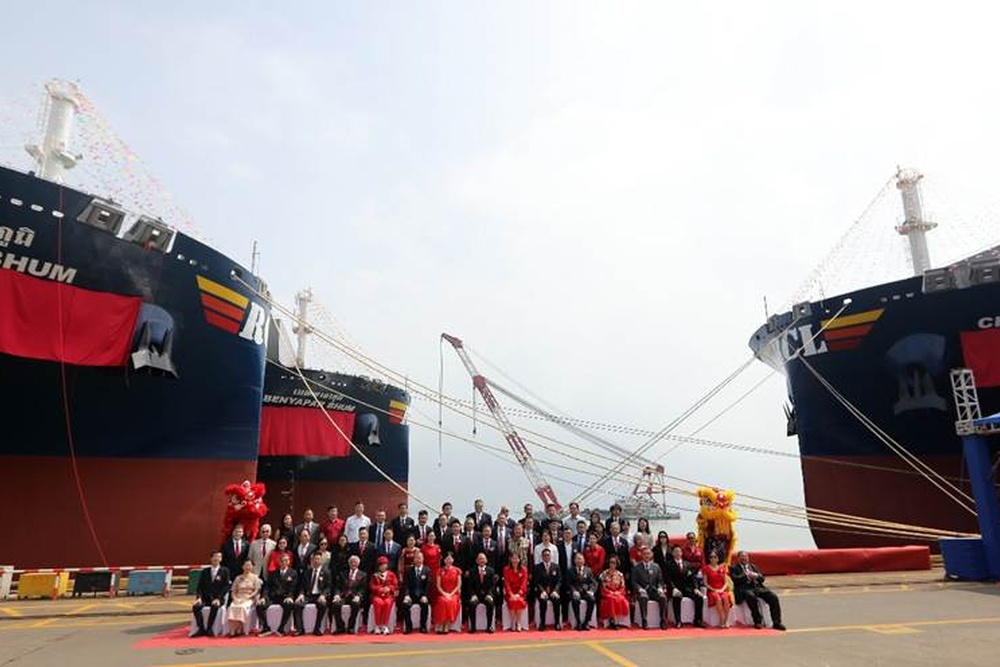
During Posidonia 2026, not only were speeches made, but deals were also concluded. For example, George Prokopiou’s Dynacom Tankers ordered twelve VLCC tankers worth 1.47 billion US dollars from the Chinese shipyard Hudong-Zhonghua Shipbuilding. Hengli Heavy Industries announced orders totaling USD 2.2 billion, including 21 firm newbuilding orders and four options from six international shipping companies.
The package includes container ships, Kamsarmax and Capesize bulkers, LR2 product tankers and Suezmax crude oil tankers. Greek shipowners were represented across several vessel types, including Venergy Maritime with Suezmax newbuildings. In addition, ONEX Shipyards signed a contract for the design and construction of four plus four eco-friendly vessels for Antipollution, a V Group company. The vessels are to be built entirely in Greece at the shipyards in Elefsis and Syros.
“As with every edition, Posidonia 2026 was the preferred venue for the most important commercial announcements in the shipping industry. Significant deals were concluded in newbuilding orders, technology partnerships, classification agreements and alternative fuel conversion projects,” emphasized Theodore Vokos, Managing Director of Posidonia Exhibitions S.A.
German Pavilion back again
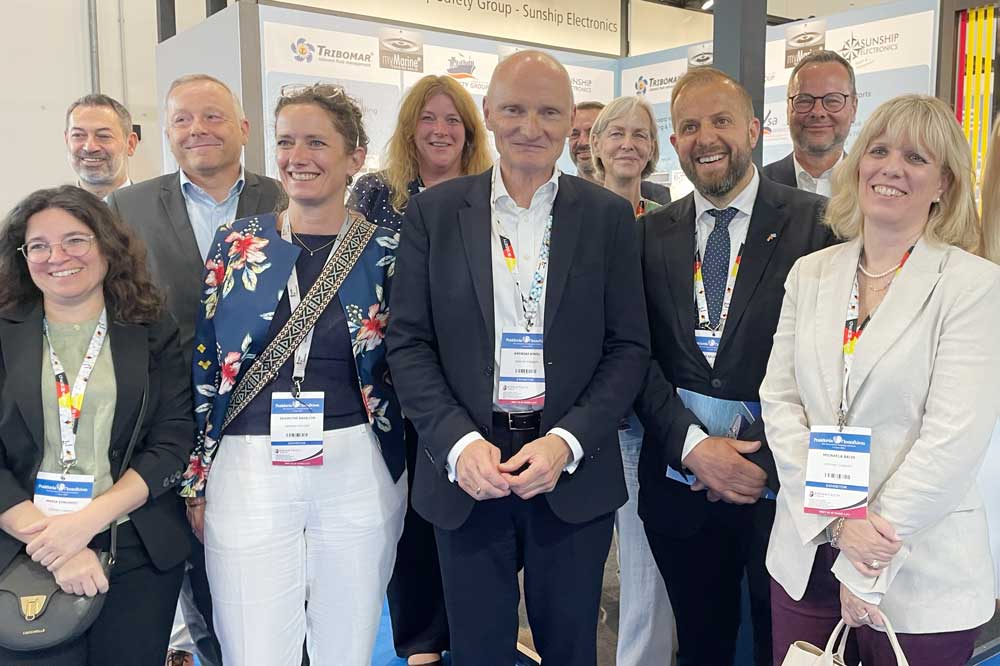
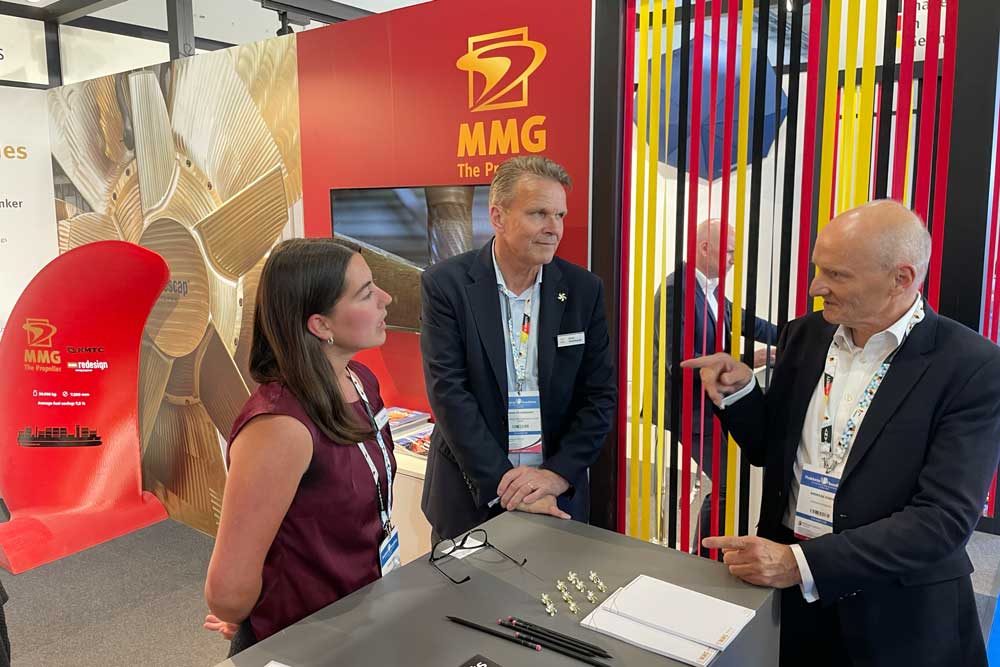
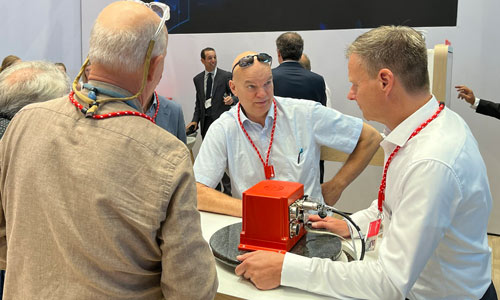
There was great international interest in this year’s Posidonia. This year’s fair was characterized by a record number of 24 national pavilions. After a long absence, Germany was once again represented with an official national pavilion.
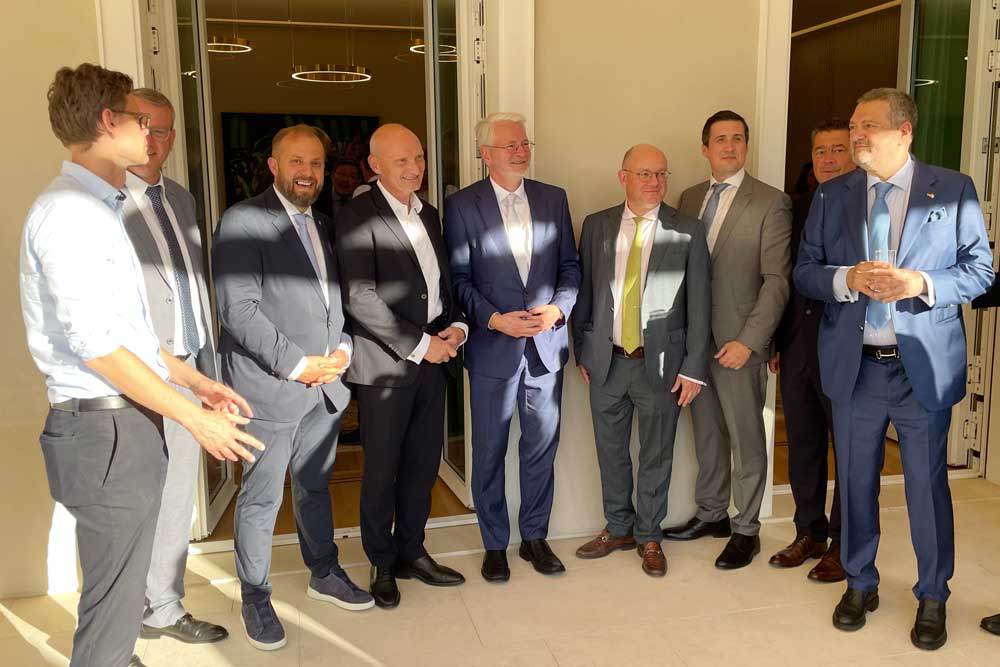
The German ambassador in Athens, Andreas Kindl, expressed his satisfaction with Germany’s return to Posidonia. At a reception in his residence, which was attended by exhibitors and representatives of the maritime industry from Greece and Germany, he announced that Germany would continue its participation with a national pavilion every two years in future.
In view of the high demand and a waiting list for this year’s pavilion, Kindl also spoke out in favour of enlarging the German joint area at Posidonia 2028 – provided this is made possible by the trade fair organizers. During his tour, he was particularly impressed by the large number of medium-sized companies offering products and services for the shipping industry worldwide from Germany.