



The Finnish cargo handling specialist wants to alleviate the problem of uneven load distribution when securing cargo on container ships with a new solution using “elastic elements”. Initial projects are running successfully.
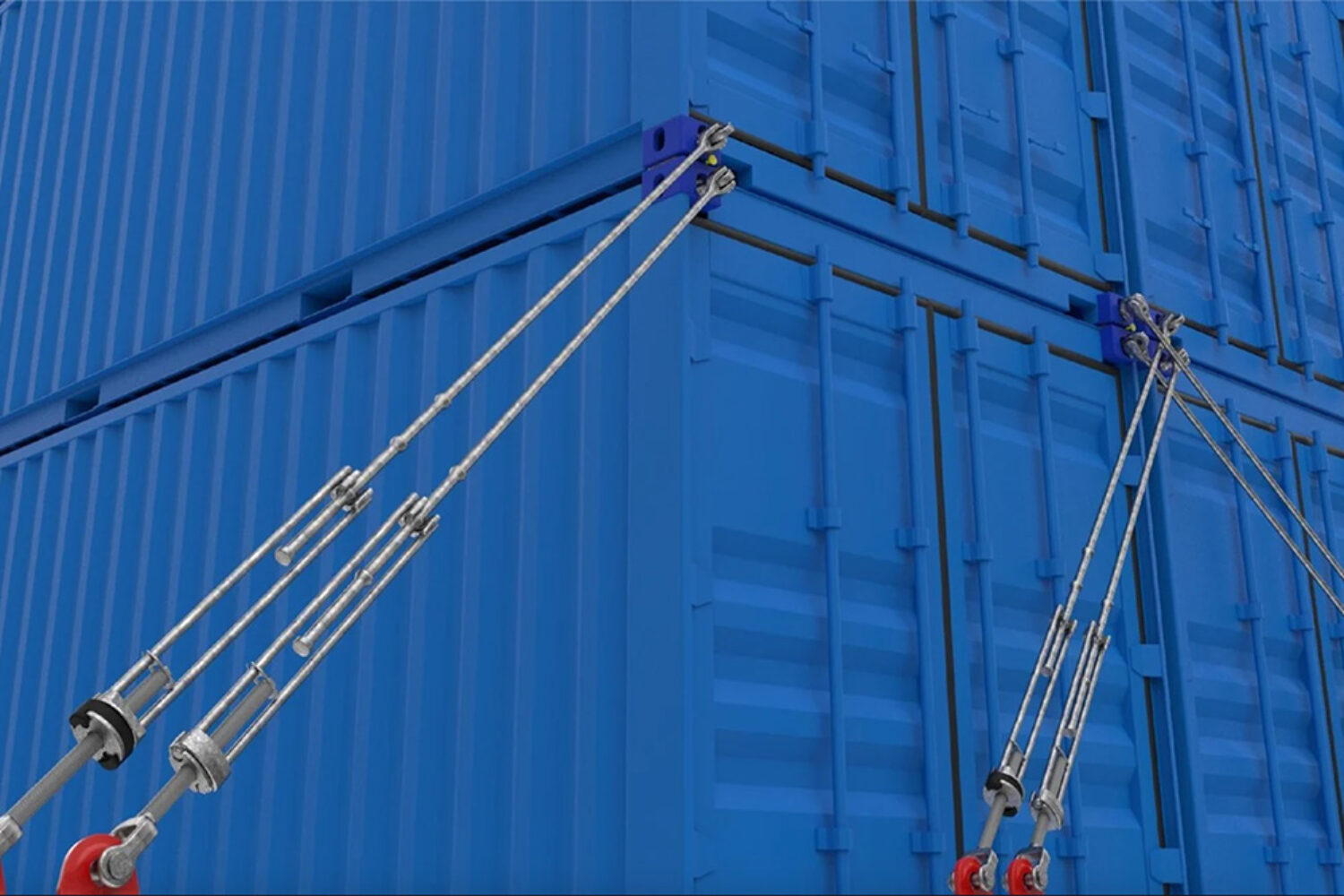
The former Cargotec subsidiary has developed the “Balanced Lashing System” for this purpose and has now presented it to the public. Shipowners should benefit from a higher payload, greater safety and stability.
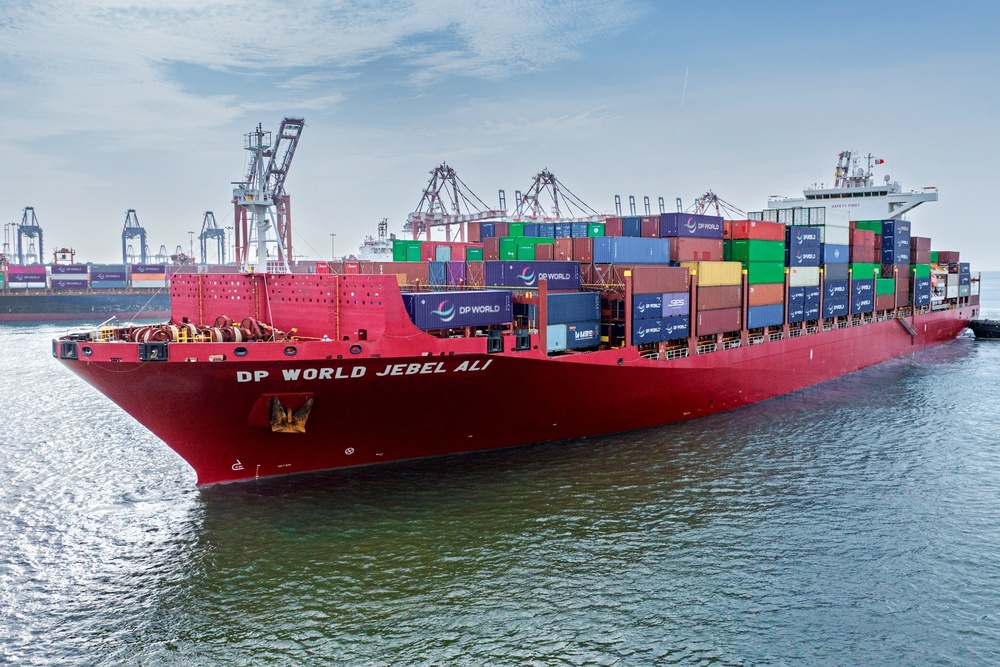
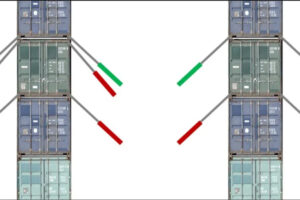
The background to the development is that the load distribution on conventional container ships is often uneven, according to the Finns, who have been part of the portfolio of European financial investor Triton since last year. “The upper cargo securing devices carry the majority of the load, while the lower ones only operate at around half their permitted capacity,” they say. The new system aims to change this dynamic by using proven elastic elements – with materials that have long been used for hatch cover systems. The aim is to achieve a more even distribution across the entire load securing system.
It’s not about prioritizing safety or capacity, it’s about enabling both,” said Magnus Sjöberg, Executive Vice President of MacGregor, at the announcement. “The system allows for more intuitive lashing while increasing the vessel’s yield potential.” The even loading of the components should enable shipping companies to achieve significantly higher stack weights and thus load up to 10% more cargo on deck.
Optimized capacity utilization and the resulting higher load can improve efficiency and ultimately also the ship’s relative ecological footprint. This aspect has been high on the agenda of the equipment industry for years. This is also the case at Macgregor, as Arto Toivonen, container ship and lashing expert, explained in detail in the 02/2025 issue of HANSA. In most cases, the first step is to open your eyes to possible inefficiencies. Various measures can then be taken – including on the lashing system.
The system is also designed to reduce the risk of broken container corners and failure of the load securing bars by eliminating load peaks on the upper turnbuckles. The integrated elastic elements act as shock absorbers and compensate for the vertical forces caused by the rolling movements of the ship in extreme sea conditions. For existing vessels, the modernization would not require any welding work; only the upper turnbuckle would need to be replaced.
Prior to the announcement, Macgregor tested the system on board with shipping company partners. Orders have now been placed for 100 newbuildings. It is now available for all container ships with a capacity of more than 5,000 TEU that are equipped with external lashing systems. Class approvals have been granted by DNV and ABS, the approval process at LR is still ongoing.
The controlled range of movement of the elastic components should make it possible to compensate for approx. 12 mm of play in the twistlock. Lashing straps and twistlocks should carry the tension together. The solution is said to be compatible with external double cross and single cross lashings on two load levels.