



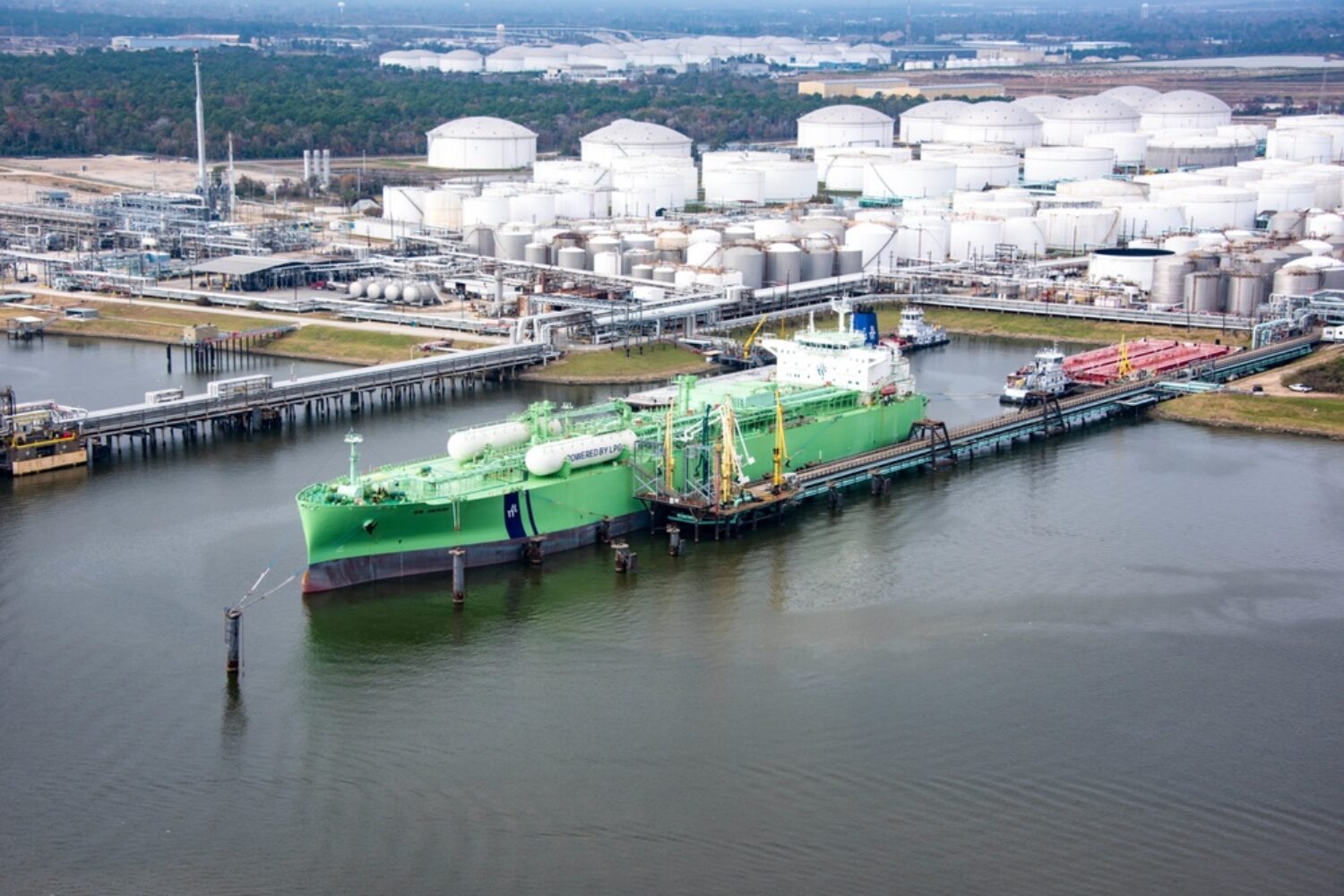
The loss of liquefied petroleum gas (LPG) cargoes from the Middle East as a result of the Iran war has driven charter rates for very large gas carriers (VLGC) to historic highs.
US LPG producers are stepping in to fill the gap. The USA is already the largest LPG supplier in Europe. With more US LPG now being shipped to Asia, the increase in ton-miles has resulted in daily time-charter equivalent (TCE) rates for VLGC reaching nearly $200,000. As of June 4, the Baltic Exchange valued daily TCE rates at $178,594 for the US-Gulf-UK Continent route and $164,441 for the US-Gulf-Japan route.
By comparison, on February 27, one day before the outbreak of war, the average daily rates for the US-Gulf-UK Continent and US-Gulf-Japan routes were $66,967 and $73,431, respectively. Shipbroker SSY said that seaborne exports were up significantly at all major terminals on the US Gulf. Enterprise Houston, Energy Transfer Nederland, P66 Freeport and even Targa Galena Park, where force majeure was declared after technical problems on March 18, all reported increases.
SSY estimates that ton-miles of US LPG exports are now around 14 billion, up from 10 billion before the war. In addition, the ramp-up of the Flexport NGL expansion at Energy Transfer’s Nederland terminal, along with the new “Neches River Phase 2” launched in April, has doubled exports from Beaumont to more than 2.6 million tons per month. P66 also appears to have improved the throughput of its Gulf Coast pipelines through the use of automated software. Exports from Freeport in May were 700,000 tons above the average of the past twelve months.
The Atlantic also contributed to this development. Exports from the Marcus Hook terminal in April were 100,000 tons above the previous year’s figure. SSY also pointed out that rising demand in the Atlantic Basin, not only for LPG but also from other sectors, had increased auction prices and congestion on the Panama Canal. The highest bid for a Neo-Panamax slot this month was $3.5 million for a northbound passage on May 10.
SSY said: “A growing proportion of VLGCs are now sailing via the Cape of Good Hope. This adds more than 20 days to a round trip. The combination of Cape distances and congestion on the Panama Canal has significantly tightened the market in recent months. However, as always with scarce slots on the Panama Canal, yields are likely to correct as soon as the queue normalizes.”