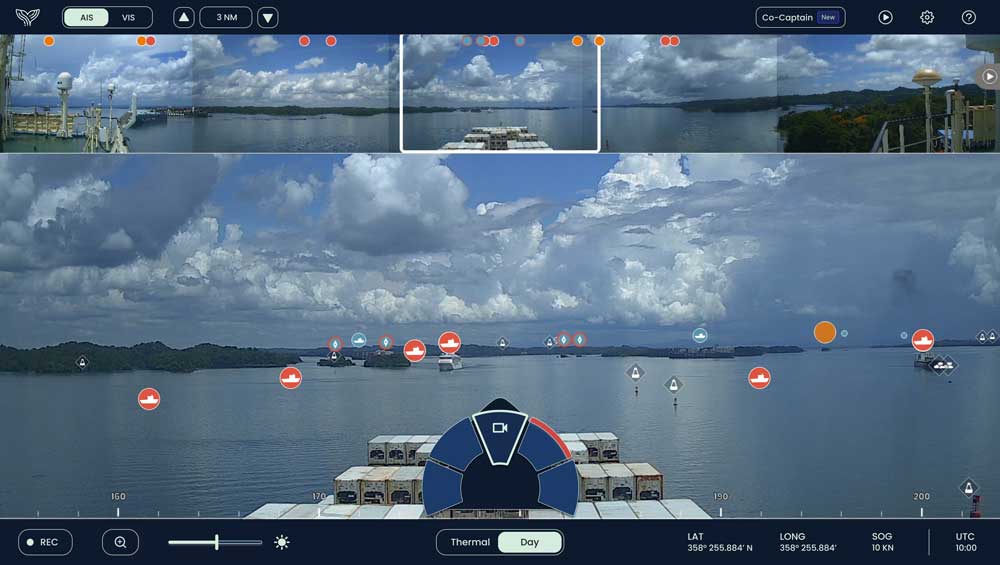



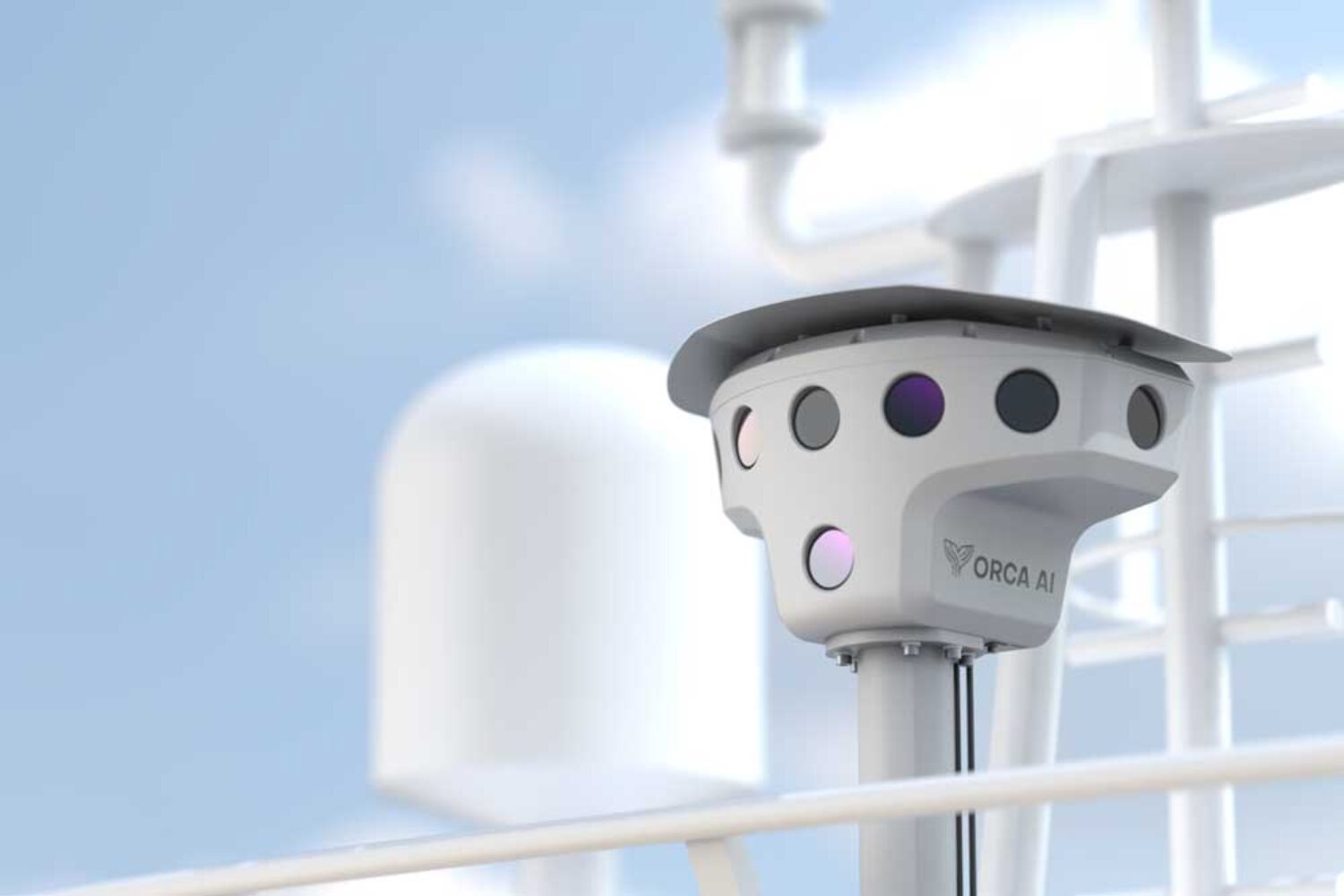
The use of artificial intelligence can significantly increase maritime safety. This is the result of a study in which data was collected from almost 140 ships.
The study was conducted jointly by the London-based AI company Orca AI and the P&I Club North Standard and is the first of its kind in the world. Over a period of twelve months, the partners collected operational data from a total of 139 vessels on which the Orca AI platform was installed. The evaluation showed that the use of artificial intelligence led to significantly more predictive navigation: serious near misses and evasive maneuvers decreased by 52% during the study period. Even in the first six months, during which the crews initially learned how to use the platform, the number of near misses fell by 22%.
More than 10.8 million nautical miles traveled by the ships were examined as part of the study. The initial system adaptation phase (the first three months after the installation of Orca AI) was compared with the stabilized use phase (months ten to twelve). The most important safety indicator was the frequency of serious near misses (high-severity close encounters), defined using objective parameters. The Closest Point of Approach (CPA), Time to Closest Point of Approach (TCPA), interactions with Collision Prevention Regulations (COLREGs) and traffic density were taken into account.
According to the study partners, the improvements were consistent regardless of the age of the ships. They would show that AI-supported situation recognition can improve safety independently of existing bridge systems.
Artificial intelligence allowed crews to sail more safely
The report found increased compliance with SMS (safety management system) protocols on the open sea. On busy shipping corridors, near misses decreased measurably: in the North Sea and Baltic Sea by 36%, in the China Sea and Sea of Japan by 18% each. In these areas, the analysis also identified a clear trend towards more proactive crew behavior, which was reflected in increased use of the Orca AI platform. Crews relied more on the system in environments with the highest navigational complexity – where bridge teams have to cope with heavy traffic, numerous contacts and limited decision time.
“In such conditions, AI-powered decision support plays a critical role in making safe and timely decisions,” according to a joint statement from Orca AI and North Standard. “The results show that crews are actively using AI-powered situational awareness to manage multiple contacts, prioritize risks and stay on top of rapidly evolving situations.”
This combination of improved outcomes and increased utilization proves that AI is not only effective, but also operationally integrated. Taken together, these results suggest that AI is becoming an integral part of bridge operations, supporting more consistent, proactive decision making in the highest risk, lowest margin of error environments.
Improved detection of risks
“What this joint analysis does is validate, at scale, what we’ve been seeing across our customer base for several years—that earlier, better-informed decisions on the bridge lead directly to safer voyages,” said Yarden Gross, CEO and co-founder of Orca AI. “By improving detection, prioritisation, and response in real time, crews are able to manage developing situations before they escalate into high-risk encounters. As this shift becomes measurable and consistent across fleets, we can expect it to increasingly be reflected in reduced risk exposure—and over time, in how insurers assess that risk.”
“What we’re seeing through our work with Orca AI, and now reinforced by this study, is that improved situational awareness and earlier risk detection can materially reduce close-quarters situations. For our members, and bridge teams, that translates directly into safer operations, lower exposure to navigational risk, and more consistent decision-making under pressure.”