



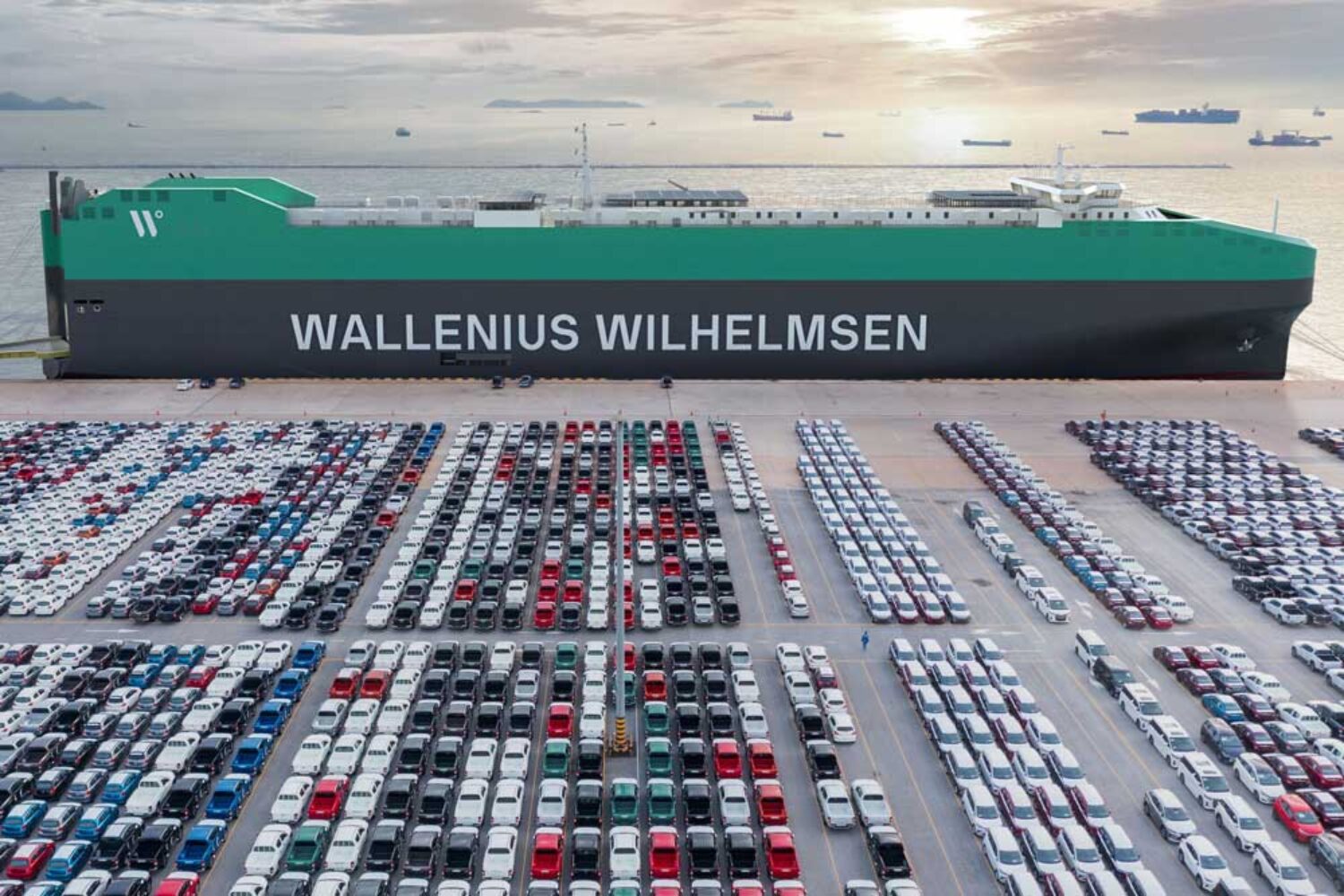
Shipping company Wallenius Wilhelmsen closed the first quarter of 2026 with a good result despite the uncertain market situation. Demand for the company’s car carriers is increasing, particularly in Asia.
In the first three months of the year, Wallenius Wilhelmsen achieved an adjusted EBITDA of $389 million – slightly below the figure for the previous quarter, which the shipping company closed at $400 million.
“Demand in the shipping sector remains very strong, with solid volumes and high capacity utilisation, especially outside Asia,” said Lasse Kristoffersen, President and CEO of Wallenius Wilhelmsen. “At the same time, the conflict in the Middle East and an increasingly tight charter market are putting pressure on net bunker and capacity costs.”
Total revenue in the first quarter amounted to $1.253 billion, down 1% compared to the previous quarter. The seasonally lower revenue in the shipping segment was partially offset by the logistics segment. Net profit increased slightly, from $175 million in the fourth quarter of 2025 to $177 million.
“The year 2026 will be characterised by the current cost increases, and the current situation underlines our financial, commercial and operational strength,” said Kristoffersen. The annual outlook remains “solid”, the shipping company announced. However, due to increased net bunker and capacity costs in the shipping segment and a weak start to the year in the government services segment, expectations have had to be adjusted.
“Adjusted EBITDA for 2026 is now expected to be around $1.6 billion, compared to $1.65 billion to $1.75 billion in the previous forecast.”
By comparison, Wallenius Wilhelmsen achieved a total EBITDA of $1.811 billion in 2025.
A ship in the Strait of Hormuz
The uncertain geopolitical situation, including the conflict in the Middle East, continues to affect business. One of the shipping company’s ships is located in the closed Strait of Hormuz, while the land-based operation in Dubai is operating only to a limited extent. “We are relieved that the employees affected by the Middle East conflict, both on land and aboard our ships, are safe,” said Kristoffersen.
According to the shipping company, the direct economic impact of the Middle East conflict remains limited. The region accounts for only 2% to 3% of revenue.
However, the closure of the strait has also led to a sharp increase in fuel costs, which is affecting the shipping company’s operations. The impact of these higher costs is expected to be felt in the coming quarter. In the long term, Wallenius Wilhelmsen expects to fully recover its costs in line with the BAF clauses.