



Recent attacks in the Black Sea highlight the growing dangers facing merchant shipping, even in European waters. The German Shipowners’ Association (VDR) is calling on the German Government to intensify its efforts to ensure the safety of shipping and seafarers.
Merchant ships are being sunk in the Black Sea, attacked again in the Gulf region and continue to face threats in the Red Sea. Several key shipping routes are currently under pressure simultaneously. This endangers lives and global supplies, disrupts supply chains and adds to price pressures, including in Germany and Europe.

“We have reached a point where the simultaneous escalation across several key shipping routes is jeopardising the rules-based maritime order as a whole. Attacks on civilian vessels and the obstruction of free passage must not become the norm,” says Martin Kröger, Chief Executive of the German Shipowners’ Association (VDR). “The international community must work together to counter this development through diplomacy, international cooperation and effective protection for merchant ships and their crews.”
The threat extends to Europe’s shores
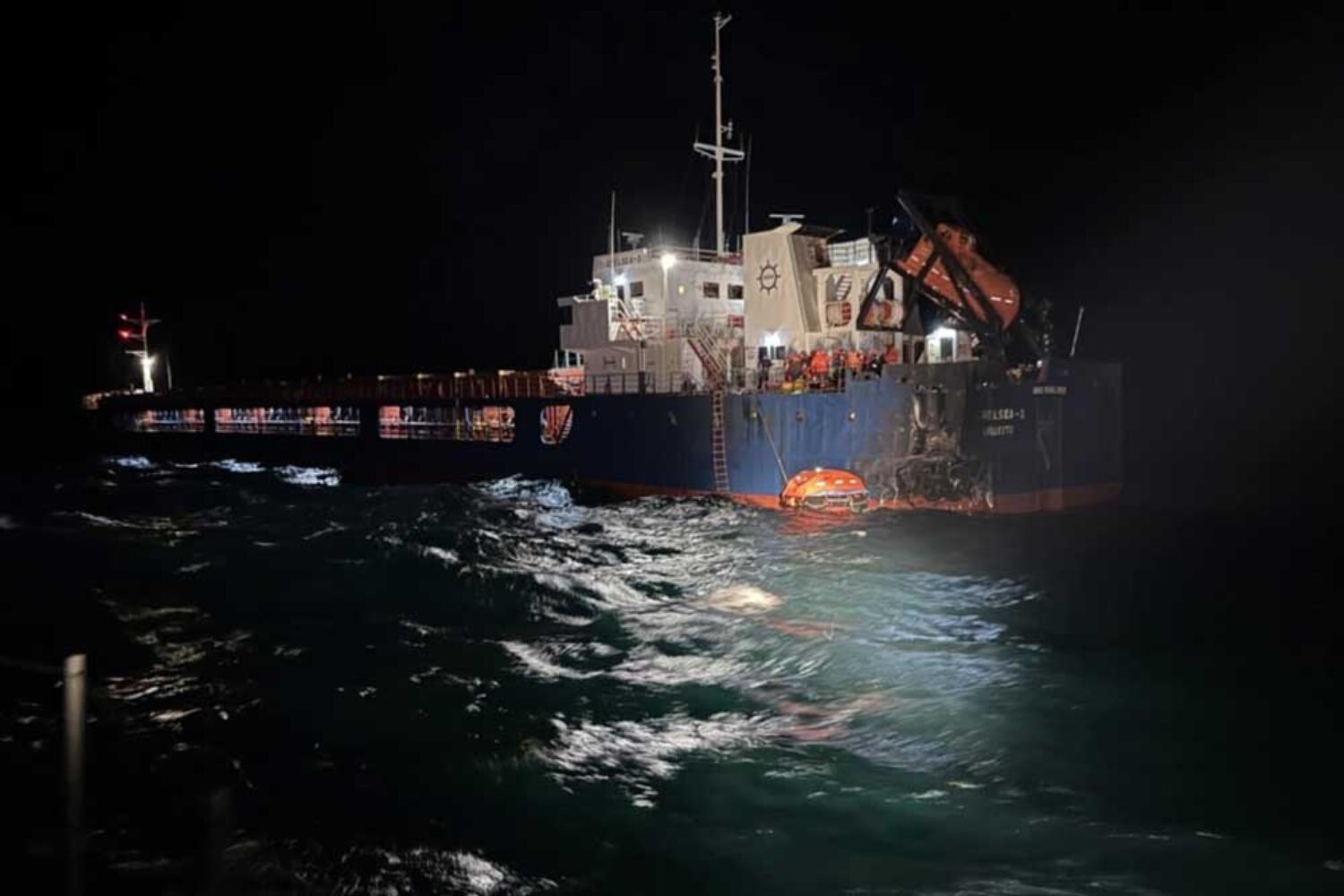
Recent attacks on merchant ships in the Black Sea demonstrate just how close the violence has come to Europe. Cargo ships have been struck by drones even off the coast of Bulgaria, an EU Member State. One of the vessels sank.
Attacks on merchant ships are also occurring repeatedly in the Persian Gulf and around the Strait of Hormuz. The International Maritime Organization (IMO) has recorded 113 confirmed incidents and 24 seafarer fatalities in the region since the start of the conflict.
In the Red Sea, the risk of renewed Houthi attacks remains. Ongoing military tensions surrounding Taiwan also pose risks to key trade routes. Closer to Germany, in the Baltic Sea, interference with and manipulation of satellite navigation signals such as GPS are also hampering safe navigation.
Consequences felt at petrol stations and supermarkets
The impact of these tensions and conflicts on shipping and maritime trade is considerable and is being felt worldwide. Russia and Ukraine account for around 27% of global wheat exports. In September, during the crucial shipping period following the harvest, wheat shipments via the Black Sea route were around 78% lower than a year earlier, falling from 7.3 million tonnes to just 1.6 million tonnes.
In 2025, around 20 million barrels of oil and petroleum products passed through the Strait of Hormuz every day. At the beginning of October, crude oil shipments were around 26% below pre-war levels. Liquefied natural gas (LNG) transport also remains severely restricted. Before the war, almost 20% of global LNG trade passed through the strait.
In the Red Sea, persistent security risks are forcing many ships to take detours around Africa. This is extending delivery times and increasing transport costs for raw materials, clothing, electronics and industrial components.
When deliveries fail to arrive, buyers worldwide seek alternatives, driving up procurement costs for Germany and Europe as well. Higher energy prices place a burden on industrial production, while more expensive diesel affects agriculture and freight transport. Combined with rising transport costs, this creates additional price pressure throughout supply chains.
“The consequences affect our economy, which relies on raw material imports, just as much as they affect us as consumers – whether we are heating our homes, shopping at the supermarket or filling up at the petrol station. Safe sea routes are the foundation of our prosperity and an affordable supply of goods,” says Kröger.
Shipping continues to deliver despite growing risks
Despite the tense situation, maritime shipping continues to maintain supplies. Shipping companies and crews are adapting routes and accepting lengthy detours to keep goods moving.
“The fact that goods continue to arrive must not obscure just how vulnerable their supply routes have become. Seafarers who are injured or killed in attacks pay the highest price,” says Kröger. “Sea routes do not protect themselves. The people who secure our supplies need protection themselves.”
The VDR is therefore calling on the German Government and its European and international partners to intensify diplomatic efforts to end the attacks, safeguard freedom of navigation and coordinate protective measures. This also includes adequately equipped naval forces and protection missions such as the EU’s Operation ASPIDES.
In this context, the VDR welcomes the international initiative to protect freedom of navigation presented on 12 October, which is supported by all EU Member States and 34 other countries. The initiative is aimed particularly at unlawful levies, restrictions on passage and other infringements of freedom of navigation.
The current EU summit is also addressing the security of shipping routes. According to the VDR, it is essential that joint political declarations are followed by concrete measures to protect merchant ships and their crews.
The German merchant shipping industry comprises just under 300 shipping companies operating a total of 1,716 vessels. Many of these ships and their crews operate worldwide and depend on safe, freely accessible sea routes.