

After the first nine months of the 2025/26 financial year, TKMS has achieved double-digit growth in turnover and profit and has raised its full-year forecast for the second time this financial year.
The stock market responded to the figures with a share price surge of more than 15% at times. Behind the record order book lie two major programmes that have not yet been finalised – and a dividend policy announced for the first time.
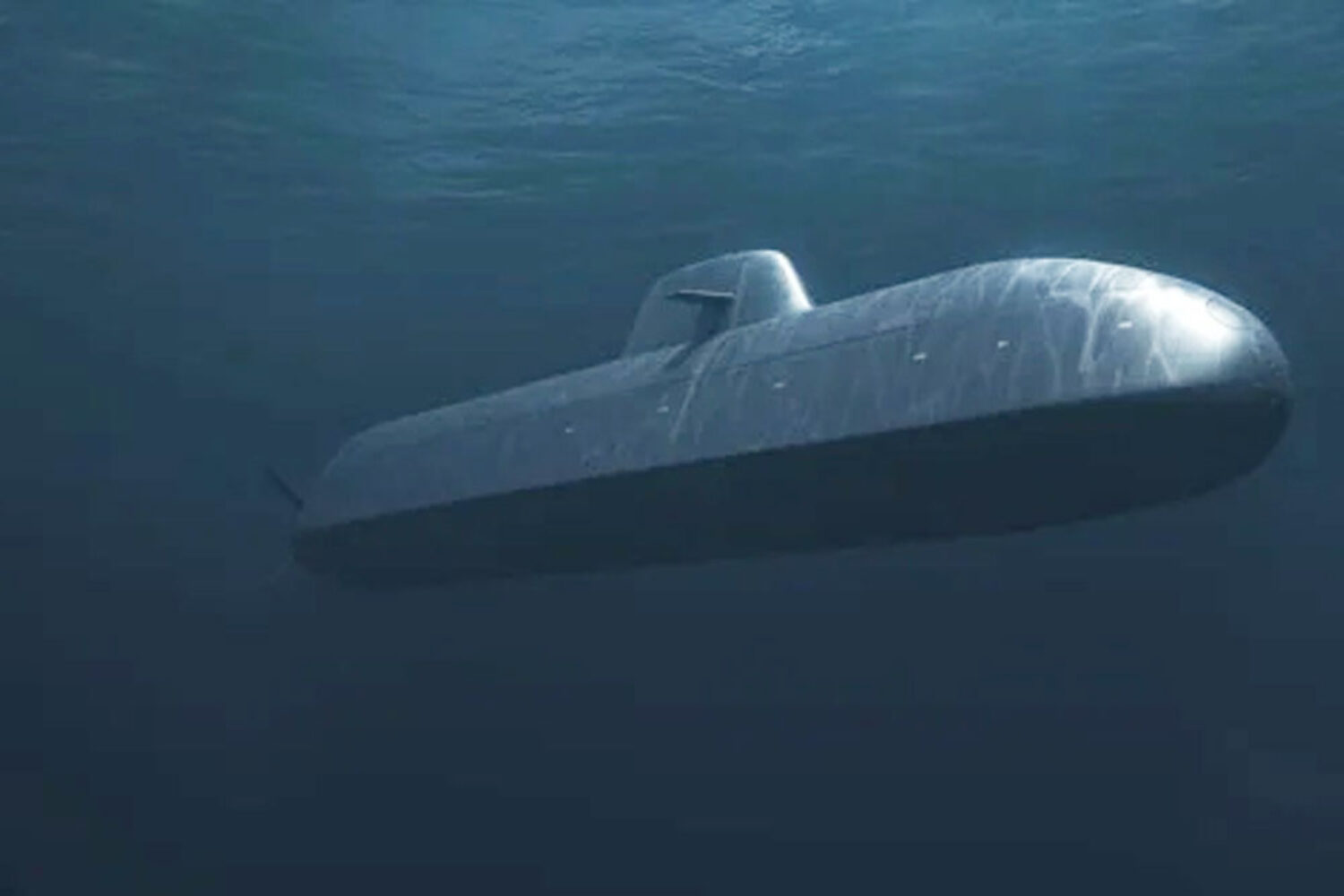
The Kiel-based shipbuilder increased its turnover by 19% to €1.89 billion between October 2025 and June 2026, and its adjusted EBIT by 13% to €110 million – the margin reached 5.8 %, exceeding the analyst consensus of €101 million. New orders totalled €3.6 billion, whilst the order book reached a record high of €20.1 billion. Including the €6.3 billion for four MEKO A-200 DEU frigates to be recognised after the balance sheet date, the order book stands at more than €25 billion. The company expects further orders totalling over five billion euros in the fourth quarter. Three submarines were delivered: the ‘Hızırreis’ (S-331) to Turkey in November 2025, and two deliveries treated as confidential in January and June 2026 – the Singaporean ‘Illustrious’ (Type 218SG) and the ‘Drakon’ for Israel.
The full-year forecast has been raised for the second time in six months: revenue is now expected to grow by ten to twelve per cent (previously 2 to 5%), with the EBIT margin reaching up to 6.5. In the medium term, Chief Financial Officer Paul Glaser is targeting more than seven per cent. Analysts reacted positively, with several firms raising their price targets and recommending a ‘buy’. The share closed at €94.20, up 8.5%, after trading above €100 intraday for the first time in around six months.
Full capacity – now above water too
The full capacity utilisation well into the 2030s is not solely down to submarines. The Kiel-based company has been having the F126 alternative, the MEKO A-200 DEU, built on a preliminary contract basis since February – well before the contract was signed on 14 July. During the meeting, Oliver Burkhard repeatedly emphasised that time was of the essence: “Everyone has a budget, but no one has any time left”, and expressed confidence regarding the delivery of the first vessel in December 2029 – “we still have forty months”. Burkhard attributes the reason why the MEKO A-200 DEU project got off the ground so quickly to its availability. His Chief Financial Officer, Paul Glaser, added: “Nothing redesigned from scratch with fancy photos that are then constantly called into question, but a proven concept – you know what you’re getting. This isn’t a luxury vessel, but a proper ship.”
The full order book is leading to an increase in staff numbers. Group-wide, more than 9,700 people now work for TKMS – and the trend is upwards. At the main site in Kiel, the workforce is set to grow from around 3,700 at present to around 4,000 by the end of the year. According to Burkhard, there are around thirty applications for every vacancy, many from the automotive industry.
Wismar is set to become more than just the second German site. The former MV shipyard is to develop into a hybrid shipyard for underwater and surface projects. Once the workforce exceeds 400 employees, it is set to grow to up to 1,700. TKMS is investing over 200 million euros, including in a pressure-hull assembly line where submarines can be built on the assembly line in future. From autumn onwards, the first sections for the German-Norwegian Class 212CD submarines are to be built in Wismar, followed in 2027 by the start of construction of the new research vessel ‘Polarstern’.
Regarding the bid for German Naval Yards Kiel, Burkhard explained that the withdrawal on 21 July was due to a failure to reach an agreement with the owner, CMN Naval.
The risks – an analytical overview
The growth story outlined by Burkhard stands or falls on two programmes that are not yet a done deal. Since early July, TKMS has been the preferred bidder in Canada for up to twelve Type 212CD submarines. According to Burkhard, the contract is due to be signed by the end of 2026. However, the official Canadian interpretation suggests the end of 2027. The Korean competitor Hanwha remains in the running as a ‘reserve supplier’. Burkhard estimates the Canadian submarine contract alone to be worth more than 15 billion euros, with a further 40 years of maintenance to follow.
In India, TKMS is awaiting approval from the Cabinet Committee on Security (CCS) under Prime Minister Modi for the P-75I project. The Ministry of Finance and the National Security Council Secretariat have already given the green light. The final hurdle is technical confirmation that the German technology transfer is sufficiently comprehensive (Outlook India, 31 July).
Notably, during the media briefing, a slide highlighted an option for three further boats in addition to the six already known. According to Burkhard, the contract is worth around eight billion euros.
Should both programmes fail, the dividend policy announced for the first time will also lose its basis: TKMS intends to distribute 20 to 30% of its adjusted consolidated profit from the 25/26 financial year onwards – given a free cash flow currently standing at minus €204 million, this is an announcement that relies on the expected down payments from Canada and India.
Iran effect and strong Atlas Elektronik
Burkhard expressed surprise at a development in the Middle East. As a result of the war in Iran, demand for mine-countermeasures capabilities is rising there. “We didn’t have that before,” he admitted, without quantifying the potential.
Within the group, Atlas Elektronik increased its turnover by 28% to €612 million and saw its order intake rise eightfold to €1.95 billion (previous year: €235 million). The DM2A5 heavyweight torpedo and the 212CD order book have played a significant role in this. Also of note: a mine countermeasures project for Ukrainian coastal defence using Seehund drones, as well as the SeaSpider anti-torpedo torpedo, which is due to enter series production in 2027.
TKMS’s openness towards the new entrant
Burkhard’s comments on the division of roles for the second lot of the future F128 are telling. There are currently no plans to involve NVL in the ongoing programme – NVL had merely been a subcontractor on the F126. For the optional second tranche, he held out the prospect of participation subject to certain conditions: NVL should submit a bid. “We have clear rules that we should seek a way to involve as many companies as possible who were not selected for the F126. But it is by no means a must. It depends on economic, legal and tender considerations.” The overriding condition remains the deadline: “No timetable must be jeopardised. Anything that would jeopardise the timetable goes against what we have promised.”
F127: 5+3
With regard to the F127 air defence frigate, the company outlined a phased structure: five ships in the first batch – plus options for three further vessels. However, a slide shown indicated a 5+1+2 structure, without further explanation. Burkhard emphasised the “significant order potential” and, at the same time, the “strong partnership” with NVL.
Comment
24 June reshuffled the German naval shipbuilding landscape: TKMS secured the contract for the A-200, a contract that Rheinmetall had lost with the F126 programme. Whilst Kiel is raising its guidance, announcing a dividend and recruiting staff, Düsseldorf is freezing plans to create 1,000 additional naval posts and scaling back its profit forecasts. The loss of the F126 contract resulted in a financial impact of €2.153 billion. In early July, the group revised its naval revenue target for 2030 downwards to around three billion euros instead of five billion, only to raise it back to five billion in August. Rheinmetall intends to offset the F126 loss through minehunters, unmanned systems and the GMF 140 frigate design, which is initially targeted at the North American market. The description provided by CFO Paul Glaser as “just a design study” with “anti-submarine warfare only” does not correspond with the technical specifications published by Rheinmetall (AAW, BMD, 64 VLS cells). It does, however, demonstrate how confidently Kiel is now sidelining the Düsseldorf-based newcomer.
In the case of the F127, it appears as though Rheinmetall – the winner of the land warfare contract – is being brought on board at sea as a junior partner in a special-purpose vehicle, with design authority remaining in Kiel.