




Following attacks by the Houthi militia on Saudi Arabian oil infrastructure in the Red Sea, the number of vessels passing through has fallen by almost half. The situation in the Strait of Hormuz also remains critical.
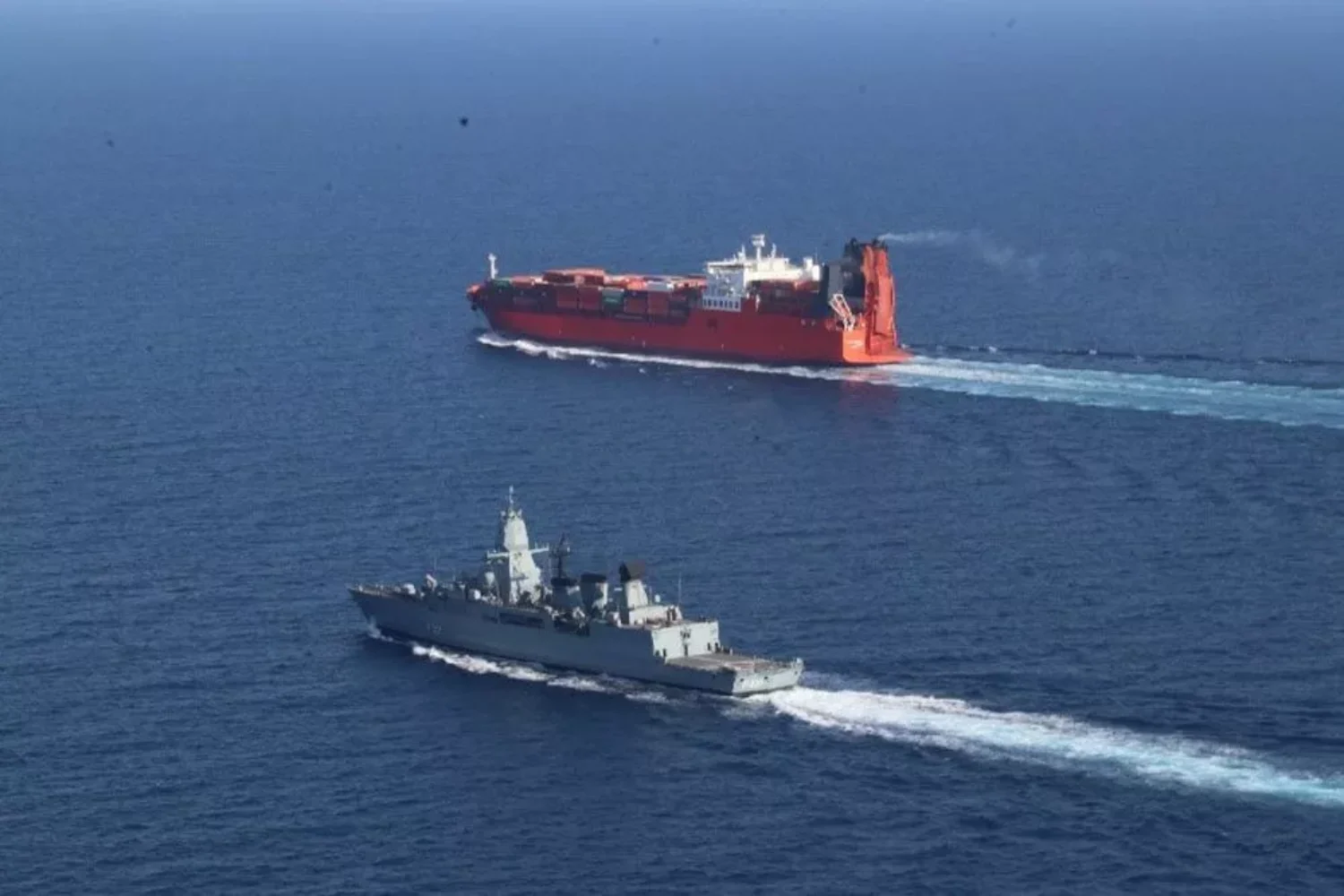
Since the Yemeni Houthis, acting on Iran’s behest, began targeting ships in the Red Sea – and particularly in the Bab al-Mandab Strait – the situation there has deteriorated significantly. According to new data from the industry service provider Kpler, only eleven ships passed through the waters on Sunday – the lowest number in months. Over the weekend, the average had been around 30 ships, representing a 50% decline compared with the average for the second quarter. It was only towards the end of 2025 that traffic in the Red Sea had slowly begun to pick up again, with the first liner shipping companies reintroducing the route via the Suez Canal into their schedules.
Oil transport has also been significantly affected: the number of VLCCs (Very Large Crude Carriers) passing through Bab al-Mandab fell from three ships a day to just one. According to the Reuters news agency, the attacks caused oil freight rates in the Middle East, Africa and Europe to rise to their highest level in two months.
The Joint Maritime Information Centre (JMIC) has highlighted two incidents involving tankers in recent days. The names of both vessels were not disclosed. On 22 July, a vessel flying the flag of Mozambique was reportedly involved in an incident in the Gulf of Oman. On 26 July, another vessel in the southern Red Sea reported that a projectile had struck near the ship’s side. According to the JMIC, the threat level in the Red Sea is ‘substantial’; in the Strait of Hormuz, it remains ‘severe’.
Very few transits through the Strait of Hormuz
Transits through the Strait of Hormuz also remain at a low level. “Over the weekend, 13 transits per day were recorded – a 90% decline compared with pre-conflict levels,” reports Steve Gordon, Global Head of Clarksons Research. Volume, measured in terms of tonnage, has fallen by more than 95%. Over the course of the past week, only six VLCCs passed through the strait.
Whilst 15 million barrels of oil were leaving the Persian Gulf daily before the crisis began, the figure stood at just 1 million last week – although the volume had temporarily risen again to 10 million barrels. It is reported that no LNG tanker or VLGC (Very Large Gas Carrier) has passed through the Strait for the past ten days. According to Clarksons, current freight rates in the energy sector are correspondingly high: “Revenues for VLCCs rose by 13 per cent last week to $ 145,000 per day, whilst favourable arbitrage dynamics led to a 24 per cent rise in spot rates for VLGCs compared with the previous week, to $ 172,000 per day,” explained Gordon. This figure is now only around 10% below the record high set in May.
According to Clarksons, continued avoidance of the Bab el-Mandeb Strait could lengthen transport routes for tankers, as cargo flows are being diverted via Yanbu (exports of 3.8 million barrels per day last week, +3 million barrels per day compared with the normal level). The route from Yanbu via the Suez Canal and the Cape of Good Hope to China is around 15,000 sm – more than double the current distance via the Gulf of Aden (6,700 sm).