


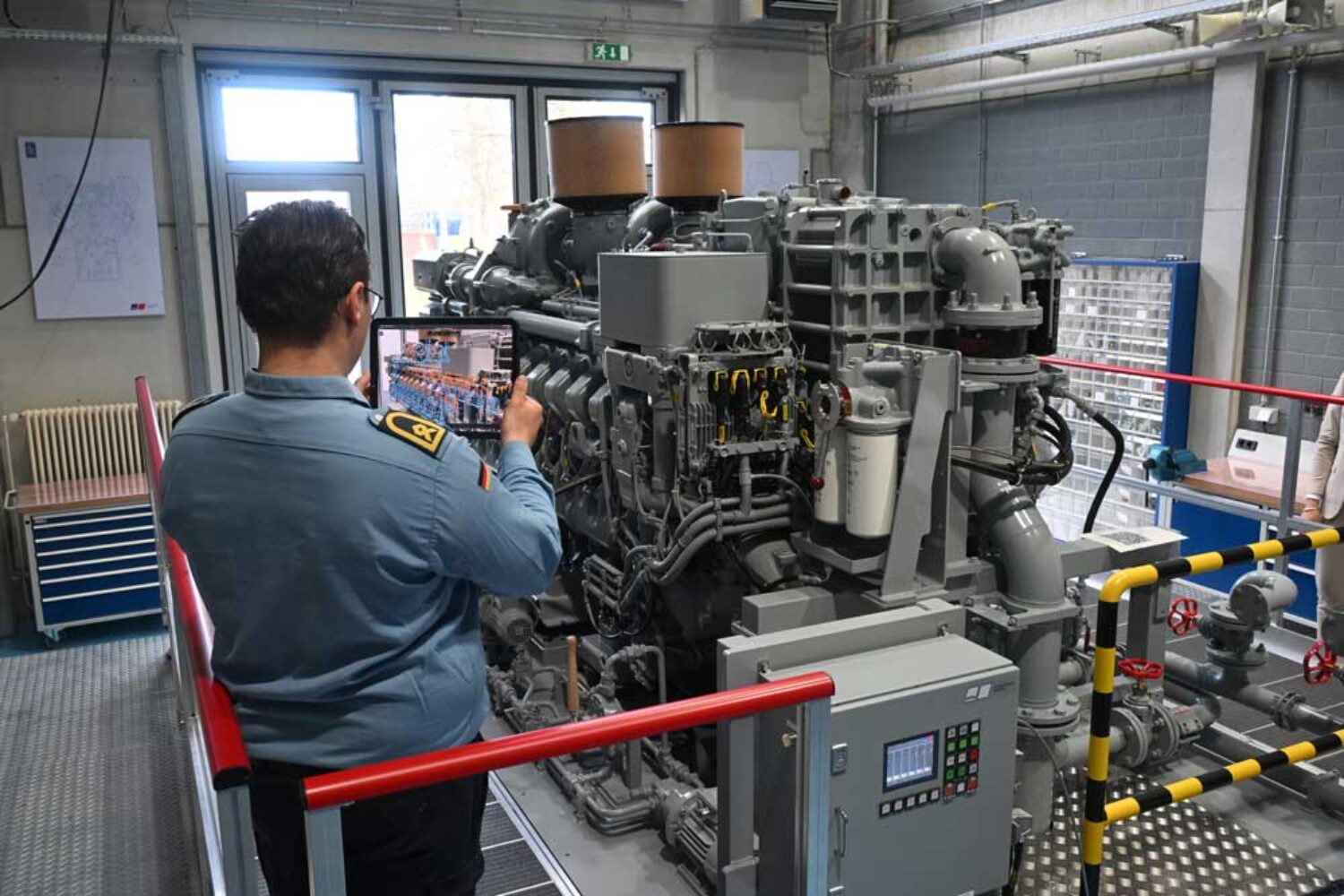
The Parow Naval Technical School is the German Navy’s central training center for technical professions. Here, service members are trained in maritime technology, maintenance, and systems operation. Service members are now also receiving virtual training on the Rolls-Royce 4000 series of engines.
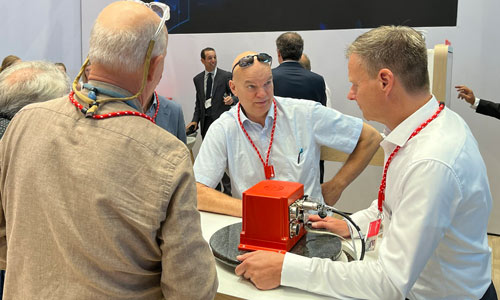
Instead of practicing in the engine room for the first time, the marines at the Naval Technical School (MTS) first train on land using a realistic model of the 20-cylinder engine from the mtu Series 4000.
According to the information provided, augmented reality and specially developed software realistically simulate maintenance, diagnostics, and fault scenarios – long before the technicians board an F125 frigate. In this way, Rolls-Royce Power Systems supports the German Armed Forces in the maritime technical training of future naval personnel.
Identical engine aboard the F125
Since March 2026, a 20-cylinder engine from the mtu 4000 series has been available for training at the Naval Engineering School. This is a so-called cold model of the mtu 20V 4000 M53B engine. It is identical to the engine on board the German F125 frigate—but without operating fluids such as fuel, oil, or compressed air.
On board the “Baden-Württemberg” class F125 are four mtu power units, which are used for both shipboard power and propulsion. Rolls-Royce Power Systems designed these units specifically to meet the German Navy’s demanding requirements. The mtu 20V 4000 M53B engine not only meets the particularly high shock resistance requirements but also operates at an exceptionally low noise level.
The new training software gives marine engineers access to all relevant documentation: from diagnostic instructions to maintenance and repair procedures. A functional engine management system enables the display of operating parameters as well as the simulation of realistic fault and damage scenarios. Augmented reality technology allows for the clear visualization of process-oriented troubleshooting activities. Additionally, a virtual reality environment with a movable 3D model of the engine is available, in which assemblies can be displayed down to the level of small parts.
According to its own statements, Rolls-Royce Power Systems provides the complete digital equipment for training, including Toughbooks, monitors, training computers, and mobile devices. The company also supplies tools, assembly platforms, and all necessary components for realistic exercises.
A first for the Bundeswehr
“A stationary engine combined with 3D and augmented reality technology—that’s something the Bundeswehr hasn’t had before. For the first time, fault and damage scenarios can be simulated realistically. Participants practice not only diagnosis but also troubleshooting before they go on board. This ensures they are prepared when every minute counts. The fact that the Naval Technical School has placed its trust in us for this is of great significance to us,” says Knut Müller, Senior Vice President of Global Governmental Business at Rolls-Royce Power Systems.