



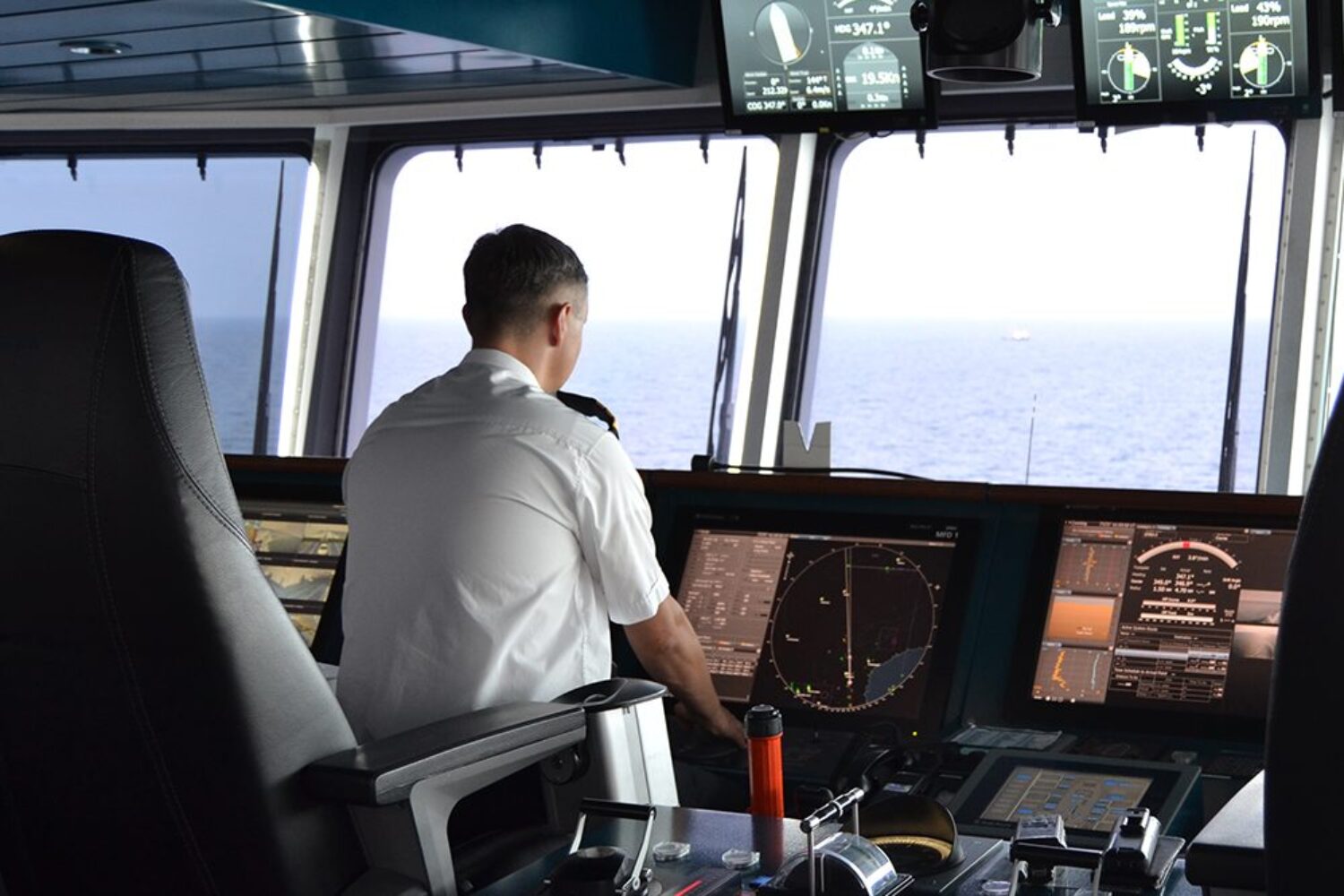
In order to make the German flag more attractive to shipping companies and to address the challenge of finding ‘skilled personnel’, the Federal Government of Germany has amended the regulations on ship manning. The amendments concern the nationality of captains and officers.
As announced by the ‘Deutsche Flagge’ portal on social media, since the weekend, ships flying the German flag have, for the first time, been able to employ captains and ship’s officers who are not from the EU. Until now, the EU requirement applied to the captain and, on larger ships, also to a ship’s officer.
It has been emphasised that this will not change for the time being: “This principle remains in place, but shipping companies now have further options”. A captain or ship’s officer from a non-EU country must either hold a certificate of competency from an EU Member State: in which case a German endorsement and attendance at the ‘German Maritime Law’ course are sufficient. Alternatively, they may hold a certificate of competency from a non-EU country. In this case, the shipping company can also apply to the Ship Safety Department of BG Verkehr for a permit.
There are three conditions that must be met in order to apply the new regulation:
- No EU master or EU ship’s officer is available on the labour market.
- The shipowner must confirm that they are currently unable to promote an EU ship’s officer to the rank of master.
- The shipowner must create two new training places for every captain or ship’s officer from third countries. For shipping companies with a fleet consisting exclusively of vessels under 500 GRT, one training place is sufficient. According to the information provided, these may include: trainee marine engineers, officer’s assistants (NOA, TOA, ETOA) or junior officers who graduated from a maritime college no more than five years ago.
It is also important to note that this does not apply ‘per ship’; the authorisation is company-specific and is initially valid for six months. Once the training places have been established, it will be extended for a further 54 months.
“By allowing for the flexible deployment of qualified specialists from third countries, the German Federal Ministry of Transport is responding to the growing shortage of EU captains and ship’s officers in the maritime labour market. Making ship manning more flexible has a dual benefit: it makes the German flag more competitive and provides incentives for more maritime training,” the statement reads.
This reform is described as a further important step towards sustainably strengthening the attractiveness and competitiveness of the German flag. Numerous measures have been implemented, particularly over the past two years, to improve service, speed up procedures and remove bureaucratic hurdles.
Indeed, the initiative appears to have gained some momentum at present. Flagging manager Christian Bubenzer sees “considerable interest” in the German flag. Alongside the legal framework and aspects such as the Ship Manning Regulations, the tense security situation at sea (and thus the potential protection of German ships by German security authorities) as well as the much-discussed resilience of Germany as a business location also play a major role. Bubenzer explains these points in detail and exclusively to HANSA in the latest episode of the HANSA podcast. Have a listen! Among other things, the conversation also covers:
- A great many and very productive discussions with shipping companies
- Further improvements to the German ship register and further tasks for the authorities
- The major ‘cost’ argument and a comparison with other registers
- Maritime law and private security teams on board
- Regulatory duties and cooperation with classification societies
- A change in image, prejudices and ‘a shift in mindset’
- Training and development
- Better career prospects for German seafarers
- Marketing and sales for the German flag
- Types of vessel flying the German flag
- Container ships and MPP vessels
- Persuasion work with Tailwind, Tui Cruises & Co.
- Support from the Ministry of Transport