



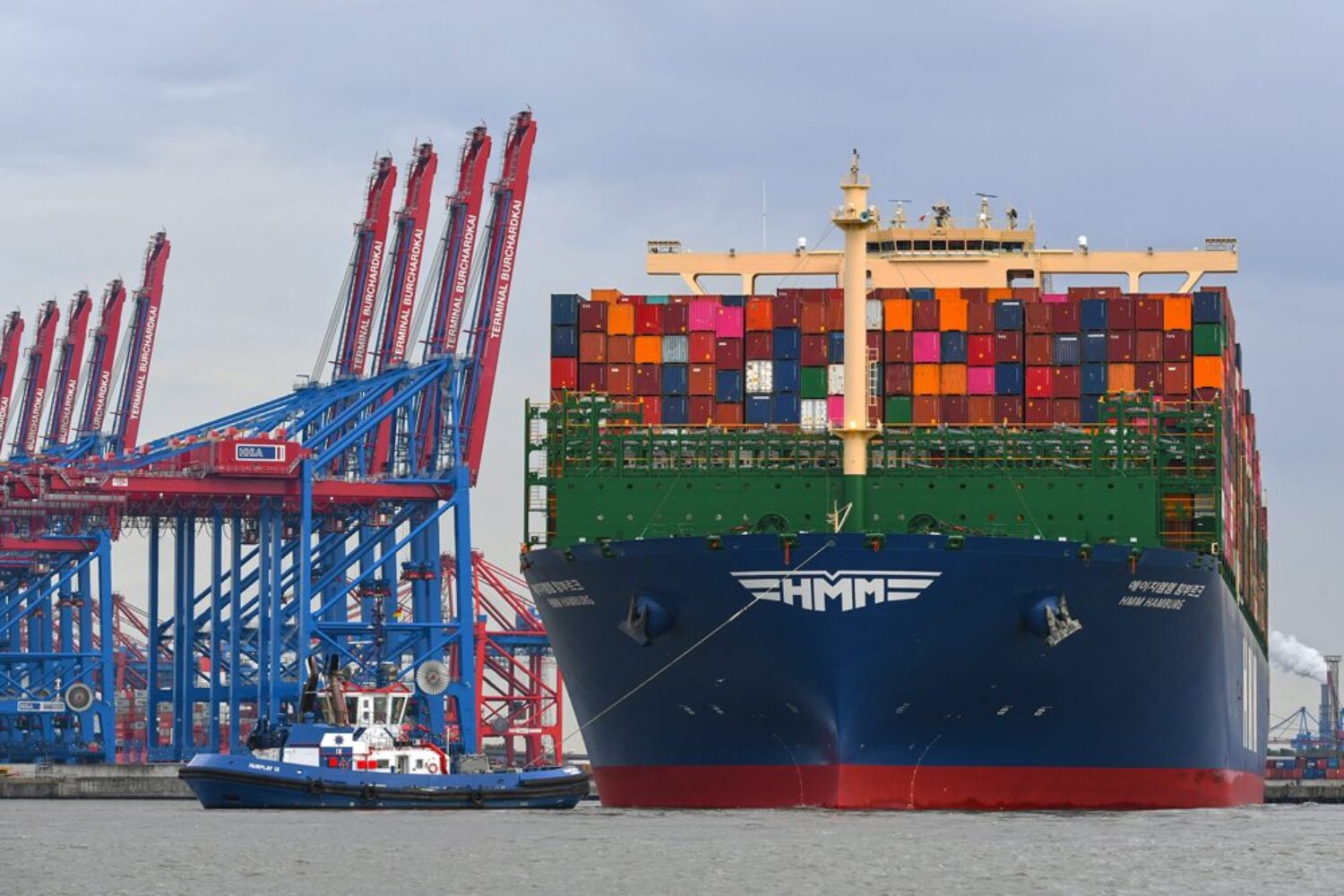
HMM has decided that it will need more ships as South Korea’s flagship carrier adopts the hub-and-spoke model for liner shipping and targets more long-term shipping contracts for the dry bulk sector.
HMM’s directors approved a KRW 29 trillion ($ 19.7 billion) budget to build or purchase more ships to take its fleet to 166 container ships, amounting to 1.47 million TEU and 110 bulk carriers totalling 13.52 million dwt, by 2030.
This represents an expansion of its original mid-term plan that called for HMM’s container shipping fleet to reach 130 vessels of 1.55 million TEU and 12.56 million dwt of dry bulk shipping capacity by 2030.
On the same day, HMM announced that its US subsidiary, Washington United Terminals (WUT), which operates container terminals in Tacoma port, has commissioned HD Hyundai Samho to build four port cranes.
WUT opened in 1999 and currently operates eight quay cranes and six yard cranes. The new cranes will replace two aging quay cranes and add two yard cranes. This upgrade will allow WUT to accommodate larger container vessels and increase its annual cargo-handling capacity from 590,000 TEU to 880,000 TEU.
The capital investments are HMM’s mid- to long-term strategy to strengthen competitiveness in container, bulk, and port infrastructure by 2030. In the dry bulk business, long-term customers, include Korea Electric Power Corporation and Brazilian miner Vale.
HMM’s spokesperson told HANSA that the company will strengthen its ocean-going and short-sea networks based on a hub-and-spoke system. This involves large vessels serving as hubs on ocean-going routes, while small and mid-sized ships support the hubs. By connecting various origins and destinations, shippers can be provided with flexible transportation routes.
As of June, HMM owns 96 container vessels of 1.02 million TEU and 61 bulk carriers with a capacity of 7.86 million dwt. In October 2025, HMM ordered a dozen 13,000 TEU LNG dual-fuelled container ships from HD Hyundai Heavy Industries and Hanwha Ocean. Recently, HMM also announced plans to order eight bulk carriers and two LPG carriers, having re-entered the LPG segment in 2025. (PL)