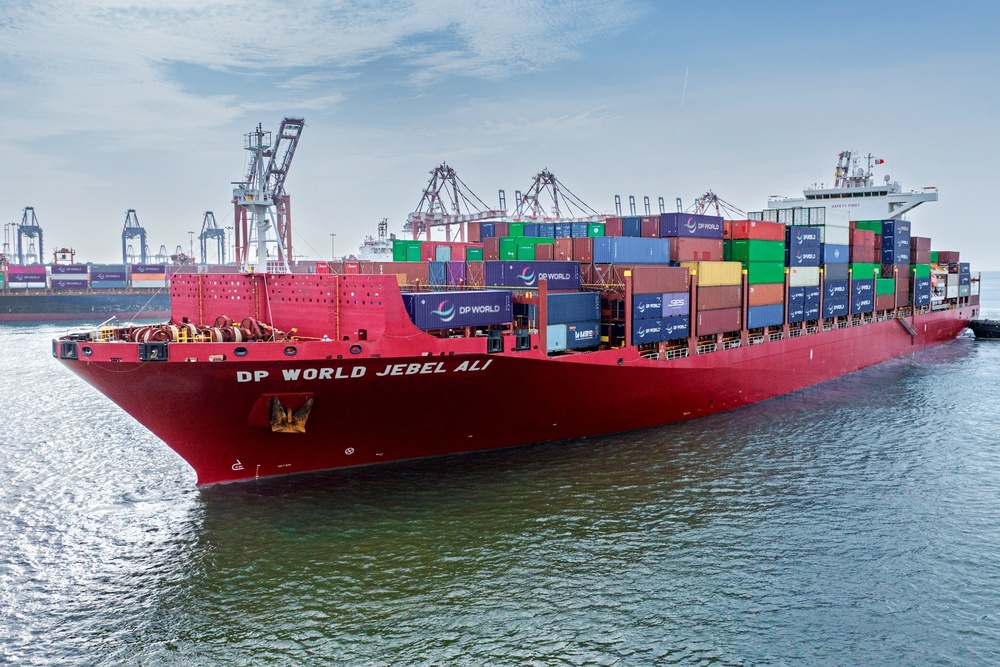





Every vessel leaves drydock operating at peak efficiency. From that moment on, microscopic organisms begin forming the biofilm that marks the first stage of biofouling, gradually reducing cooling efficiency, increasing maintenance requirements and affecting vessel performance.
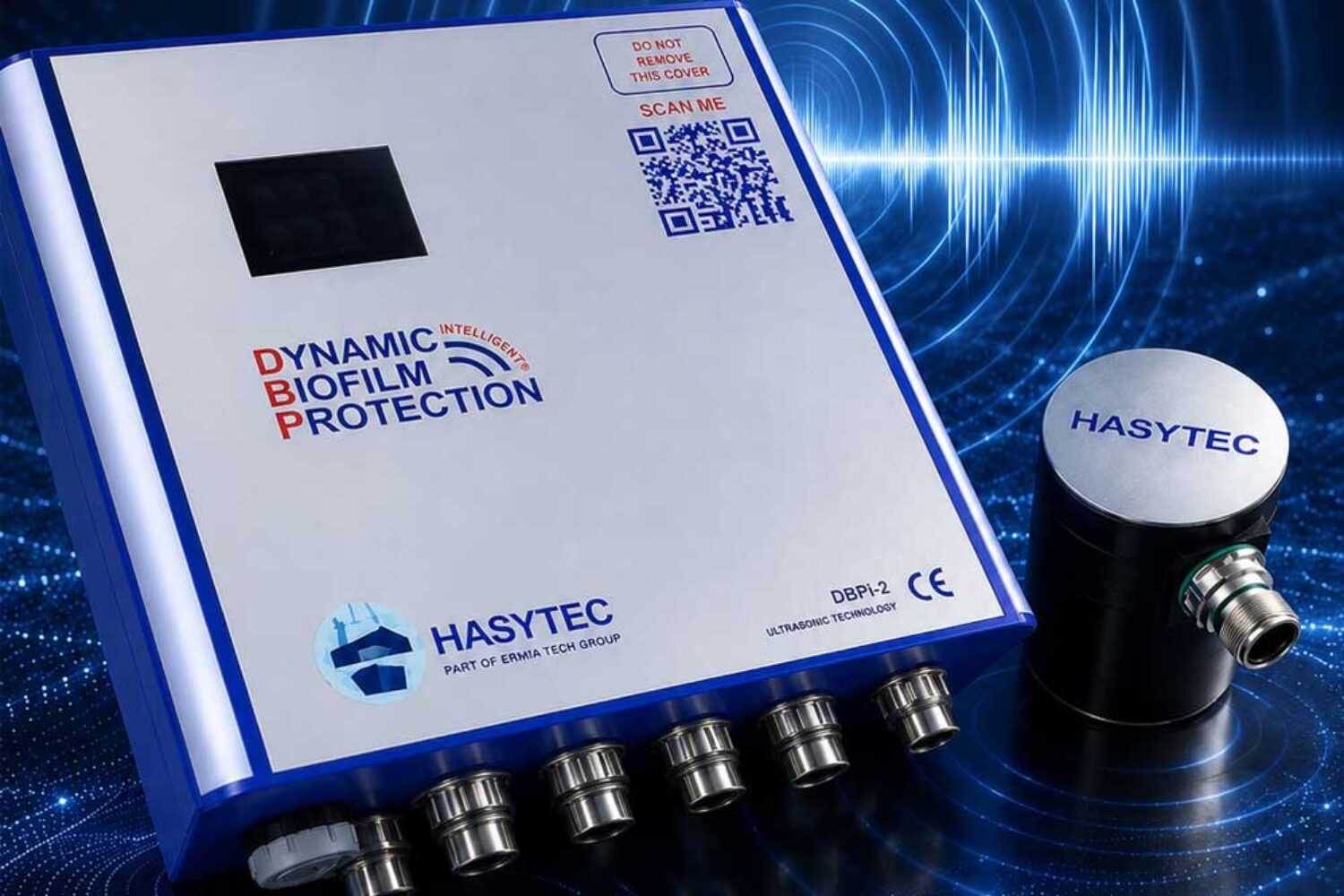
Hasytec addresses this with its AI-driven Dynamic Biofilm Protection Intelligent (DBPi) technology. Using precisely controlled ultrasonic waves, the system prevents biofilm from establishing itself through stable, non-inertial cavitation. According to the company, microscopic bubbles create a protective layer at the surface that discourages marine growth without damaging coatings or vessel structures. The system operates continuously with low-energy transducers and requires neither copper, heavy metals nor chemical biocides.
Unlike conventional ultrasonic systems operating at fixed frequencies, DBPi continuously adapts to changing conditions through adaptive resonance tracking. Per-transducer diagnostics and system-level monitoring provide continuous system oversight, while higher-output transducers allow larger areas to be protected with fewer units. The technology has received Lloyd’s Register Type Approval.
The modular system can be applied to sea chests, seawater piping, strainers, seawater filters, heat exchangers, condensers, cooling systems, freshwater generators, thrusters, pod drives and propellers. Installation does not require hull penetrations or major vessel modifications and can be carried out during drydocking or scheduled maintenance.
According to Hasytec, the technology improves cooling reliability, helps maintain propulsion efficiency, reduces maintenance and diver interventions, lowers MGPS and anode consumption, supports CII performance and contributes to limiting the spread of invasive species.
As part of Erma Tech Group, Hasytec combines German engineering with a global network for engineering, sales and service.