



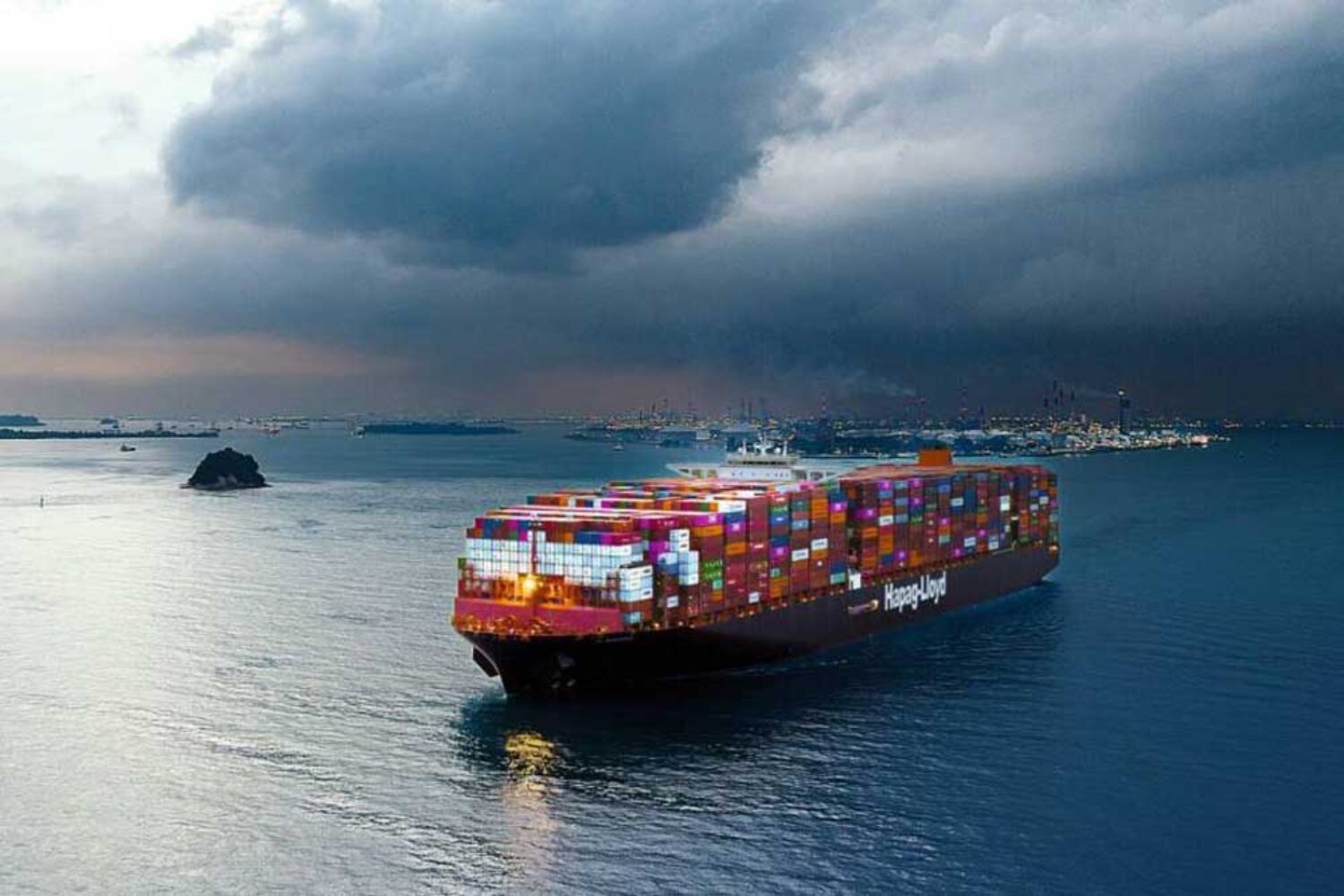
The container shipping company Hapag-Lloyd is set to become the next shore power customer at the Port of Hamburg. In future, the company will be able to use the infrastructure at all terminals.
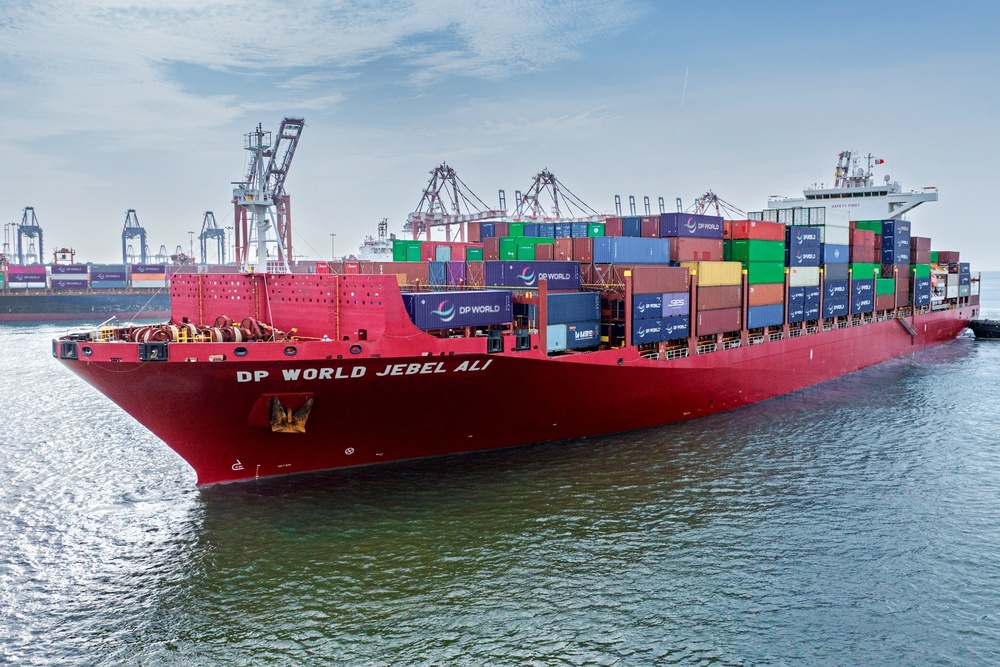
In recent weeks, the container ships “Al Muraykh” (19,892 TEU) and “Tihama” (19,870 TEU), which operate on the Asia–Northern Europe Service NE 2, have already connected to shore power in Hamburg. In future, Hapag-Lloyd will be able to use all terminals in the port for this purpose, as set out in an agreement with the Hamburg Port Authority (HPA).
Shore power has been available for cruise ships at the Cruise Centre Altona since 2016, whilst the first facility for container ships at the Container Terminal Hamburg (CTH) came into operation in May 2024. Hamburg has thus played a pioneering role in the use of shore power in the maritime sector for many years, the HPA announced.
“The use of shore power contributes to air quality management at the Port of Hamburg and helps to make the goal of a climate-neutral port by 2040 a reality,” said Melanie Leonhard, Senator for Economic Affairs, Labour and Innovation. “Hamburg has led the way by installing the technology; shipping companies are following suit and taking responsibility by using the technology on suitable vessels. Together with the market, we are continuing to develop this technology until it becomes standard practice. Our partners worldwide benefit from the Port of Hamburg’s expertise in this regard.”
Jens Meier, CEO of the HPA, welcomed the agreement with one of the world’s largest liner shipping companies. Hapag-Lloyd joins a list of companies including CMA CGM, Maersk, Evergreen, MSC and ONE. On the cruise side, Aida & Costa, Crystal Cruises, Cunard, Fred Olsen, MSC Cruises, Mystic, NCL, Phoenix, P&O, Princess and Tui have signed agreements for the use of shore power. “These agreements underline our customers’ firm intention to adopt and expand this technology,” said Meier. “Together, we are sending a clear signal in favour of a sustainable and forward-looking maritime industry.”
Rolf Habben Jansen, CEO of Hapag-Lloyd, placed the agreement within the context of the company’s long-term strategy. “Shore power is a building block on our path towards lower-emission ship operations in ports and towards our goal of achieving net-zero fleet emissions by 2045,” he said. “All our newbuilds are already shore power-capable, and we are retrofitting suitable vessels in our existing fleet accordingly. Where the infrastructure is available and its use makes operational sense, we utilise shore power. Hamburg demonstrates how investments in lower-emission shipping operations are being put into practice.”
The three cruise terminals in Hamburg, as well as the berths for large vessels at the container terminals, are now equipped with shore power facilities. According to the HPA, “all key berths” in the Port of Hamburg are scheduled to be equipped with infrastructure tailored to demand by 2030.