


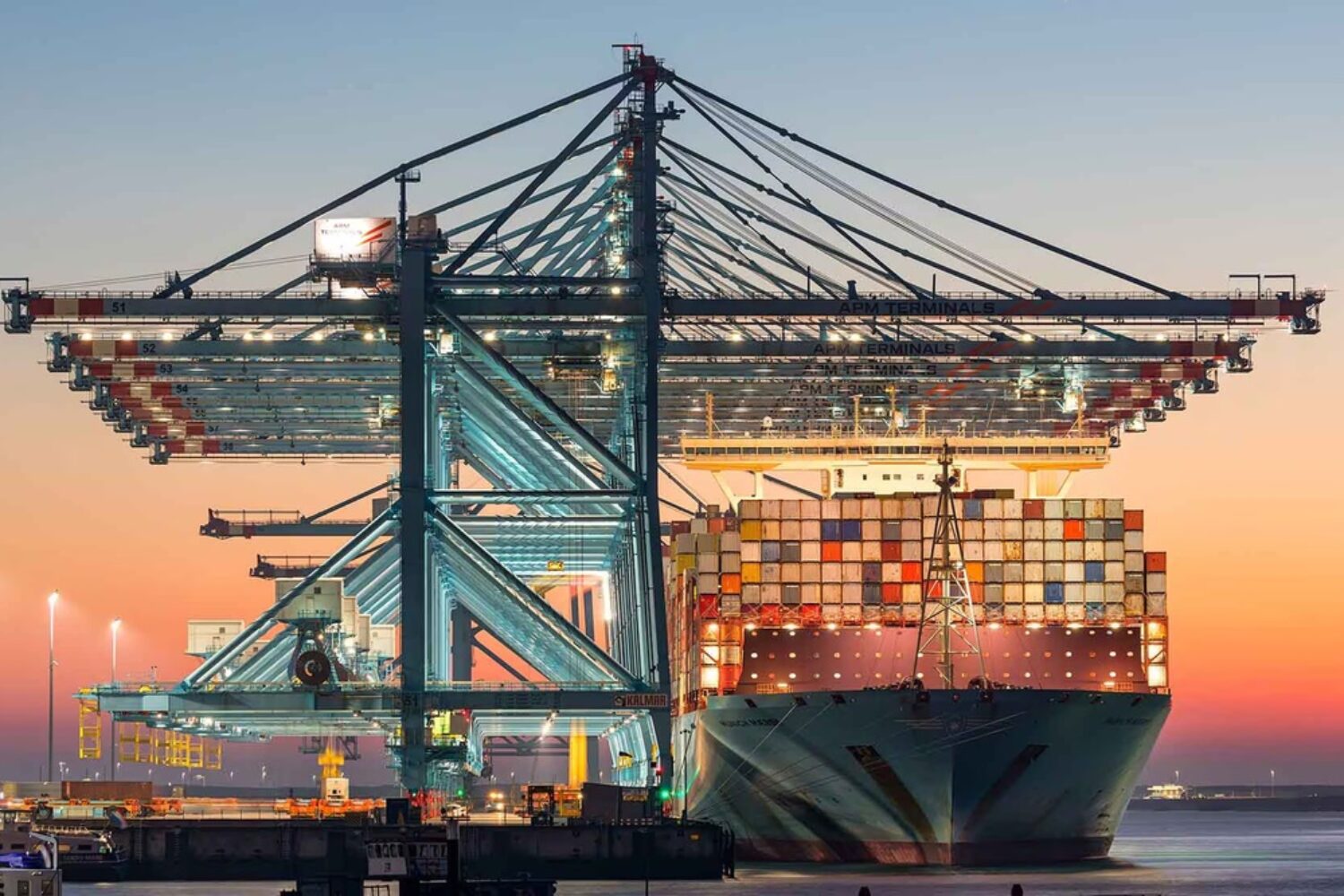
Hapag-Lloyd has acquired a 25% stake in APM Terminals Maasvlakte II in Rotterdam. The Hamburg-based shipping line intends to drive forward the expansion and further development of the terminal, which is of key importance to the Gemini Cooperation.
No financial details of the transaction have been disclosed as yet. Completion is still subject to approval by the relevant authorities and regulatory bodies. According to Hapag-Lloyd, this investment secures long-term automated handling capacity in Rotterdam.
At the same time, the group is further expanding its terminal portfolio. The investment will be allocated to the Terminal & Infrastructure segment, which is grouped under the Hanseatic Global Terminals (HGT) brand. Operational responsibility for Maasvlakte II remains with APM Terminals. The terminal also plays an important role in the Gemini Cooperation between Hapag-Lloyd and A.P. Moller-Maersk.
“With the planned investment in Rotterdam, we will further increase the efficiency and reliability of our network. The terminal is a key element of the Gemini Cooperation and fits very well with our strategy of further expanding our terminal portfolio in core markets,” explained Dheeraj Bhatia, CTIO of Hapag-Lloyd and CEO of Hanseatic Global Terminals.
Capacity set to rise to 5.4 million TEU
APM Terminals Maasvlakte II has been in operation since 2015 and is currently undergoing extensive expansion. Plans include an additional 1,000 m of deep-water quay wall, bringing the total length to 2,000 m. This will be complemented by additional storage capacity and four extra railway tracks.
Automated Terminal Tractors (ATTs) and other automated equipment are also to be deployed. Once the expansion is complete, the terminal’s annual handling capacity is set to rise to up to 5.4 million TEU.
APM Terminals CEO Keith Svendsen described Hapag-Lloyd’s entry as a vote of confidence in the terminal and the long-term cooperation between the two companies. APM Terminals aims to further expand the site’s capacity, in particular through additional deep-water berths and increased container capacity.